
Things to watch out for if you're experimenting with a rolled up cloth under your breast + a word about the 'breastfeeding buddy'
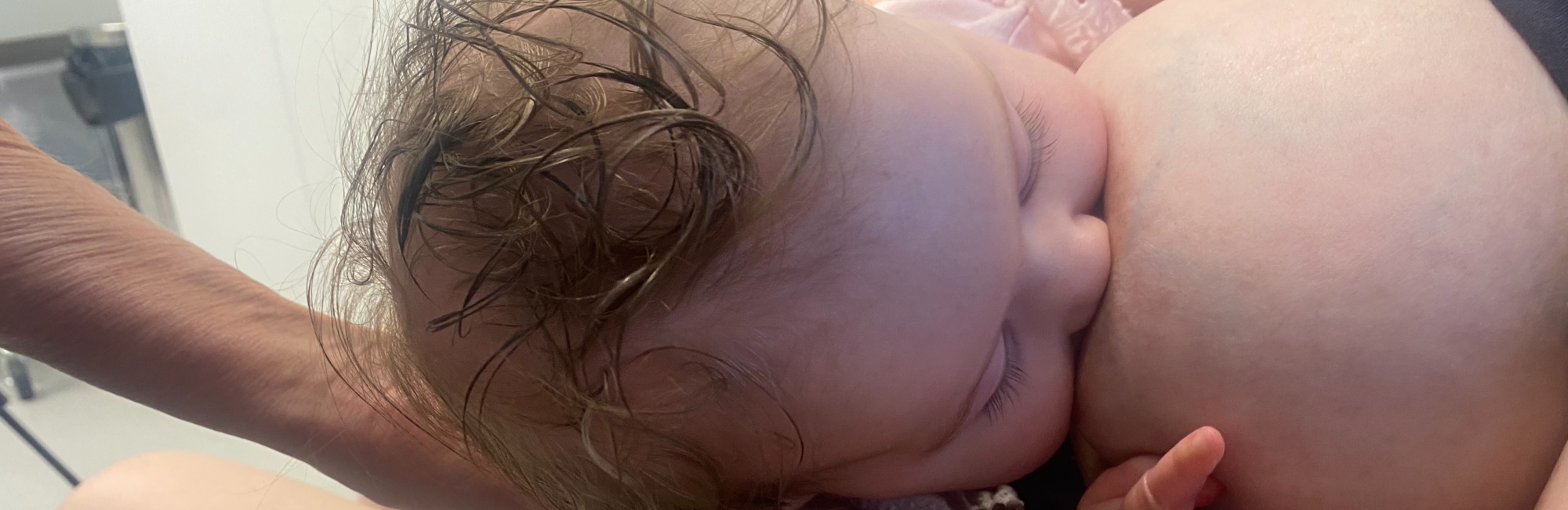
Problems to watch out for with facecloth rolls
Here are four problems that might come up if you're using a facecloth roll to better expose the 'landing pad' of your breast as you breastfeed your baby.
-
The roll gets in the way of (or encroaches upon) the landing pad. This can result in baby fussing at the breast, or in nipple pain - and is counter-productive!
-
The roll slips out from under your breast when you're breastfeeding (that is, it gets in the way of the landing pad as it slips).
-
The roll protrudes too far from the side of your breast towards the midline, interfering with your baby's capacity to fit snugly and comfortably against you in a ribcage wrap. If this happens all the time, then it's not a good fit - or you could try wrapping the roll in cling wrap or food wrap.
-
The roll doesn't adequately expose the whole of the landing pad. Again, this means it isn't working well.
If these issues can't be dealt with by experimenting with different roll widths, then it seems unlikely that the roll will help with the problems you're facing. You and your breastfeeding support professional will need to explore other strategies.
Are commercial silicone rolls (sold as the 'breastfeeding buddy') better than a facecloth for exposing the landing pad?
Those who sell silicone rolls to lift the breast will claim that their product works better than a rolled up cloth! However, that hasn't been my experience as I've worked with breastfeeding women and their babies in the clinic.
Commercial silicone rolls can be subject to the same problems as facecloth rolls (above)
The four problems listed above which can occur with facecloth rolls can also occur with silicone rolls if they don't fit your unique breast and body shapes. A choice of just three sizes of silicone roll, for instance, limits the product's flexibility to fit your own unique breast.
Problems which are unique to commercial silicone rolls
In my experience, the silicone rolls not only don't help better than rolled up facecloths, but have three downsides.
-
A facecloth roll compresses differentially, according to the weight placed upon it.
-
A facecloth roll can act to expose the landing pad well, but also compresses comfortably when the baby's chest presses in upon it.
-
The silicone roll isn't soft and doesn't compress. If the silicone roll protrudes out from under the breast towards the midline, this hardness irritates or causes discomfort to the baby if baby is pressed in nice and close to the mother's body, as he needs to be.
-
-
If the silicone roll protrudes out from under the breast towards the mother's arm, it can get in baby's way too, this time interfering with baby's capacity to have her lower hand and arm resting around the mother's side - something that is often essential for a good face-breast bury.
-
I am concerned that a silicone roll might predispose a lactating woman to mastitis, since it is firmer under the breast than a facecloth roll, and more likely to compress milk ducts. I believe I have seen this happen at least one patient of mine who was using a 'breastfeeding buddy'.
In my own experience working collaboratively with women in the clinic to date, women are still finding the rolled up facecloths more flexible and effective than commercial silicone rolls. But that doesn't mean you can't experiment with a silicone roll if you'd like to!
Recommended resources
PBL Foundations
What's useful to notice in the mirror before you bring baby on to your breast?
What does the gestalt method mean by the 'landing pad'?
PBL Intermediate
Working breasts are diverse on the outside
How Janine uses a rolled up facecloth to better expose her generous breast's 'landing pad'
Why it's often best not to shape your breast with your hand though some women need to