How to roll up a facecloth for better exposure of your breast's 'landing pad' (+ when this doesn't work!)
-fotor-20231221163912.jpg)
Here's a video about how to roll up a facecloth and when you might experiment with it
The video below shows how to tightly roll up a facecloth so that you can use it as a tool for better exposing the 'landing pad' of your breast. A rolled up facecloth can be helpful when you're facing problems such as nipple pain, or baby fussing at the breast, and you notice the landing pad of your breast isn't fully exposed under your nipple and areola when you're in a semi-reclined position.
There are two common reasons why the landing pad of your breast isn't fully exposed.
-
Your breast is generously shaped, or
-
You have a breast-belly contour like Janine's, which doesn't give you quite enough space under your breast for baby to fit (face-breast bury + shoulder-tip to shoulder-tip) without nipple and breast tissue drag.
In both situations you're likely to find a rolled up cloth helps! I recommend against using towels or nappies or other kinds of cloth, because we want the smallest workable length which won't interfere with how baby snuggles in against your body. (I share my clinical experiences with a silicone roll called 'breastfeeding buddy' here.)
Secure the rolled up facecloth with elastic bands
You could place two elastic bands around the rolled up facecloth, one towards each end, to keep it securely rolled up. This makes the roll easy to use when you're ready to breastfeed, and easy to put in your nappy bag when you leave the house.
When cling wrap might help
- Wrapping the rolled up facecloth in cling wrap (plastic wrap or food wrap) might help the roll stay where it needs to be, up high under the breast where the breast meets their ribcage and out of the way of the landing pad. Although a cling wrap cover usually isn't necessary for women with generous breasts, it might be very helpful for a woman with a more petite breast who needs to better expose her breast's landing pad, due to her breast-belly contour.
Photos of a knitted breast illustrate whether or not the width of your roll works
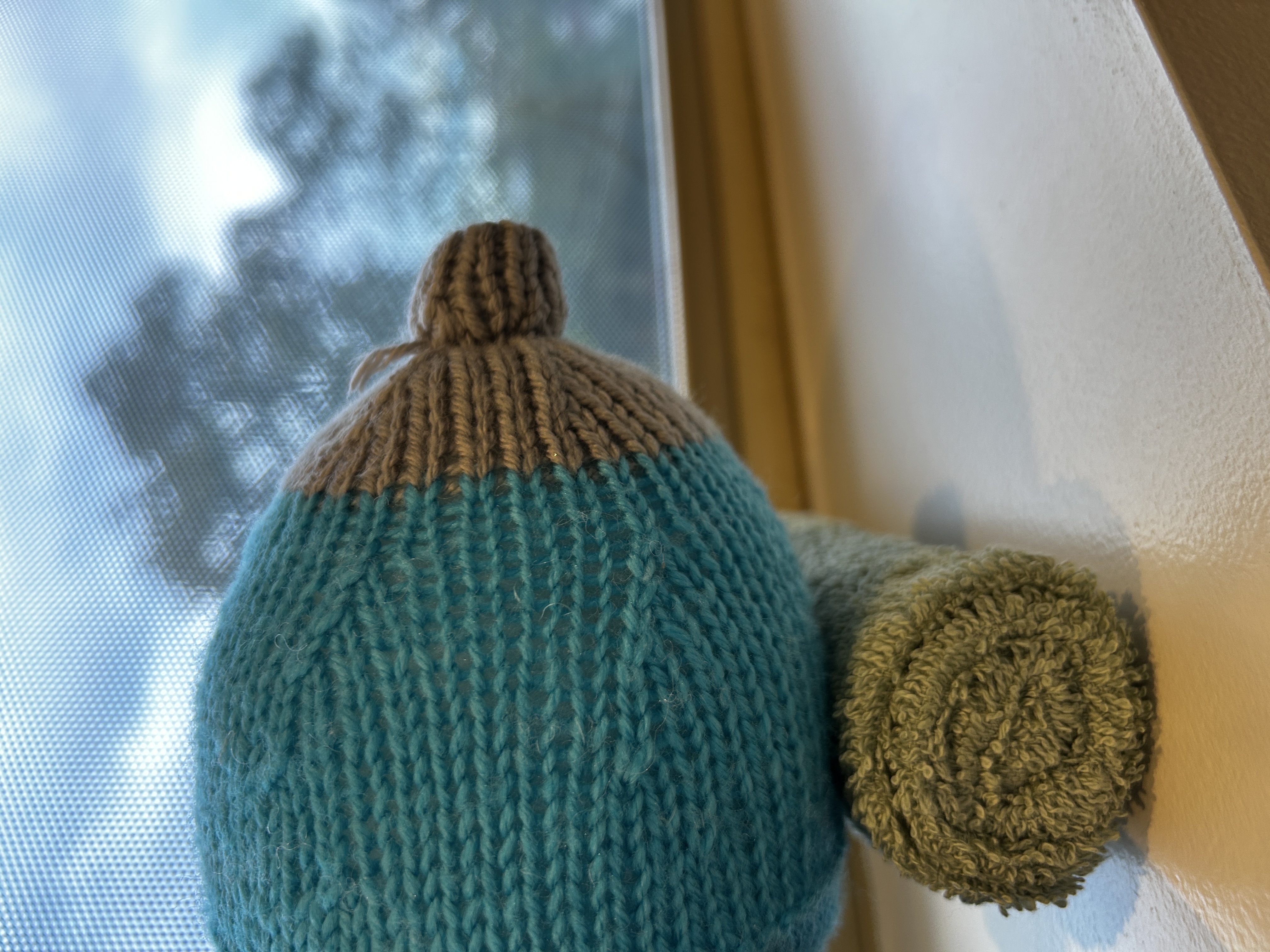
Example 1
The image below illustrates how a rolled up facecloth, tucked up firmly at the junction between a woman's breast and her ribcage, exposes the landing pad of a knitted breast without encroaching upon the landing pad. This works!
Example 2
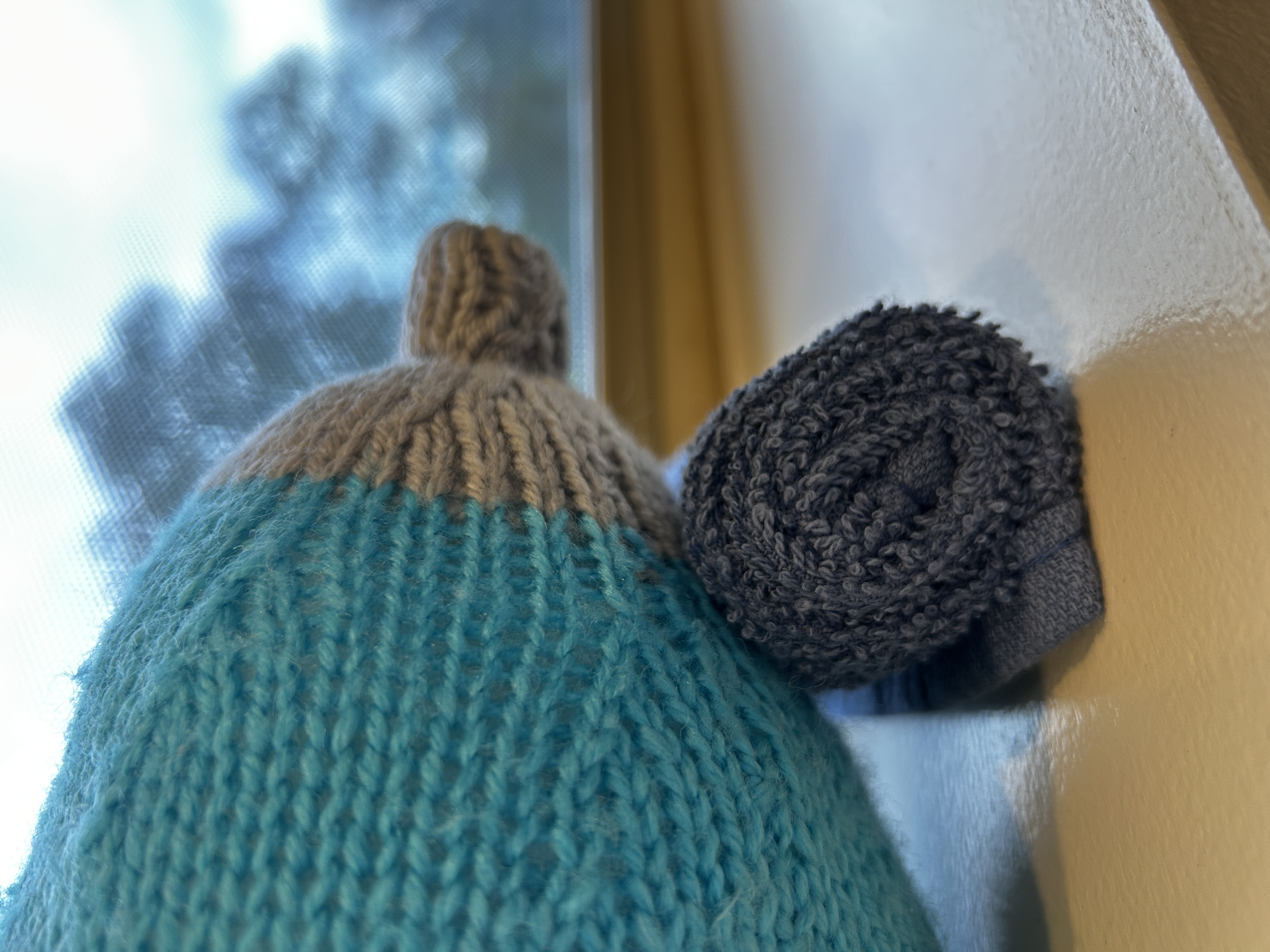
The image below uses a knitted breast to illustrate how a rolled up facecloth, tucked up firmly at the junction between a woman's breast and her ribcage, exposes the landing pad of a knitted breast BUT encroaches upon the landing pad. This doesn't work! The baby is likely to continue to fuss at the breast, or cause nipple pain, due to nipple and breast tissue drag. In this situation, if a smaller cloth doesn't stay in place comfortably with good landing pad exposure, you will be best not using a rolled up facecloth at all.
Example 3
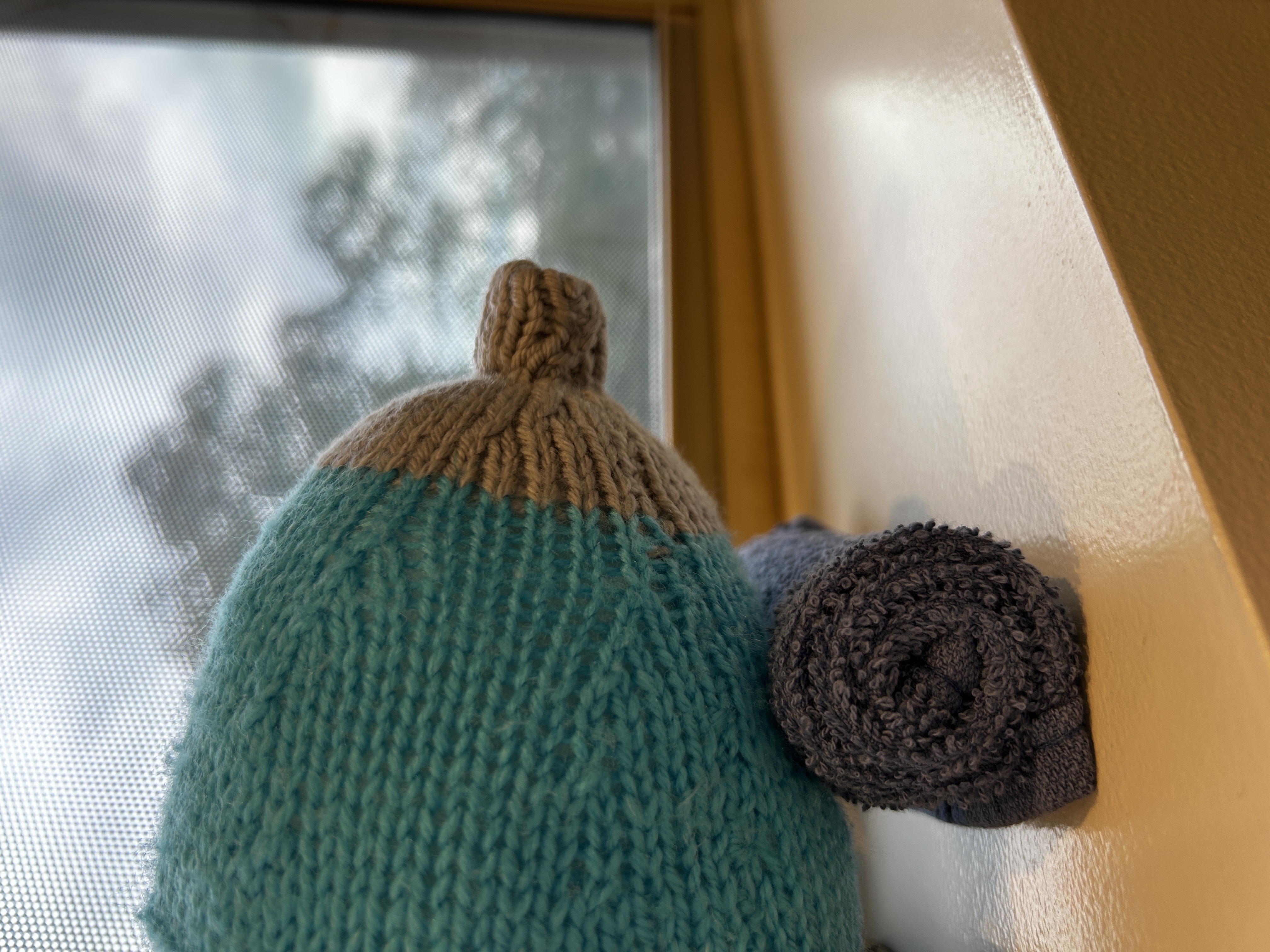
The image below illustrates a rolled up facecloth, tucked up firmly at the junction between a woman's breast and her ribcage, adequately exposes the landing pad of a knitted breast. Again, we would expect this to work because the ten centimetre diameter landing pad should be adequately exposed (just).
Create a width of roll that works for your own unique body
I use the two kinds of facecloths commonly available in the shops where I live, one smaller and thinner than the other, to create a range of different roll widths. You don't really need to worry about measurements - I include them to show you how we can make up different sizes. Really, you'll just need to experiment to see what works for your own unique body!
| Cloth width | Maximum width or diameter of roll |
|---|---|
| 27 x 27 cm (blue face cloth in these photos); length when folded in half 13.5 cm | 4 cm |
| 30 x 30 cm (green cloth in these photos); length when folded in half 15 cm | 5 cm |
| Blue and green cloths placed on each other, folded in half, rolled | 6 cm |
| Green and green cloths placed on each other, folded in half, rolled | 7 cm |
Recommended resources
PBL Foundations
What's useful to notice in the mirror before you bring baby on to your breast?
What does the gestalt method mean by the 'landing pad'?
PBL Intermediate
How Janine uses a rolled up facecloth to better expose her generous breast's 'landing pad'
Why it's often best not to shape your breast with your hand though some women need to