Logo - The Possums baby and toddler sleep program.
parents home
librarybrowse all programsfind answers nowaudioprograms in audiogroup sessionsgroup sessions with dr pam
menu icon NDC Institute
possums for professionals
(the ndc institute)
menu icon eventsguest speakers
menu icon the sciencethe science behind possums/ndcmenu icon who we arewho we aremenu icon evidence basendc research publicationsmenu icon dr pam's booksdr pam's books
menu icon free resourcesfree resourcesmenu icon dr pam's blogdr pam's blog
menu icon consult with dr pamconsult with dr pammenu icon consult with dr pamfind a possums clinicmenu icon find a NDC accredited practitionerfind an ndc accredited practitioner
login-iconlogin

Welcome back!

Forgot password
get access
search

Search programs

PBL Intermediate icon

PBL Intermediate


  • Why the saying "there's no right way to breastfeed, only your way" doesn't help
  • Why it's usually best not to shape your breast with your hand though some women need to
  • What does the research tell us about approaches to fit and hold currently used for breastfeeding support?
  • Things to know about biological nurturing (or laid back breastfeeding or koala position or straddle hold) and breastfeeding on the move

Next article

Sign up now
  • PBL Intermediate
  • S4: Getting fit and hold right for you and your baby
  • CH 3: Using the gestalt method to trouble shoot problems
  • PT 3.4: Fit and hold approaches which mostly don't help

Why it's usually best not to shape your breast with your hand though some women need to
Dr Pamela Douglas7th of Oct 202410th of Jan 2026

x

Try not to shape the breast with your hand

A friend tells me over dinner that she remembers a well-meaning if insanely overworked midwife coming into the ward just as she was attempting to bring her newborn on to the breast. The midwife, hands busy with other tasks, began calling out repeatedly that my friend should ‘make a burger, make a burger!’ Now, my friend is able to laugh about this.

‘I had absolutely no idea what she meant!’ my friend says. ‘I was in pain from the caesarian section, hadn’t slept a wink, could hardly think, and there she is yelling at me to ‘make a burger’. What one earth did she mean?’

I knew what the midwife intended. She was trying to help.

But an excellent Australian study by another midwife Dr Robyn Thompson demonstrates that this particular style, still widely used, of shaping the breast (for instance, into a burger or sandwich shape, sometimes called a ‘c-’ or ‘v-’ or ‘u-hold’ or scissors hold) and bringing the baby on with a hand on the back of the baby’s head and neck (sometimes called the ‘cradle hold’), actually increases a woman’s risk of nipple pain fourfold. This may be because hands and fingers on the back of the baby’s head and neck switch off the baby’s breastfeeding reflexes - the baby might start back arching and fussing because of this, and dragging on the nipple.

But before all else, it’s because as soon as a woman let’s go after shaping the breast, the breast falls back to where it was, and baby experiences breast tissue drag. Bringing the baby to the breast, just where the breast falls naturally without manipulating the breast in any way, means that there is not likely to be much breast tissue drag once baby is on.

Popular advice to line the baby up nipple to nose, or have the chin and lower lip pressed into the breast first, or to watch for the tongue to go down, or to wait for a big gape, or to get an asymmetrical latch, is all unhelpful, and comes from old understandings of how babies suckle. These recommendations are to avoided in the gestalt approach.

Bring your baby onto your breast any old way!

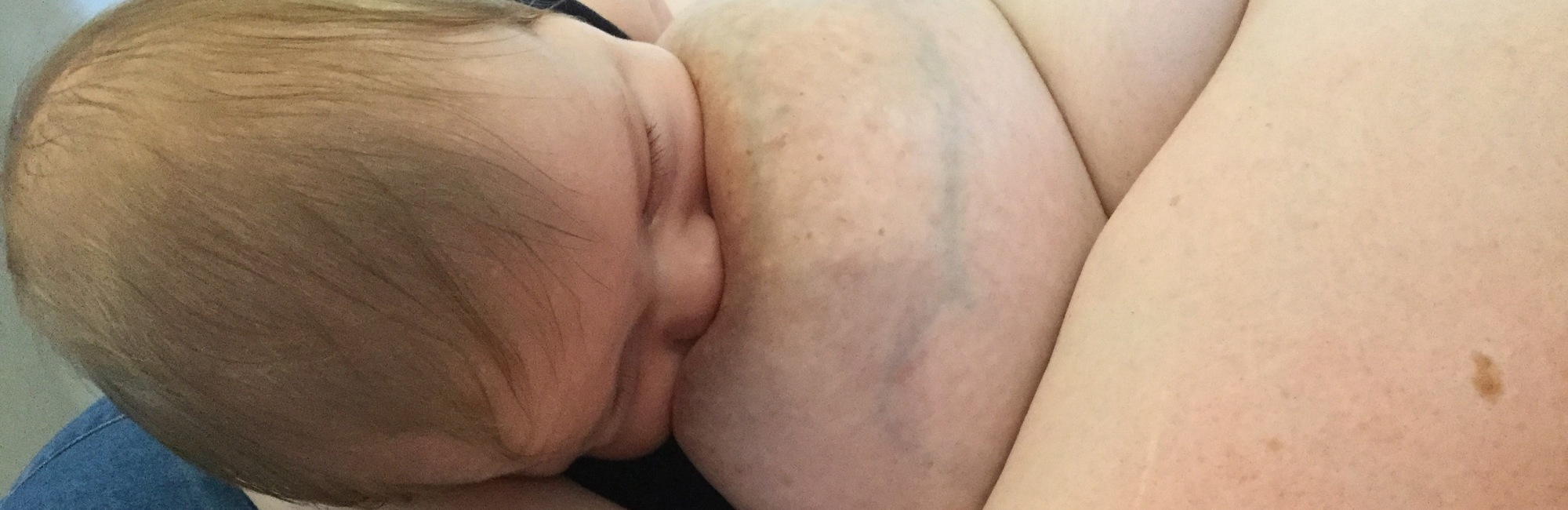
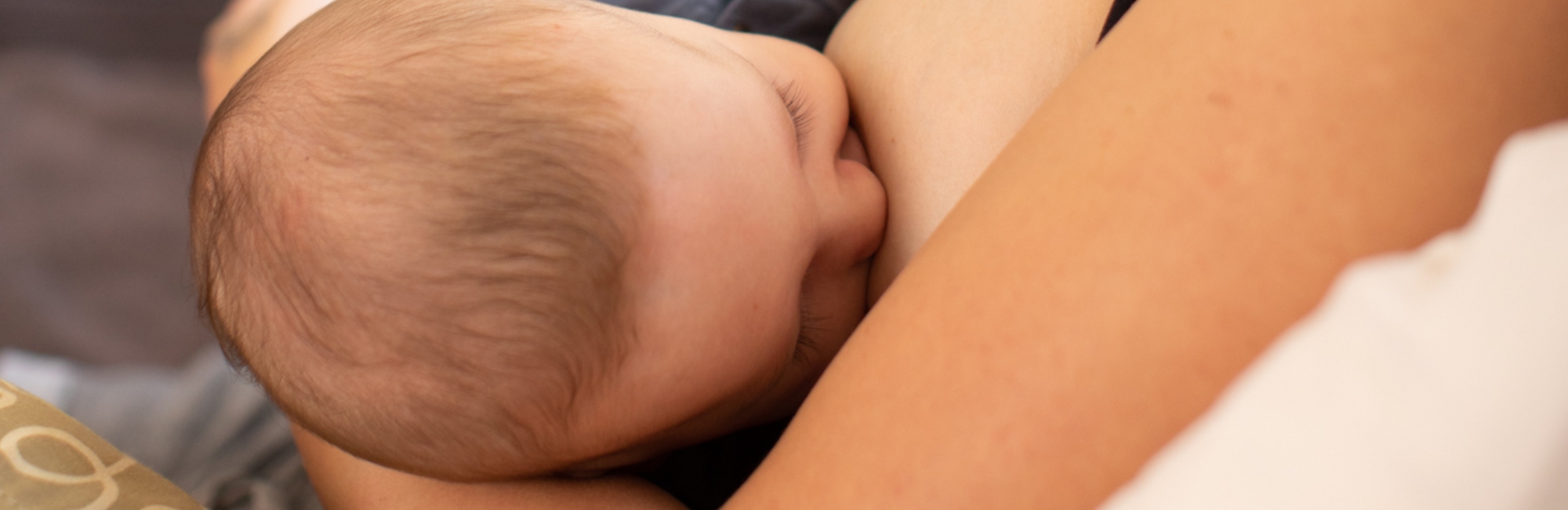
Instead, we invite you to turn on the baby’s breastfeeding reflexes by burying the little face into your breast above the nipple and areolar, with your forearm under his head. Then, as the baby bobs and roots, you help him on. ‘Bring baby on mouth over nipple any old way’, I hear myself saying, repeatedly. ‘What matters is what comes next: the micromovements.’

If you find shaping your breast works best, just know how to quickly get rid of any breast tissue drag

Some women do find that shaping their breast tissue into a mouth-size ‘sandwich’ as the baby comes on (without using any force or coercion) and then using micromovements to compensate for any resultant breast tissue drag works best for them. If you are experimenting and find this works for you, just be mindful not to push the breast away from where it naturally wants to fall, so that the baby isn’t immediately faced with serious breast tissue drag when you let go.

Recommended resources

COMMON BREASTFEEDING PROBLEM #1: nipple and breast tissue drag

The three key elements of stable fit and hold for enjoyable breastfeeding

The mechanical effects of nipple + breast tissue drag on breastfeeding

Selected references

Thompson RE, Kruske S, Barclay L, Linden K, Gao Y, Kildea SV. Potential predictors of nipple trauma from an in-home breastfeeding programme: a cross-sectional study. Women and Birth. 2016;29:336-344.
Finished

share this article

Next up in Fit and hold approaches which mostly don't help

What does the research tell us about approaches to fit and hold currently used for breastfeeding support?

x

The foundational importance of laid-back or baby-led breastfeeding

The physiologic or mammalian approach to breastfeeding initiation, including skin-to-skin contact postpartum, has been a major advance in the field of clinical breastfeeding support over the past two decades, with positive impacts on breastfeeding outcomes.1-4

Teaching the biological nurturing approach to fit and hold preventatively modestly decreases the prevalence of nipple pain but doesn’t impact on breastfeeding rates

Whilst biological nurturing methods are foundational, they are not enough to prevent nipple pain in most women, or to resolve latching problems once they emerge.

  • A 2021 meta-analysis review of studies investigating ‘biological nurturing’ or ‘laid-back breastfeeding’ as a preventative approach, finding 11…

Keep reading
logo‑possums

Possums in your inbox

Evidence-based insights, tips, and tools. Occasional updates.

For parents

parents homebrowse all programsfind answers nowprograms in audiogroup sessions with dr pam

For professionals

possums for professionals
(the ndc institute)
guest speakers

About

the science behind possums/ndcwho we arendc research publicationsdr pam’s books

More resources

free resourcesdr pam’s blog

Clinical consultation

consult with dr pamfind a possums clinicfind an ndc accredited practitioner

Help & support

contact usfaqour social enterpriseprivacy policyterms & conditions

Social

instagramlinked infacebook

Possums acknowledges the traditional owners of the lands upon which The Possums Programs have been created, the Yuggera and Turrbal Peoples. We acknowledge that First Nations have breastfed, slept with, and lovingly raised their children on Australian lands for at least 65,000 years, to become the oldest continuous living culture on Earth. Possums stands with the Uluru Statement from the Heart.