Logo - The Possums baby and toddler sleep program.
parents home
librarybrowse all programsfind answers nowaudioprograms in audiogroup sessionsgroup sessions with dr pam
menu icon NDC Institute
possums for professionals
(the ndc institute)
menu icon eventsguest speakers
menu icon the sciencethe science behind possums/ndcmenu icon who we arewho we aremenu icon evidence basendc research publicationsmenu icon dr pam's booksdr pam's books
menu icon free resourcesfree resourcesmenu icon dr pam's blogdr pam's blog
menu icon consult with dr pamconsult with dr pammenu icon consult with dr pamfind a possums clinicmenu icon find a NDC accredited practitionerfind an ndc accredited practitioner
login-iconlogin

Welcome back!

Forgot password
get access
search

Search programs

PBL Foundations icon

PBL Foundations


  • What's useful to notice in the mirror before you bring baby on to your breast?
  • Notice where your breast and nipples naturally fall before bringing baby on
  • What does the gestalt method mean by the 'landing pad'?
  • The deck-chair position is usually the best for a relaxed and comfortable breastfeed
  • Consciously relax your shoulders and take slow deep breaths as you bring baby onto your breast
  • Pay close attention to nipple and breast sensations while your breastfeeding
  • Helpful strategies for managing difficult thoughts and emotions if you have breastfeeding problems

Next article

Sign up now
  • PBL Foundations
  • S3: Fit and hold: #1 breastfeeding superpower
  • CH 5: Step 2: Preparing your body and mind for relaxed and comfortable breastfeeding

What does the gestalt method mean by the 'landing pad'?
Dr Pamela Douglas1st of Sep 202310th of Jan 2026

x

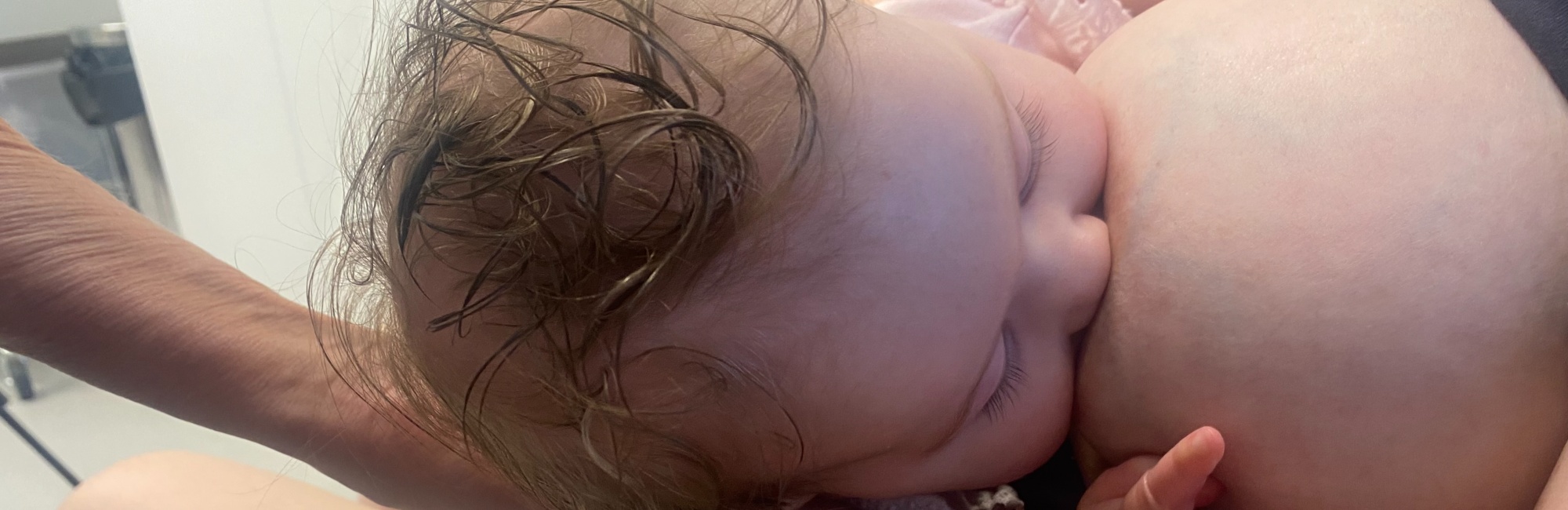
You might pause for a moment to look at the size of your baby's gorgeous little face. This helps you get a feel for the kind of 'landing pad' your baby needs on the breast.

Depending on your baby's age and size, you will see that baby needs a landing pad of perhaps five centimetre radius or more around the nipple (>10 cm diameter) if the lower half of that little face is to properly bury into your breast.

Contact between the bare skin of the breast and the lower half of baby's face switches on the baby's suckling reflexes. We don't want your upper arm or clothing to press against your baby's upper face either because that will interfere with a symmetrical face-breast bury. It's important to have the landing pad as clear and as exposed as possible.

The best way to do this in the early days, while you're laying down new neurological pathways, is to take off your upper garments and bra if you possibly can.

In the video above, you'll see that the baby has difficulty getting oriented at the breast due to the lack of an adequate landing pad. Notice how the woman's arm and bra compromise the amount of exposed breast available, so that they have difficulty switching on the baby's breastfeeding reflexes.

Selected references

Douglas PS, Keogh R. Gestalt breastfeeding: helping mothers and infants optimise positional stability and intra-oral breast tissue volume for effective, pain-free milk transfer. Journal of Human Lactation. 2017;33(3):509–518.

Douglas PS, Geddes DB. Practice-based interpretation of ultrasound studies leads the way to less pharmaceutical and surgical intervention for breastfeeding babies and more effective clinical support. Midwifery. 2018;58:145–155.

Douglas PS, Perrella SL, Geddes DT. A brief gestalt intervention changes ultrasound measures of tongue movement during breastfeeding: case series. BMC Pregnancy and Childbirth. 2022;22(1):94. DOI: 10.1186/s12884-12021-04363-12887.

Finished

share this article

Next up in Step 2: Preparing your body and mind for relaxed and comfortable breastfeeding

The deck-chair position is usually the best for a relaxed and comfortable breastfeed

x

We need to prepare for breastfeeding by placing your own body in a relaxed and comfortable position, which can be sustained without causing muscle tension or pain.

The semi-reclined or deck-chair position is by far the Keep reading

logo‑possums

Possums in your inbox

Evidence-based insights, tips, and tools. Occasional updates.

For parents

parents homebrowse all programsfind answers nowprograms in audiogroup sessions with dr pam

For professionals

possums for professionals
(the ndc institute)
guest speakers

About

the science behind possums/ndcwho we arendc research publicationsdr pam’s books

More resources

free resourcesdr pam’s blog

Clinical consultation

consult with dr pamfind a possums clinicfind an ndc accredited practitioner

Help & support

contact usfaqour social enterpriseprivacy policyterms & conditions

Social

instagramlinked infacebook

Possums acknowledges the traditional owners of the lands upon which The Possums Programs have been created, the Yuggera and Turrbal Peoples. We acknowledge that First Nations have breastfed, slept with, and lovingly raised their children on Australian lands for at least 65,000 years, to become the oldest continuous living culture on Earth. Possums stands with the Uluru Statement from the Heart.