A little about the underlying theoretical frameworks from which the gestalt method has been built

The gestalt method has been built by using the principles of implementation science
The gestalt method of fit and hold is just one part of the comprehensive Possums approaches to breastfeeding and lactation challenges, but experimenting with fit and hold is essential when problems arise - and also if we want to prevent problems.
It's important to name the kind of method that is being used when professionals help with fit and hold, and to be explicit about the models that the approach is built from. This is so that the method can then be evaluated in the research, and taught to other health professionals. The idea that naming a particular approach to fit and hold is somehow 'branding' breastfeeding misunderstands how implementation science works - and breastfeeding families deserve the best possible science we can develop!
The gestalt method of fit and hold is developed from six key models
Before all else, I developed the gestalt method from years of experimenting with the strategies that were already available to me and my breastfeeding medicine and IBCLC colleagues as I tried to help breastfeeding women and their babies in the clinic, addressing the shortcomings of these strategies, and trying out new things with women. I also immersed myself deeply in the research literature, year after year, and participated in the conferences and discussions occuring amongst my colleagues in this shared field.
Here are the six models I used as I gradually built on what existed, to develop a new approach which I found to be much more effective clinically.
-
Baby-led breastfeeding or mammalian approaches (Colson 2014), also referred to later on as the physiologic initiation of breastfeeding (Schafer & Watson 2015)
-
Gestalt biomechanical model of infant suck and swallow (Douglas & Keogh 2017; Douglas & Geddes 2018)
-
Neurobiological model of infant crying and fussing, including the concept of conditioned sympathetic nervous system hyperarousal - translated into the Possums 5-domain approach to infants who cry a lot (Douglas & Hill 2013)
-
Applied functional contextualism, known popularly as Acceptance and Commitment Therapy (Steven Hayes - see Levin et al 2024)
-
Principles of mechanobiology to resolve nipple pain and damage and fussy behaviour at the breast (Douglas 2022)
-
Empowering choice of words (woman-centred language) which avoids evaluative or comparative terms, and which also avoids outdated and unhelpful ideals of the 'natural' (Douglas 2018).
The gestalt method of fit and hold is genuinely holistic
The gestalt method
-
Has the most rigorous, peer-reviewed and published theoretical frames of any approach to fit and hold currently available
-
Acknowledges the complexity of interacting factors from which breastfeeding problems emerge
-
Proposes strategies for fitting together which work across the range of maternal and infant anatomic diversity.
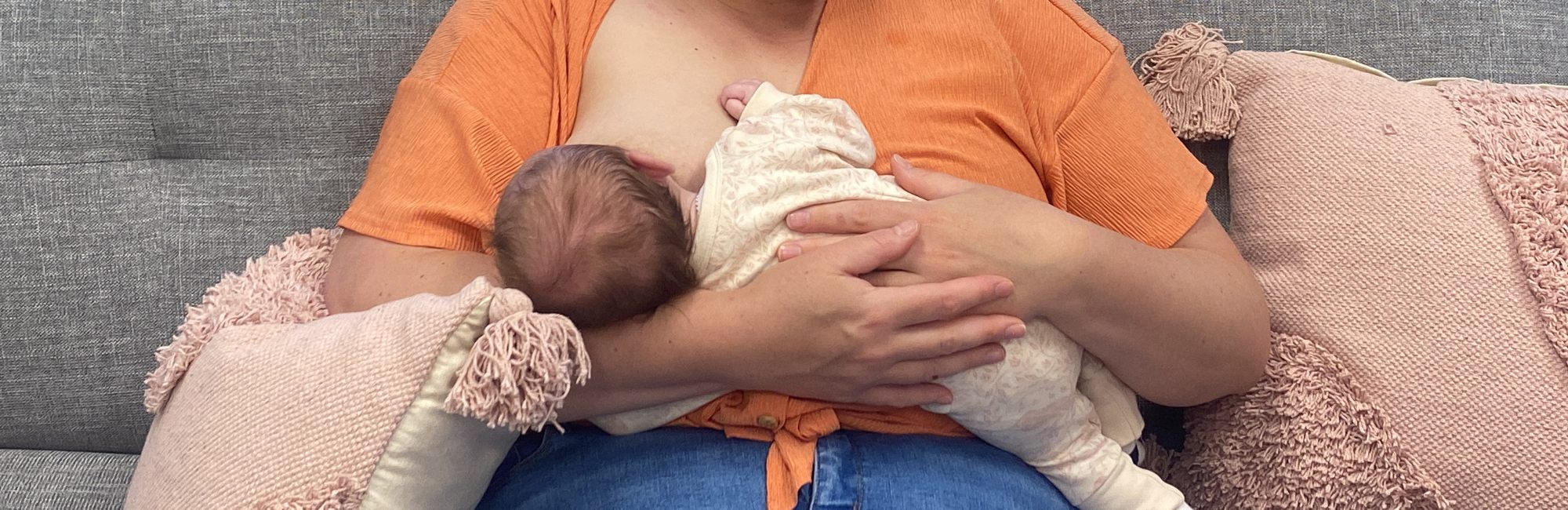
If we are to best support your baby's sensory and motor development, we need to set up healthy contexts for movement that dynamically act upon your baby's body in healthy ways. When you are breastfeeding your baby, your aiming to set up the physical context which best supports successful breastfeeding - and then offer it many times a day. You're aiming to optimise interactions at that incredibly subtle and sensitive interface between a woman's gloriously variable anatomy and her own baby's incredibly various anatomies. You're aiming to optimise strategies which help you fit baby into your body in a way that supports pain-free efficient milk transfer and the generation of enough milk to meet your baby's caloric needs.
This is the joy and the healing power of structural and functional alignment, which I refer to as evolutionary bodywork in Possums Breastfeeding & Lactation. This is the harnessing of your own innate psychobiological powers so that you and your baby slip into ease and enjoyment, over and over, day and night.
If there is damage, the work can be subtle and sensitive, requiring your experimentation, and the support of an appropriately trained health professional.
This is breastfeeding stripped bare of unnecessary medications, surgery, aids, and exercises, and handed back to you! This is breastfeeding stripped back to the powerful belief in your innate capacity to attend to your baby's cues and her body's sensations.
Recommended resources
PBL Advanced
Woman-centred language and weight-inclusive care of breastfeeding and lactating women
Selected references
Colson SD, Meek JH, Hawdon JM. Optimal positions for the release of primitive neonatal reflexes stimulating breastfeeding. Early Hum Dev. 2008;84:441-449.
Douglas PS, Hill PS. A neurobiological model for cry-fuss problems in the first three to four months of life. Med Hypotheses. 2013 A;81:816-822.
Douglas PS, Geddes DB. Practice-based interpretation of ultrasound studies leads the way to less pharmaceutical and surgical intervention for breastfeeding babies and more effective clinical support. Midwifery. 2018;58:145–155.
Douglas PS, Keogh R. Gestalt breastfeeding: helping mothers and infants optimise positional stability and intra-oral breast tissue volume for effective, pain-free milk transfer. Journal of Human Lactation. 2017;33(3):509–518.
Douglas PS. Re-thinking lactation-related nipple pain and damage. Women's Health. 2022;18:17455057221087865.
Levin M, Krafft J, Twohig MP. An overview of research on Acceptance and Commitment Therapy. Psychiatric Clinics of North America. 2024;47(2):410-431.
Schafer R, Watson Genna C. Physiologic breastfeeding: a contemporary approach to breastfeeding initiation. Journal of Midwifery and Women's Health. 2015;60:546-553.