Micromovements: the power lies in the detail
Borrowing the word micromovements from NIA dance practice!
I borrowed the word “micromovement” from NIA dance, back in 2015 when I first began to write down the gestalt approach that my colleague Renee Keogh and I were using in the clinic. NIA is a contemporary dance practice. It is inspired by a range of bodywork modalities and has brought me a great deal of joy and companionship (and maybe even some fitness!) for sixteen years now.
“Dance with little micro-movements,” the teachers often say, usually in a quieter part of the playlist. “Yummy little internal sensations, tiny movements you can hardly see!”
“Precision,” they say, and we create tiny little pelvic undulations or small flowing shoulder rolls. “Juice up those joints! Maybe no-one else can see them but you can feel the deep sensation of micromovements!”
“It takes much more energy to make micromovements,” the teachers like to say, “than it does to make our big movements.”
Teaching micromovements hands power back to the breastfeeding woman
Many breastfeeding support professionals have scoffed at the level of attention to detail embodied in the gestalt approach to micromovements. They cannot believe that such patient, subtle work makes a profound difference to a woman's experience of breastfeeding. I think this is because the subtley of the body, and the subtley of embodied healing, is often lost to us in our society, which loves the quick externally-applied fix, whether medical, pharmaceutical, surgical, or by prescription of bodywork exercises. Except that the quick fix often doesn't work in a complex system, and can even make things worse long-term.
Micromovements are a careful millimeter by millimeter exploration, which is completely in the woman's control and completely dependent on her own experience of her body's sensations. That is, micromovements are a careful exploration in the context of paying attention. This experimentation with micromovements empowers her, gives her back the power to change the situation, whether it's her own pain or her baby's fussy behaviours at the breast. This is transformative for breastfeeding women, who have been taught that the fault lies with the baby's anatomy or function, or the way the baby came on. Then they freeze with the pain, hopelessly, feeling profoundly disempowered, believing they are unable to make a difference.
Instead, we wait after we've applied a micromovement to see what changes occur in the nipple sensation with sucks, and what changes occur with baby's behaviour, before continuing on with another one, millimeter after millimetre.
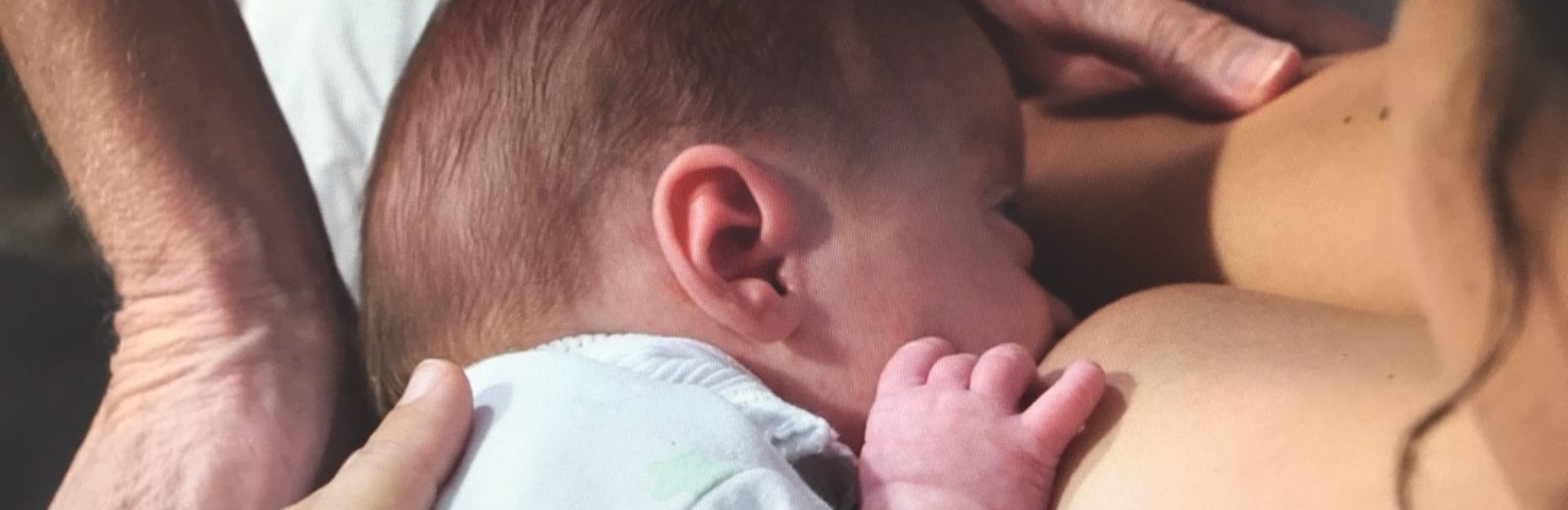
Experimentation with micromovements, in the context of a deck-chair position and rib-cage wrap (if the baby is very young) or a more diagonal position with the longer baby's chest and tummy still flat against the woman's body after the newborn period, is the key to eliminating breast tissue drag.
Micromovements are truly 'micro'
The adjustments, the movements a woman makes once her baby is suckling, are “micro,” just one or two millimetres at a time. This is important because if I ask you to make a movement to adjust the fit and hold, you are more likely to move a few centimetres.
“Just a millimetre this way - is that better or is that worse?”
Often I ask women to give me feedback on the painscale 0-10. I tell them we are always aiming for zero, and to never give up exploring just how close to zero she can get in any feed - until such time as problems are completely resolved. But if any pain or difficulty emerges further down the track, she'll know how to go back to paying careful attention once again with her micromovements!
“There will come a time when you don't have to be so precise,” I explain, “but for now, if we are going to heal up your nipples so that you can feed without pain, we need to be thinking throughout the whole feed: is that better or is that worse? Can I get to zero? Can I get any closer to zero?”
“You think you've got it pain-free, then the baby will move, or you'll move - something changes - and we need to keep going with the micro-movements.”
The three planes of micromovements
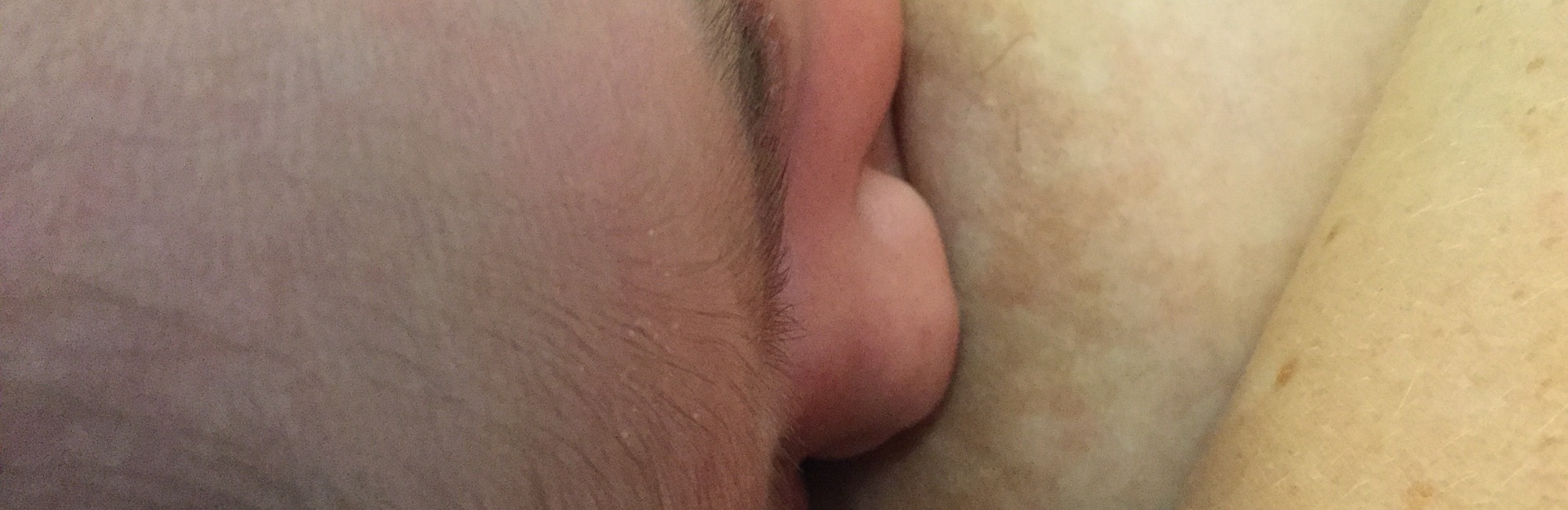
There are three planes in which micromovement experimentation occurs: horizontal (towards baby's toes or towards baby's nose), vertical (lower relative to where the breast and nipple fall, or higher), and then the plane at the face-breast bury, which we call 'angle control', because these tiny movements alter the symmetry with which the baby's face buried into the breast, either lining up the cheeks for symmetrical bury, or causing one cheek to be buried more deeply than the other.
"Your forearm is your lever", I explain to women. "Your forearm gives you control over your baby's head, and how the little face buries into your breast. Your hand on that side is best resting in a relaxed way that feels weird and redundant, without attempting to hold it in against your baby, so that your wrist is protected from strain."
Vertical micro-movements
The most common direction of breast tissue drag is downwards: the baby is held too high relative to where the breast and nipple naturally want to fall. A woman might bring the baby in nice and deep, but also accidentally lifts the whole breast up as she does so, and the breast tissue starts dragging down with gravity in the baby's mouth, in tension with the vacuum force the baby's mouth is applying. This causes pain, sometimes immediately and terribly, sometimes after feeding with subtle breast tissue drag hour by hour, day by day.
The baby's mouth will need to be at the level that her breasts and nipples naturally fall. And then she'll need to be careful not to pull the nipple too high, or too low, but just directly up into baby's mouth. It's important to notice just where a woman's breasts want to fall if she is semi-reclined, at about 45 degrees. If the landing pad is not properly exposed, you will need to take steps to address that as discussed elsewhere.
Women often say to me after we've worked together: "I've been holding her too high."
However, I also see women for whom the breast sits higher relative to her torso and forearm, and the baby comes on dragging breast tissue down low.
Horizontal micro-movements
It is also very common to have the baby dragging the breast tissue too far off to the side. The arms of chairs can worsen this, as the baby kicks off the opposite chair-arm, and it also commonly emerges as a problem as the baby grows and becomes longer. Women still hold the baby across their body as they did when he or she was smaller - and the feeds grow more and more painful.
However, sometimes breast tissue is dragged too far to the midline.
Angle-control with micro-movements
This is how we get that symmetrical face-breast bury of both cheeks equally buried into the breast tissue.
The forearm may need to be a little towards the back of the baby's head, not tight up under the back of the baby's skull and neck, so that the woman is able to control the angle at which her baby comes into her breast.
A case where the micromovements needed to be more maco
I saw a woman with awful nipple pain who said, as we worked with the micromovements, that it hurt so much she couldn't feel any difference.
“Is that better, or is that worse,” I asked. We waited for the bubby to suckle.
“It just hurts…. I really can't feel any difference…..”
So with her permission I experimented. Often there are little cues that I read to give me hints about the direction that might be most useful - the breast tissue visible around baby's face-breast bury might be visibly pulling and moving as the baby suckles, for example, which tends to indicate drag. Or I might notice where the nipple falls when she takes the baby off: if the nipple swings in or swings down or swings out, then it's a sign that the nipple was being dragged away during the feed from its natural position relative to gravity.
But in this case I was left guessing. I wasn't sure what was happening. Together, we simply experimented. I put my hand on that baby's bottom and moved him a couple of centimetres towards me, much more to the side and - ah! My patient immediately experienced relief! There had been so much breast tissue drag towards the midline that only the bigger movement helped. From there, we worked with micromovements and we could get down to one out of 10 on the painscale.
This lady told me later that she believed she was going so far towards the midline because her lactation consultant had told her to place baby's chin on the areolar towards the midline, nipple to nose - very unhelpful advice, not something women need to worry about.
A history of subtle positional adjustment in breastfeeding
On one of my early visits to New York City, where my daughter now lived, both Dr Tina Smillie in Connecticut and Cathy Watson Genna in Queens, kindly allowed me to sit in on their clinics. I saw how both of these women used the concept of “snuggle and slide” with a baby whose chest and tummy were flat up against the mother's body. I borrowed this concept - and began to refine it through the lens of my own clinical experience into the micromovements of the gestalt approach. I started to see that the "snuggle and slide" education was a beginning - but nowhere near enough to help many women eliminate nipple pain.
Years later, when Dr Smillie flew out to speak at the 2017 Possums Conference, she told me how much she liked the term Renee and I were using - “micromovements”. By this stage I'd made micromovements fundamental to the gestalt method of fit and hold, the fourth critical step, and had explained what this word meant in an article in the Journal of Human Lactation.