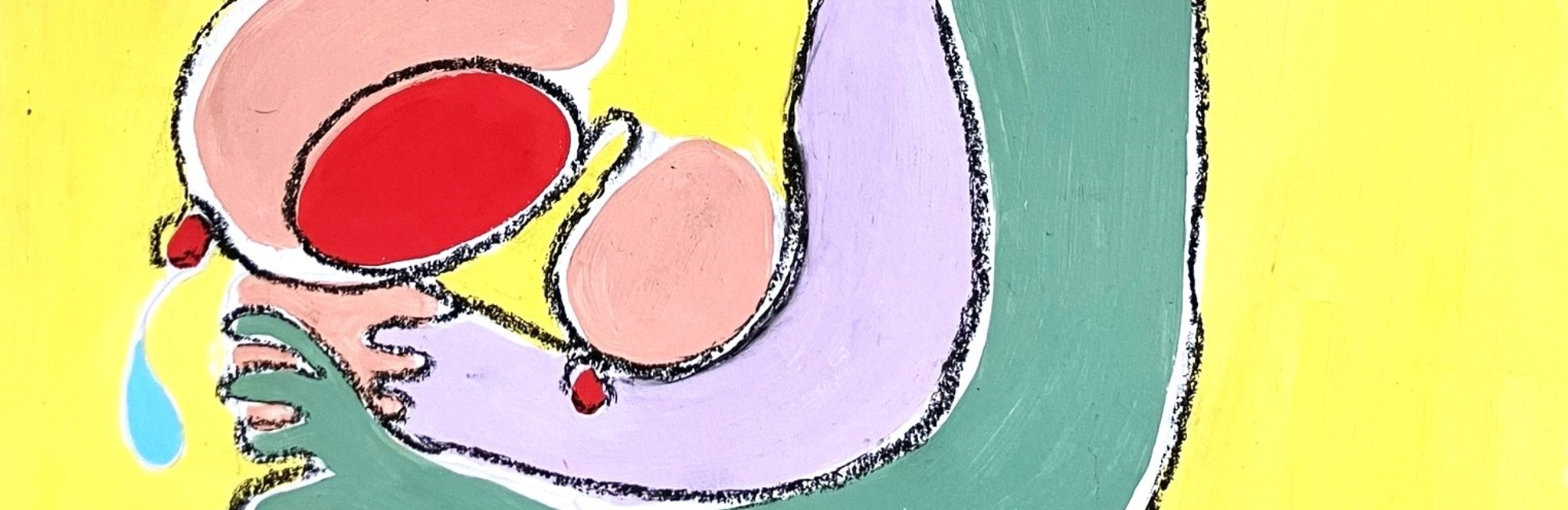
How do you know if you have mastitis and how common is it?
.jpg)
How do you know if you've got mastitis?
It's very important if a lump persists a week after you first noticed it to see your doctor. After one week, it's best to have an ultrasound scan to check that the lump is not an abscess (and also to make sure it isn't a breast cancer, which isn't usual but something we definitely don't want to miss if a lump persists.)
The word 'mastitis' means inflammation of the breast.
However, mastitis is most commonly used to refer to the particular kind of breast inflammation which shows up when you're breastfeeding as a lump which is
-
Hot
-
Red
-
Tender or painful, and
-
Sometimes accompanied by a fever, aching muscles, and even the shakes.
Often women feel quite unwell when they have a mastitis. It certainly needs to be taken very seriously, so that we can heal it up as quickly as possible.
-
You can find out the seven steps to take if you have a mastitis here.
-
You can read about what Jessie did when she had mastitis here.
Breast inflammation occurs on a spectrum of severity
Breast inflammation occurs on a spectrum of severity, and presents in a variety of ways. Blocked ducts and engorgement are other ways in which you might experience breast inflammation when you're making milk. There often aren't clear distinctions between blocked ducts and mastitis, for example, because they are on the spectrum of inflammation. What you were calling a blocked duct yesterday might have turned into a mastitis today. A severe mastitis can turn into an abscess, which is a late kind of breast inflammation.
-
You can find out about blocked ducts here and engorgement here.
-
You can find a story about breast abscess here.
How common is mastitis?
Maybe around around a quarter of breastfeeding women will experience the kind of breast inflammation which is commonly known as mastitis in the first six months of their baby’s life. It’s hard to say exactly how often breast inflammations occur when women are lactating because of the confusing and unclear definitions used in the research.
-
Most localized inflammation is located towards the outer part of the breast.
-
It mostly appears in just one breast, but can occur on either side.
-
Sometimes you might experience breast inflammation multiple times with the same child, and women who experience mastitis with previous children are two to four times more likely to experience mastitis in subsequent lactations.
Even though genetic factors do affect susceptibility to inflammation, I can’t help but wonder women who've had a mastitis with one baby are more likely to have it with other children because the same things that caused the breast inflammation with the first child are repeated as the woman breastfeeds her other children.
This is why, if you’ve already had a breast inflammation, you might like to read here on how to prevent it as best we can. (There are no guarantees, of course. No matter what some women do, they may unfortunately be prone to breast inflammation during lactation. We can only give prevention our best shot!)
You can read about the six steps for preventing breast inflammation here.
Recommended resources
PBL Foundations
Six steps for when your milk-making breast develops a painful lump
Why your letdowns help prevent or heal breast inflammation
When might you need antibiotics for mastitis?
How Jessie recovered from mastitis
Why lymphatic drainage and therapeutic massage don't help with breast inflammation
Ellie, who is breastfeeding four-week-old Harry, develops breast inflammation. Part 1
PBL Intermediate
Five ways to help prevent breast inflammation when you're lactating
A closer look at breast inflammation, fever, and use of anti-inflammatory medications
Probiotics (including Qiara) don't help prevent or treat breast inflammation
Selected references
Grzeskowiak LE, Kunnel A, Crawford SB, Cullinane M, Amir LH. Trends in clinical management of lactational mastitis among women attending Australian general practice: a national longitudinal study using MedicineInsight, 2011-2022. BMJ Open. 2024;14(5):e080128. doi: 080110.081136/bmjopen-082023-080128.
Amir LH, Crawford SB, Cullinane M, Grzeskowiak LE. General practitioners' management of mastitis in breastfeeding women: a mixed method study in Australia. BMC Primary Care. 2024;25(161):https://doi.org/10.1186/s12875-12024-02414-12874.