When might you need antibiotics for mastitis?
The decision to prescribe antibiotics needs to be made in consultation with your GP. This article does not substitute for assessment and treatment by your doctor when you have a breast inflammation.
Our health systems tend to overprescribe antibiotics
Overuse of antibiotics for mastitis or breast inflammation is a serious problem. You can find out about the problem of antimicrobial resistances here.
Currently, many clinical guidelines recommend commencing antibiotics 12-24 hours after you first develop a mastitis. This swift use of antibiotics has no evidence to support it, nor to show that it improves outcomes, and has become normalised for reasons of politics rather than the research! There is an important European study which showed that much less aggressive use of antibiotics had the same outcomes. There's also good reason to think this is true based on biological plausibility - in particular, based on knowledge of how your specialised mammary immune system acts to protect you.
Sometimes, clinical guidelines which don't have much evidence to guide them are built from the old medical belief that quicker, more aggressive treatment is always better. Sometimes it is, actually. But the belief that early use of antibiotics for mastitis prevents abscess formation is not true. The rate of abscess formation is the same across countries, regardless of that country's rate of antibiotic use. Some countries use antibiotics for mastitis twice as often as other countries.
If your signs and symptoms persist for a number of days and are getting worse, speak with your doctor about antibiotics
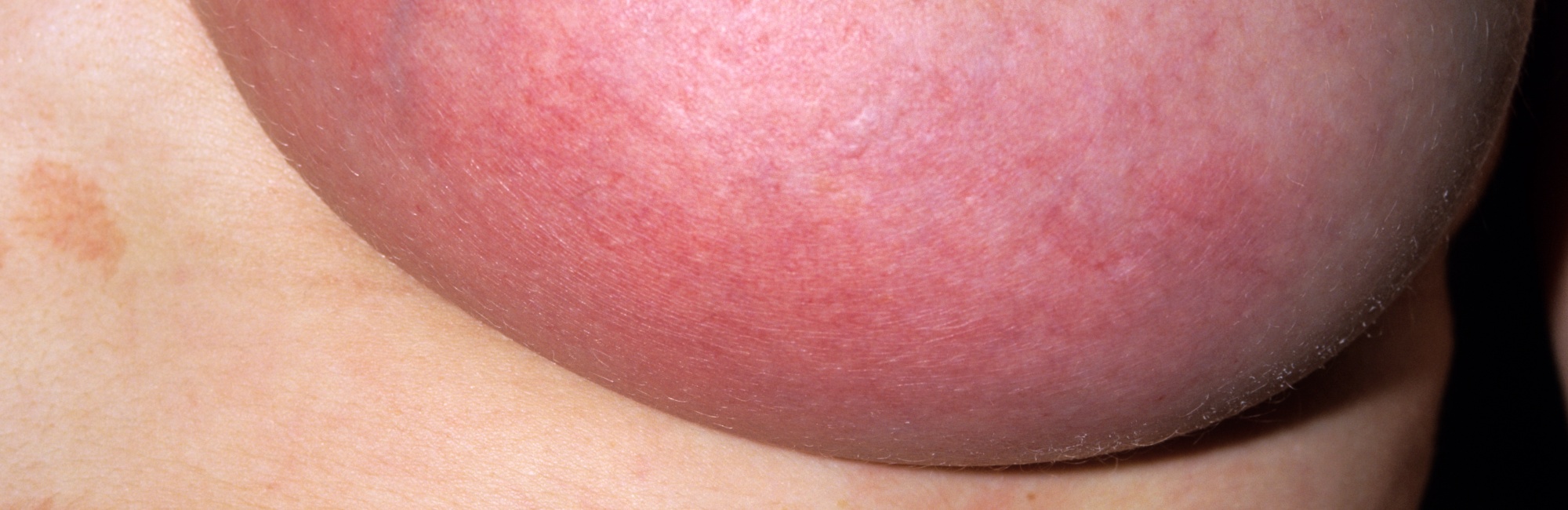
If you have ongoing pain and fevers, and a worsening lump or spreading changes in the skin or tissue of your breast, your mastitis is at the most severe end of the spectrum of breast inflammation and is likely to require antibiotics. Please consult with your GP.
A majority of women will actually recover from mastitis without antibiotic treatment. This may mean tolerating some discomfort for some days, which can be very tough when you are caring for a baby - often alongside other responsibilities, too, such as caring for other children.
Although breast inflammation isn't viral, it can help to think of breast inflammation in the following way. Like a viral upper respiratory tract infection, your own immune system can usually deal with mastitis, if you give it time. This is because your breast has a powerful inbuilt immune system all of its own.
Breast inflammation normally feels very miserable for a number of days, accompanied by fevers, muscle aches and pains, sometimes even shaking, and by feeling really quite unwell. It's normal just to want something that will make it all go away, especially because you have responsibilities (like your baby) to attend to. You definitely need support and help. However, as the days pass, the symptoms gradually improve and the fevers lessen. You might still not feel great after five days, but you're confident you're mending. This is a normal course of mastitis which does not require antibiotics.
One of the big problems which confuses the research into mastitis is that many of the breastfeeding women studied have been advised to put in place strategies which are likely to make mastitis worse, such as massage, or not preferencing the affected breast when you feed your baby.
Although fevers with breast inflammation can be expected to persist for a number of days, by 72 hours the fevers should be lessening in intensity and frequency, and the area of inflammation should be showing signs of improvement - not getting worse. If it's getting worse, please see your doctor.
By the fifth day, persisting fevers and no signs of improvement may require antibiotic use. Your doctor will follow you up closely.
Any new lump which has persisted for a week requires assessment by your doctor, who may order ultrasound imaging to exclude breast cancer.
-
You can find the steps to take if you have a mastitis here.
-
You can find out steps which might help prevent mastitis here.
Recommended resources
PBL Foundations
Six steps for when your milk-making breast develops a painful lump
Five ways to help prevent breast inflammation when you're lactating
Your breasts are powered by an ancient genetic code which knows how to regulate inflammation
PBL Intermediate
A closer look at breast inflammation, fever, and use of anti-inflammatory medications
The bad bugs theory has resulted in catastrophic antimicrobial resistances
Your breast and milk evolved from an ancestral immune system
PBL Advanced
Mastitis management: secondary outcomes, indication for antibiotics, prevention
Selected references
Amir LH, Coca KP, Da Silva Alves MdR. Management of mastitis in the hospital setting: an international audit study. Journal of Human Lactation. 2025;4(3):401-411.
Amir LH, Crawford SB, Cullinane M, Grzeskowiak LE. General practitioners' management of mastitis in breastfeeding women: a mixed method study in Australia. BMC Primary Care. 2024;25(161):https://doi.org/10.1186/s12875-12024-02414-12874.
Hoffman T, Del Mar C. Clinicians' expectations of the benefits and harms of treatments, screening, and tests - a systematic review. JAMA Internal Medicine. 2017;177(3):407-419.
Hoffman T, Del Mar C. Patients' expectations of the benefits and harms of treatments, screening and tests - a systematic review. JAMA Internal Medicine. 2015;175(2):274-286.
Jahanfar S, Ng CJ, Teng CL. Antibiotics for mastitis in breastfeeding women. Sao Paulo Med J. 2016;134(3):273. doi:10.1590/1516-3180.20161343T1
Kvist LJ, Halll-Lord ML, Larsson BW. A descriptive study of Swedish women with symptoms of breast inflammation during lactation and their perceptions of the quality of care given at a breastfeeding clinic. International Breastfeeding Journal. 2007;2:2.