What is dysbiosis of your milk microbiome?
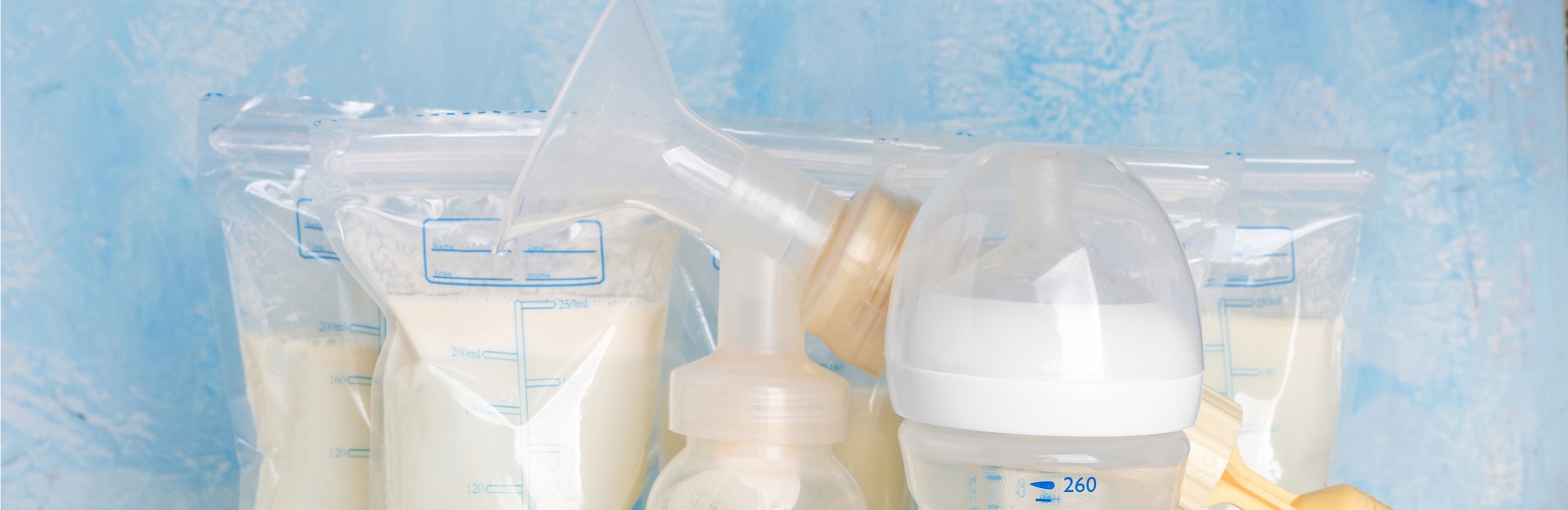
Is there such a thing as dysbiosis of your milk microbiome?
There are two ways to work out what’s in your milk microbiome.
-
One is by bacterial culture on specific growth media which identifies species and numbers.
-
The other is polymerase chain reaction (PCR) identification of DNA. Importantly, PCR analysis can’t distinguish between viable and non-viable bacteria, or between bacteria and bacterial fragments.
Both methods require expressed breast milk. That is, neither method can look at the human milk microbiome and its composition and behaviours inside a woman's breast. Researchers hope that microbiome findings from expressed breast milk are reasonably close to the microbiome inside your milk glands and ducts, but there's no certainty about that!
The findings from both culture and PCR show that the micro-organism populations are complex and highly changeable. Human microbiome scientists are starting to realise that it is impossible to list out what ‘eubiosis’ – a normal healthy microbiome – in any part of the human body might look like, for this reason. And if we can’t clearly define ‘eubiosis’, then we also can’t easily say what comprises a ‘dysbiosis’.
Microbiomes are constantly adapting and stabilising around endless disruptions, using thousands or millions of feedback loops amongst the micro-organisms (including the fungi and viruses) and their metabolites and your immune system to maintain equilibrium and good health.
This is why scientists are less focussed now on trying to categorise eubiosis by listing the content of normal healthy microbiomes, and are increasingly focussing on the function of the microorganisms within a microbiome and the function of the microbiome itself. There might be very different microorganisms within different people’s microbiome, but in good health, their microbiomes overall function in similar ways, which is what matters.
Dysbiosis can be said to occur when an overgrowth of a microorganism overwhelms your immune system response
Applying the lens of complexity science, pathology emerges when a myriad feedback loops fail to stabilise complex adaptive systems. Depending on the virulence of the organism, feedback loops may be overwhelmed, and in some cases antibiotic or antifungal treatment will be required. This is the case in a breast inflammation or mastitis which has gotten out of hand - when, commonly, the previously well-regulated Staphylococcus aureus found within your milk microbiome has become destructively dominant.
You could say, then, that the only dysbiosis that is relevant to you occurs when you have a true infective process: infection is a dysbiosis that makes you feel unwell and which your body is not getting on top of.
But in most cases the microbiome will activate in collaboration with your immune system, and successfully suppress the destabilised feedback loops so that you are protected. This might mean feeling sick for a number of days, in the same way that a viral infection makes you feel sick for a number of days, but given time, rest, and care, your body downregulates the inflammation and imbalances, and soon enough you recover.
Does pumping affect your milk microbiome?
Yes, it does.
But human milk microbiomes are complex systems, highly variable between lactating women and within the one lactating woman over time. We don’t know what the implications of the bacterial changes that have been found in expressed breast milk of women who are pumping compared to those who don’t might be.
You will only be pumping in situations where direct breastfeeding doesn’t work for you and your baby. I think it is amazing that you are doing it. Pumping is very hard work. So you are doing a wonderful thing, regardless of the microbiome changes that researchers have found, because your own milk remains highly beneficial for your baby. Although new research shows that sterilising your pumping equipment is associated with less milk microbiome changes, you might decide that steriising more than once a day is too burdensome, for minimal or uncertain benefit.
Selected references
Moossavi S, Sephehri S, Robertson B. Composition and variation of the human milk microbiota are influenced by maternal and early-life factors. Cell Host & Microbe. 2019;25:324-335.
Reyes SM, Allen DL, Williams JE, McGuire MA, McGuire MK, Rasmussen KM, Hay AG. Pumping and hygiene practices are associated with bacterial load and microbial composition in human milk expressed at home. J Transl Med. 2025 Aug 21;23(1):947. doi: 10.1186/s12967-025-06967-5. PMID: 40841980; PMCID: PMC12372358.