
Human microbiomes, your baby's gut microbiome, and biofilms
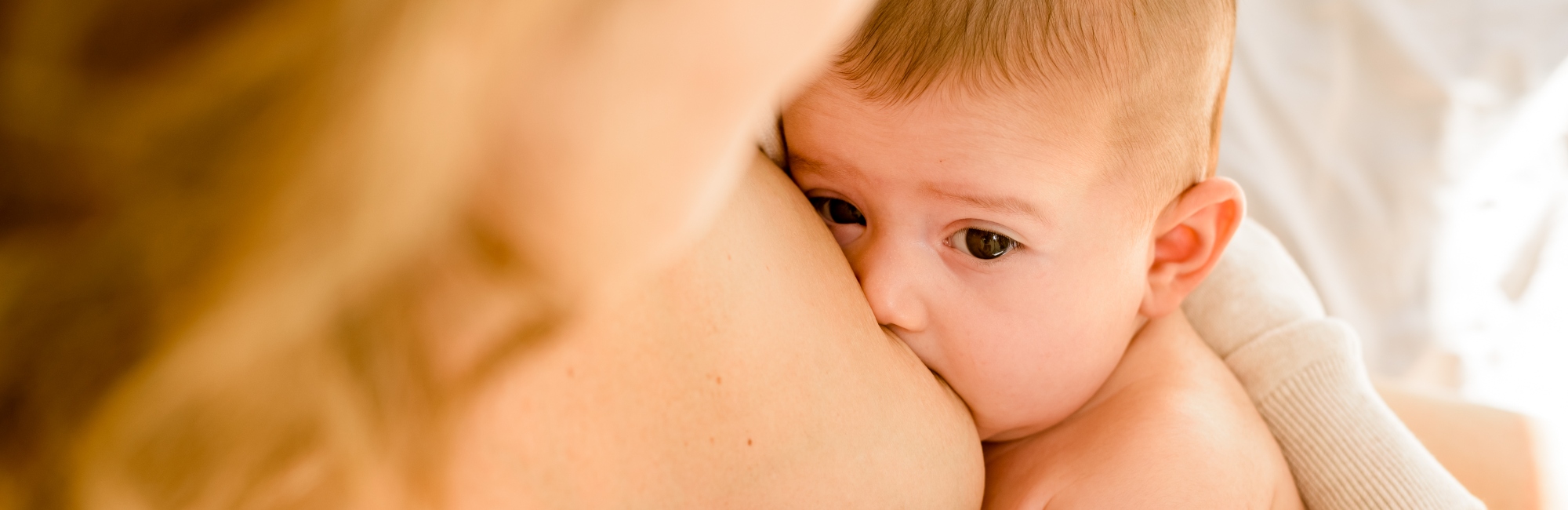
Humans and all life forms on Earth have evolved from ... bacteria
Can you believe that the human body is home for approximately 40 trillion bacteria, with approximately 99% of them living in the human colon? It is hard to believe - but in fact, life on Earth began 3.5 billion years ago with the astonishing appearance of single-celled microorganisms - arising out of chemical reactions and minerals - and these were the only form of life for a whole three billion years!
All life-forms evolved out of these single-celled bacteria, including humans. Single cell organisms joined together to become multi-celled organisms, with different cells developing different qualities and functions, and some billions of years later - enter the humans, you and me, whose bodies carry more bacterial DNA than human DNA!
Human microbiomes are research frontiers
Half of the cells that make up your precious Homo sapiens body are micro-organisms - bacteria or fungi or protozoa or viruses. Whether it's the microbiome of your skin or milk or mouth or gut or genitals, each of your microbiomes is as unique to you as your fingerprint. Although we humans have 99.9% of our genes in common, our microbiomes might be up to 80-90% different between people.
These microbiomes act as extensions of your own immune system, keeping you safe and healthy, not just from unwanted external invaders but perhaps even more importantly, from rogue cells and the normal debris generated by daily life inside your tissues.
Astonishingly, your microbiomes' collections of genes impact much more upon your body's functions than your own human genes. Your microbiomes shape your body's characteristics and functions, including your body's nutritional and metabolic traits, in profound and complicated ways.
Let's look outwards for a moment at the cosmos inhabited by our small blue planet. It can be hard for those of us who aren't astrophysicists to make sense of the mind-blowing new data gathered from space telescopes like the Hubble and now the James Webb. In the same way, looking inwards at the microcosms found inside our human body, it can be hard for those of us who aren't geneticists or microbiologists to make sense of rapidly growing knowledge about how our genes are expressed, what factors in the environment affect genetic expression, what makes up our microbiomes, and how our genes and our microbiomes interact.
It's all so staggering complex! That could be why there is so much misunderstanding about how your microbiomes affect the health of you and your baby.
Your baby's gut microbiome
Bacteria often live inside your baby's gut while still in the womb. If your baby passed stool into the amniotic fluid before birth, that stool may have contained bacteria. During birth, your baby swallows bacteria into the gut and the species vary depending on whether the birth is vaginal or by caesarean section. When your baby is born vaginally, her gut is immediately exposed to your own bacteria from the birth canal or even from your own faecal microbiome. This sounds icky, but from an evolutionary perspective this is exactly how it's all meant to work.
Antibiotics temporarily obliterate parts of your baby's gut microbiome, whether the antibiotics arrive through your placenta or your milk. But once the antibiotics are finished, the microbiomes quickly go back to normal. Where you live and what you eat has some small effect too on your baby's gut microbiome, not necessarily for good or for bad, but just shaping it. If your own diet is consistently poor, though, for instance, filled with too much ultraprocessed food, ongoing changes will be detectable in the make-up of your gut microbiome.
Your breast milk has by far the most powerful effect of all the things that shape your baby's gut microbiome, optimising the gut bacteria and your baby's immune and metabolic development. Your colostrum, for instance, is an early seeding of live microbes, including bacteria and fungi, into your baby's gut.
Your baby's gut microbiome changes constantly in the first days, weeks and months of life, which is an essential part of the maturation of your baby's interrelated gastrointestinal and immune systems.
What are biofilms and where are they found in the human body?
In milk, it's estimated that perhaps half of the microbiome is planktonic, free-floating in the milky environment. The other half travel on your milk's immune cells.
Sometimes, microorganisms adhere together in biofilms, which are a normal part of many healthy human microbiomes. A biofilm may be a community of just a few dozen microorganisms, or hundreds of thousands or more. A biofilm is a strong, resilient and dynamic ecosystem of micro-organisms created by dense interactions and adhesions between microbiome and mycobiome cells. The microbes in a biofilm communicate together, create special nutritional opportunities, protect each other from environmental stressors - and might also protect each other from the restraining effects of your own immune system.
Pathogenic biofilms often form in chronic wounds, such as vascular or diabetic ulcers or pressure sores or burns. Biofilms also form on medical prostheses or devices inserted into the human body. These biofilms are difficult to treat, due to poor penetration by antimicrobial and antifungal medications, and often have high levels of antimicrobial resistance.
But there is no evidence to suggest that pathogenic biofilm formation is related to blocked ducts or mastitis. There is no evidence to suggest that milk bacteria predominantly live in biofilms lining your milk ducts the way you might have heard. The theory about biofilms lining the lactiferous ducts was developed before the explosion of knowledge concerning the human milk microbiome, and can be easily pulled apart.
Recommended resources
Misunderstandings about your and your baby’s microbiomes result in unnecessary treatments
Myths about your and your baby’s microbiomes
Selected references
Boix-Amorós A, Collado MC, Mira A. Relationship between Milk Microbiota, Bacterial Load, Macronutrients, and Human Cells during Lactation. Front Microbiol. 2016 Apr 20;7:492. doi: 10.3389/fmicb.2016.00492. PMID: 27148183; PMCID: PMC4837678.
Douglas PS. Does the Academy of Breastfeeding Medicine Clinical Protocol #36 'The Mastitis Spectrum' promote overtreatment and risk worsened outcomes for breastfeeding families? Commentary. International Breastfeeding Journal. 2023;18:Article no. 51 https://doi.org/10.1186/s13006-13023-00588-13008.
Douglas P. Re-thinking benign inflammation of the lactating breast: a mechanobiological model. Women's Health. 2022;18:17455065221075907.
Hutchings M, Truman AW, Wilkinson B. Antibiotics: past, present and future. Current Opinion in Microbiology. 2019;51:72-80.
Lesho EP, Laguio-Vila M. The slow-motion catastrophe of antimicrobial resistance and practical interventions for all prescribers. Mayo Clinic Proceedings. 2019;94(6):1040-1047
MacDonald A, Brodell JD Jr, Daiss JL, Schwarz EM, Oh I. Evidence of differential microbiomes in healing versus non-healing diabetic foot ulcers prior to and following foot salvage therapy. J Orthop Res. 2019 Jul;37(7):1596-1603. doi: 10.1002/jor.24279. Epub 2019 Mar 28. PMID: 30908702; PMCID: PMC6659747.
Rees T, Bosch T, Douglas AE. How the microbiome challenges our concept of self. Plos Biology. 2018(February 9 ):https://doi.org/10.137/journal.pbio.2005358.
Thomas AM, Segate N. Multiple levels of the unknown in microbiome research. BMC Biology. 2019;17(48):https://doi.org/10.1186/s12915-12019-10667-z.
Selected references
Moossavi S, Azad MB. Origins of human milk microbiota: new evidence and arising questions. Gut Microbes. 2020;12(1):e1667722.
Fernandez L, Pannaraj PS, Rautava S, Rodriguez JM. The microbiota of the human mammary ecosystem. Frontiers in cellular and infection microbiology. 2020
Rodriguez JM, Fernandez L, Verhasselt V. The gut-breast axis: programming health for life. Nutrients. 2021;13(606)
Fernandez L, Pannaraj PS, Rautava S, Rodriguez JM. The microbiota of the human mammary ecosystem. Frontiers in cellular and infection microbiology. 2020
Groër M., Morgan K., Louis‐Jacques A., & Miller E.. A scoping review of research on the human milk microbiome. Journal of Human Lactation 2020;36(4):628-643. https://doi.org/10.1177/0890334420942768
- Lesho EP, Laguio-Vila M. The slow-motion catastrophe of antimicrobial resistance and practical interventions for all prescribers. Mayo Clinic Proceedings. 2019;94(6):1040-1047.
- Tipton L, Muller CL, Kurtz ZD, Huang L, Kleerup E, Morris A, et al. Fungi stabilize connectivity in the lung and skin microbial ecosystems. Microbiome. 2018;6(12):doi: 10.1186/s40168-40017-41393-40160.
- Limon JJ, Skalski JH, Underhill DM. Commensal fungi in health and disease. Cell host microbe. 2017;22(2):156-165.
- Sakwinska O, Bosco N. Host microbe interactions in the lactating mammary gland. Frontiers in Microbiology. 2019;10:doi:10.3389/fmicb.2019.01863.
- Kaski K, Kvist LJ. Deep breast pain during lactaton: a case-control study in Sweden investigating the role of Candida albicans. International Breastfeeding Journal. 2018;13:21.
- Fernandez L, Pannaraj PS, Rautava S, Rodriguez JM. The microbiota of the human mammary ecosystem. Frontiers in cellular and infection microbiology. 2020;10:Article 5866667.
- Rodriguez JM, Fernandez L, Verhasselt V. The gut-breast axis: programming health for life. Nutrients. 2021;13(606):https://doi.org/10.3390/nu13020606.
- Boix-Amoros A, Collado MC, Land VtB, Calvert A, Le Doare K, Garssen J. Reviewing the evidence on breast milk composition and immunological outcomes. Nutrition Reviews. 2019;77(8):541-556.
- Ruiz L, Garcia-Carral C, Rodriguez JM. Unfolding the human milk microbiome landscape in the omics era. Frontiers in Microbiology. 2019;10(1378):doi:10.3389/fmicb.2019.01378.
- Oikonomou G, Addis MF, Chassard C. Milk microbiota: what are we exactly talking about? Frontiers in Microbiology. 2020;11(60):doi:10.3389/fmicb.2020.00060.
- Dinleyici M, Perez-Brocal V, Arslanoglu S, Aydemir O, Ozumut SS, Tekin N. Human milk mycobiota composition: relationship with gestational age, delivery mode, and birth weight. Beneficial Microbes. 2020;11(2):doi:10.3910/BM2019.0158.
- Moossavi S, Fehr K, Derakhshani H, Sbihi H, Robertson B, Bode L. Human milk fungi: environmental determinants and inter-kingdom associations with milk bacteria in the CHILD Cohort Study. BMC Microbiology. 2020;20:146.
- Dominguez-Bello M, Godoy-Vitorino F, Knight R, Blaser MJ. Role of the microbiome in human development. Gut. 2019;68:1108-1114.
- Dos Santos ALS, Gladino ACM, De Mello TP. What are the advantages of living in a community? A microbial biofilm perspective! Mem Inst Oswaldo Cruz 2018;113(9):e180212.
- Hooks KB, O'Malley MA. Dysbiosis and its discontents. mBio. 2017;8(5):e01492-01417.
- Brussow H. Problems with the concept of gut microbiota dysbiosis. Microbial Biotechnology. 2020;13(2):423-434.
- Mediano P, Fernandez L, Jimenez E. Microbial diversity in milk of women with mastitis: potential role of coagulase-negative staphylococci, viridans group streptococci, and corynebacteria. Journal of Human Lactation. Arroyo, Rebeca;33(2):309-318.
- Douglas PS. Re-thinking benign inflammation of the lactating breast: classification, prevention, and management. Women's Health. 2022;18:doi: 10.1177/17455057221091349.
- Ingman WV, Glynn DJ, Hutchinson MR. Inflammatory mediators in mastitis and lactation insufficiency. Journal of Mammary Gland Biology and Neoplasia. 2014;19:161-167.
- Kvist L. Diagnostic methods for mastitis in cows are not appropriate for use in humans: commentary. International Breastfeeding Journal. 2016;11(2):doi 10.1186/s13006-13016-10061-13001.
- Rees T, Bosch T, Douglas AE. How the microbiome challenges our concept of self. Plos Biology. 2018(February 9 ):https://doi.org/10.137/journal.pbio.2005358.
- Boix-Amoros A, Puente-Sanchez F, Du Toit E, Linderborg K. Mycobiome profiles in breast milk from healthy women depend on mode of delivery, geographic location, and interaction with bacteria. Applied and Environmental Microbiology. 2019;85(9):e02994-02918.
- Heisel T, Nyaribo L, Sadowsky MJ, Gale CA. Breastmilk and NICU surfaces are potential sources of fungi for infant mycobiomes. Fungal and Genetic Biology. 2019;128:29-35.
- Lai GC, Tan TG, Pavelka N. The mammalian mycobiome: a complex system in a dynamic relationship with the host. WIRES Systems Biology and Medicine. 2018;11:e1438.
- Douglas PS. Overdiagnosis and overtreatment of nipple and breast candidiasis: a review of the relationship between the diagnosis of mammary candidiasis and Candida albicans in breastfeeding women. Women's Health. 2021;17:DOI: 10.1177/17455065211031480.
- Urbaniak C, Angelini M, Gloor GB, Reid G. Human milk microbiota profiles in relation to birthing method, gestation and infant gender. Microbiome. 2016;4(1):doi:10.1186/s40168-40015-40145-y.
- Fetherstone C. Mastitis in lactating women: physiology or pathology? Breastfeeding Review. 2001;9:5-12.
- Biagi E, Quercia S, Aceti A. The bacterial ecosystem of mother's milk and infant's mouth and gut. Frontiers in Microbiology. 2017:doi: 10.3389/fmicb.2017.01214.
- Ramsay DT, Kent JC, Owens RA, Hartmann PE. Ultrasound Imaging of Milk Ejection in the Breast of Lactating Women. Pediatrics. 2004;113(2):361-367.
- Sweeney EL, Al-Shehri SS, Cowley DM, Liley HG, Bansal N, Charles BG, et al. The effect of breastmilk and saliva combinations on the in vitro growth of oral pathogenic and commensal microorganisms. Scientific Reports. 2018;8:15112.
