How does your milk microbiome get started?
It's likely that your milk microbiome is started (or seeded) in various ways
Various microbiomes from both your own and your baby's body interact to support the flourishing of your milk microbiome. There are different theories about how your milk microbiome starts, but I suspect that all of these theories are relevant.
From your breast stroma
Living bacteria are found in breast tissue of women who have never breastfed, so breast tissue itself is thought to be one source of bacteria for your milk.
-
The junctions between your milk-producing cells are permeable during pregnancy and at birth, and only close over the first few days as the colostrum changes to transitional milk. It's thought that this is how bacteria from your breast tissue make their way into your colostrum and transitional milk.
-
If these junctions are under strain or if the milk gland ruptures from very high volumes of milk in the lumen, bacteria might also move the other way, back into your breast stroma from your milk.
From your gut
From late in your pregnancy and throughout the time you are lactating, white blood cells carry bacteria, and also fragments of bacteria, from your gut to your breasts. There, the white blood cells pass out of the blood stream and travel into the milk glands, to release the bacteria into your milk.
This is thought to be the main way your baby's gut is seeded with protective bacteria, as an extension of your own immune system.
From your mouth
There is some similarity between your mouth and your milk microbiota, too, which suggests that your immune system transfers some bacteria from your mouth to your milk, most likely in a similar way.
From your baby's mouth
Finally, your milk microbiome is exposed to the external environment through the openings of your milk ducts on the nipple. Certain kinds of bacteria all inhabit healthy nipple-areolar-complex skin, your baby’s mouth, and also human milk. However, these same organisms have also been isolated in colostrum during pregnancy, before a woman’s breasts have any contact with a newborn.
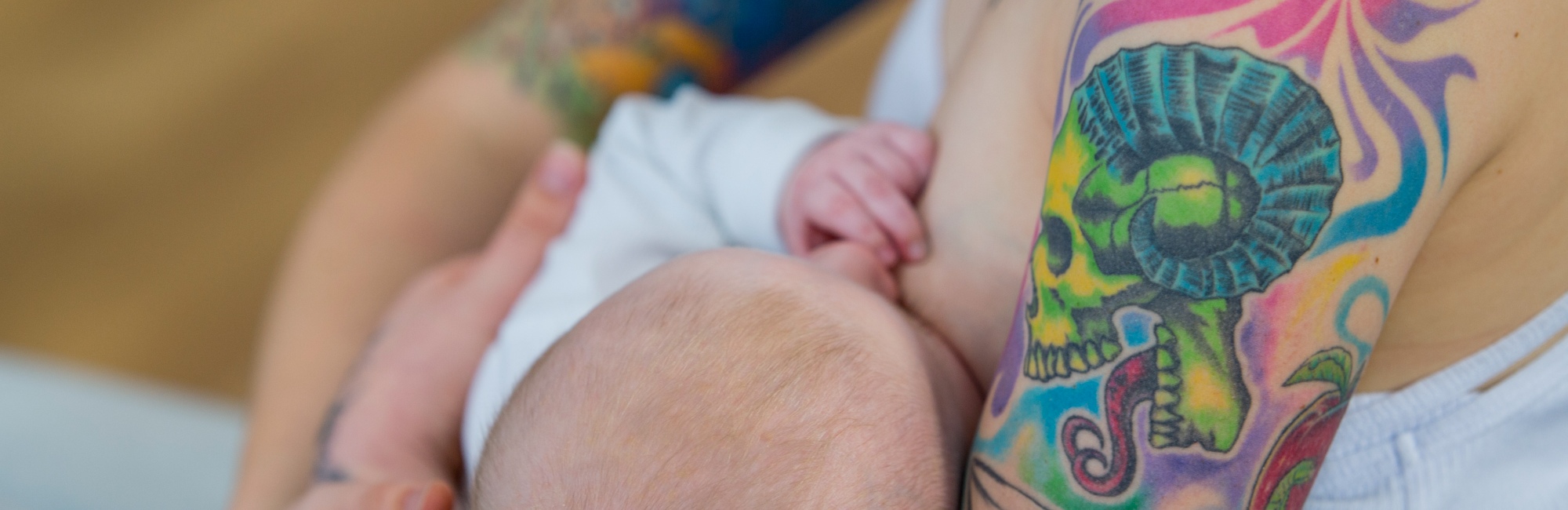
What seems clear is that when you are direct breastfeeding, your milk microbiome has increased numbers of these bacteria, suggesting an interaction between your baby’s mouth microbiome and your milk.