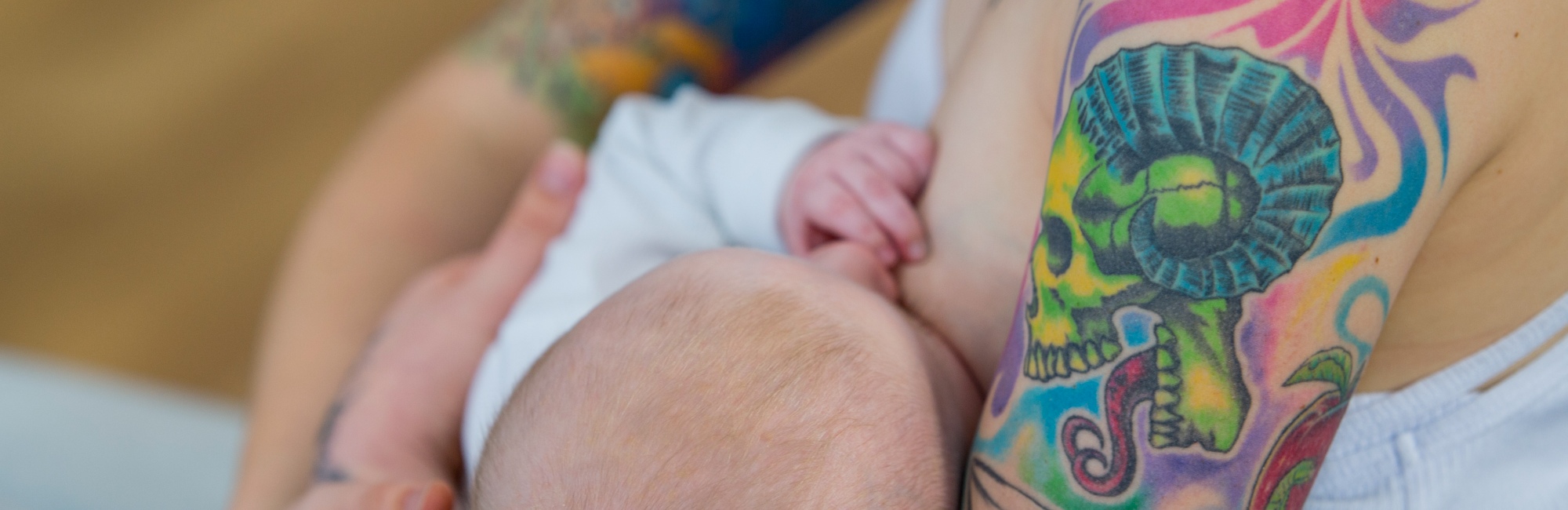
What's in your milk microbiome?

Unveiling the microbiome in your milk
By the time I was born, in 1960, scientists knew that human milk was a living tissue, full of powerfully protective goodness. But still at that time, human milk was widely believed to be sterile, even 'pure'. Any bacteria found in it were thought to be contaminants or backwash from the nipple.
As early as the 1980s, a team of Argentinian researchers proposed that there was a normal bacterial population in human milk. But their ground-breaking research was largely ignored in the West. When I graduated from Medical School in 1985, everyone still thought that a woman's milk was sterile. Any bacteria we cultured from milk was considered an infection, requiring antibiotics, or a contaminant washed back from the baby's mouth and mother's nipple and areolar skin, to be ignored. Yet in the last couple of decades it's become widely known that human milk definitely isn't sterile!
The discovery of a teaming microbiome in a woman's milk should not surprise us. Microorganisms were the first living things on our Earth. Bacteria are foundational to our planet's biosphere, which could not have supported the development of more complex life forms without the changes the bacteria created. Plants and animals evolved from microbial ancestors. This means that humans, too, evolved from microbial ancestors. Microbes continue to live in us, and on us, and our essential for life. Human bodies are made up of more bacterial cells than human cells. Bacteria, with a few important exceptions, take care of us and protect us.
As I began to publish in the research literature about mothers and babies from the mid-2000s, and my children moved into adulthood, it was becoming clear that there were higher bacterial concentrations in the human milk microbiome than in any other healthy fluid secreted by our bodies - even though our milk still has a far lower bacterial load than the gut or skin.
Your milk is alive with microorganisms
Your skin, your baby's mouth, and your milk microbiomes share some features, but remain different microbial ecosystems, interacting together. Your breast milk micro-organisms colonise your baby's gut and help set course for growing your baby's immune system and metabolism in the best possible way.
-
Like any other complex system, your milk microbiome is affected by many factors from both inside and outside your body. These include where you live, how long you've been breastfeeding for, whether your baby is born premature or term, your health, and antibiotics or other medicines that you take. Some studies have found differences in the milk microbiome depending on the infant's mode of delivery, others haven't. Genetic predisposition, ethnicity, circadian rhythm, age, body mass index, and your nutrient intake, including of fatty acids, carbohydrates or proteins, also alter your milk microbiome.
-
And your microbiome differs between colostrum, transitional milk, and mature milk.
-
There is extraordinary variation in milk microbiomes between women - but these variations don't cause you or your baby problems, in the way you might hear. Healthy microbiomes vary in composition between individuals in response to multiple environmental factors, and have constantly changing composition because this promotes resilience, making sure that no particular organism becomes dominant.
-
Your milk microbiome interacts with other complex systems in human milk, for example, your oligosaccharides, metabolome, exosomes, and leukocytes, to function as a powerful part of your mammary gland immune system. Below, we'll explore how your milk microbiome is made up of organised networks of bacteria, viruses, fungi, archaea, and protozoa.
Bacteria
Human milk has a bacterial load of abaout 10^6 cells/ml (which is highly variable). About 200 different species of bacteria have been identified in healthy human milk, including a high normal load of bacteria which were previously labelled as pathogenic. It’s generally agreed that the core bacterial genera of the milk microbiome, universal across lactating women, are Staphylococcus, Streptococcus and Propionibacterium. Much smaller and more variable populations of Lactobacillus and Bifidobacterium may occur, but not in all breastfeeding women.
Fungi
The fungal component of a microbiome is known as the mycobiome. Bacterial cells vastly outnumber fungi in human microbiomes, composing more than 99% of a microbiome, but fungal cells are typically 100-fold larger than bacterial cells, and are part of the normal ecology of human bodies.
The human milk mycobiome interacts with and stabilises the microbial domain in protective and collaborative networks. These networks strengthen host health and immunity and resist overgrowth of any particular bacterial species (previously referred to as pathogen colonisation).
Candida albicans is the most common fungal organism found in the human body. Candida spp (including C. albicans) occur commonly in human milk, having a beneficial, probiotic effect, interacting with and containing bacteria.
Viruses
The viral component of a microbiome is known as the virome. In human milk, the virome is dominated by bacteriophages, which comprise 95% of human milk viruses. Bacteriophages kill certain bacteria, controlling their numbers and ensuring they don't overgrow in the milk.