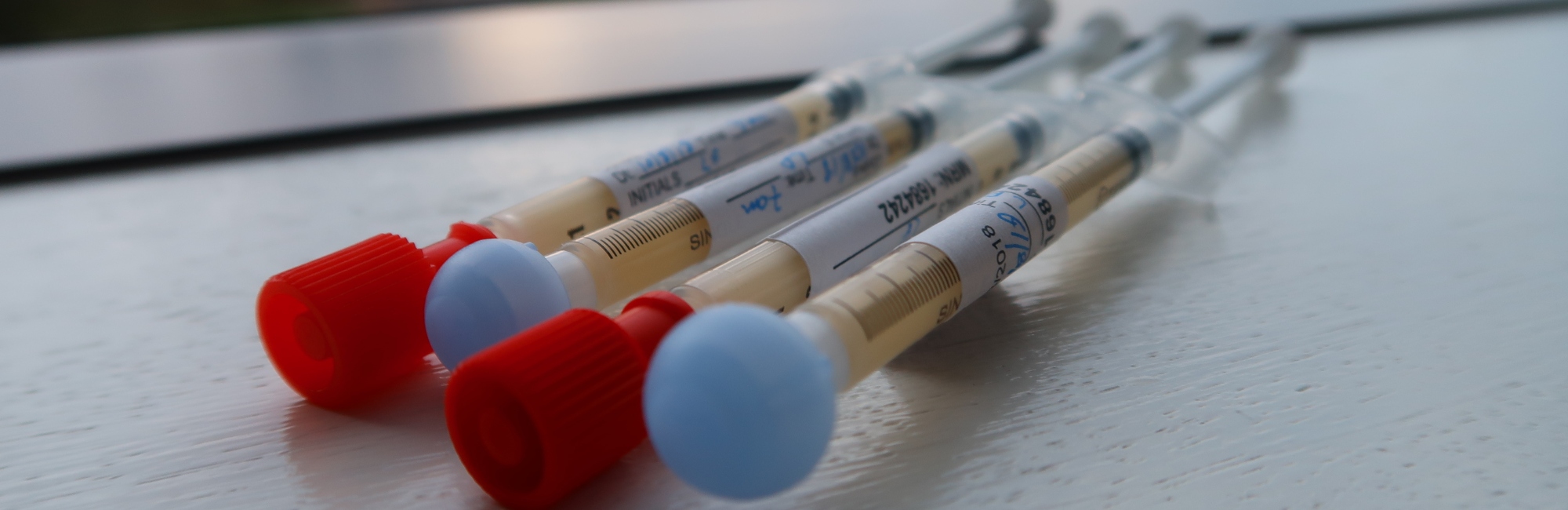
Colostrum: inoculating your newborn with living immune tissue

Colostrum transfers concentrated, living immune tissue from your body into your baby's gut
Colostrum eases out of your breast as a scant, strange, sticky elixir, an ancient and elegant extension of your own immune system. When your baby swallows your colostrum, her little body receives a powerful inoculation of living immune tissue. Sometimes your colostrum will be clear, sometimes pale or dark yellow, sometimes amber. Regardless of colour, it's a low-dose, high impact infusion of protection in your newborn's first few days of life, kick-starting gut development and immunity.
From an evolutionary perspective, inoculation with this dense miracle fluid helps your baby adapt from life inside your womb to life outside your womb. It has been shown to help protect your baby from developing food allergies later on. Your colostrum is also particularly protective if your baby is born prematurely.
Colostrum also acts as a natural laxative for your baby in those first days, assisting in the elimination of your baby’s meconium, which is how bilirubin washes out of your baby’s gut.
-
You can find out about antenatal expression of colostrum here.
-
You can find out more about colostrum here.
How much colostrum does your baby need?
We don’t know exactly how much milk your baby needs in the days after birth, because amounts of colostrum removed are highly variable between mother-baby pairs.
Although colostrum appears thick and sticky, it’s not "hard for baby to suck out", as I’ve heard some say. It’s meant to be a tiny quantity, moving slowly through your milk ducts with baby's normal suckling. It comes out in little pearls, not gushes, because that's all your baby's gut needs in the first few days of life.
Your breasts might make something like 30 millilitres of colostrum in total over a 24 hour period in those first three days. But some women make over three times more than this! Colostrum is on a spectrum in both volume and composition, transforming as the hours and days pass into what's known, when your milk comes in between the third and fifth day postbirth, as transitional milk. You don't need to worry about volumes - you need only offer your breasts to your newborn frequently and flexibly.
Because colostrum is so concentrated, it paints baby's gut with protective antibodies and microbiome bacteria more effectively than it would if the colostral ingredients were contained within more copious fluid.
-
You can find out about frequent and flexible breastfeeding here.
-
You can find out about your milk coming in here.
-
You can find out about keeping your baby safe with adequate colostrum and milk here.
-
You can hear a neonatologist talk about baby's milk needs in the first days here. The transcript is here.
What's in colostrum?
Colostrum has more protein but less fat and carbohydrate (including less lactose) than mature breast milk. Colostrum is also relatively high in salt content, which helps protect your newborn during the normal physiological dehydration of the first days of life.
Colostrum has a very high number of immune white cells. Transitional and mature milk are characterized by very low leucocyte counts when both mother and infant are healthy. Toward end of the first week postpartum, leucocyte numbers rapidly decrease to reach the baseline level of living white cells found in transitional milk and mature breastmilk. This remains stable then, unless you develop breast inflammation.
Protein is the dominant component of colostrum
Colostrum is dense with proteins which are predominantly bioactive, not nutritional. Colostral proteins act as a natural, broad spectrum antibiotic. This is because from an evolutionary perspective, colostrum evolved to extend your own immune system into your newborn's body, providing immune protection from infection and kick-starting your baby's own nascent immune system.
Colostral proteins include
-
Antibodies, in particularly secretory immunoglobulin A
-
Lactoferrin, which helps cells repel unfriendly bacteria and viruses, and inhibits the growth of fungi including Candida albicans.
Other important components of colostrum
Colostrum doses your baby with all that he needs to ingest in the first days, after the direct route of transfer from your body through the umbilical cord has been cut. Here's a lit of other important ingredients in your colostrum.
-
White cells (that is, living immune cells)
-
Bacteria, living cells which help your baby's gut cultivate a protective gut microbiome
-
Oligosaccharides (carbohydrates which nourish the bacteria)
-
Fat-soluble vitamins and minerals, most particularly vitamin A, also E and K
-
Cytokines (signalling molecules, which regulate inflammation)
-
Antioxidants
Because formula is not a living tissues, it doesn't contain most of the important components of colostrum, including secretory immunoglobulin A, white cells, or bacteria.
What's the difference between colostrum, transitional milk, and mature milk?
Colostrum has more protein (dominated by the immune-protective secretory immunoglobulin A and lactoferrin) and less carbohydrate and fat than mature breast milk.
-
We call the milk that you produce in the first fortnight of your baby's life transitional milk.
-
We call the milk you produce after the first two weeks mature milk.
These are arbitrary definitions, because milk is on a spectrum and is always dynamic in composition. There's a gradual transition from colostrum to the full secretory activation of your transitional milk over those first three to five days. It’s not really that there's a day when you don’t have any transitional milk and then a day when you do!
Colostrum might be secreted from your baby's mammary glands too!
Amazingly, for four weeks after birth, colostrum is also sometimes secreted from a baby's mammary glands. If you see a drop on your baby's nipple, you need only wipe it off gently. It's important not to irritate your baby's little nipples and mammary glands by trying to express the colostrum!
Can colostrum supplements help your own health?
Colostrum supplements, which are dried and powdered form of cow's colostrum, have become popular. There is, however, no evidence to show that they are beneficial to human health or athletic performance. The manufacture of bovine colostrum supplements remains unregulated, and I recommend that you don't take them.
Recommended resources
How to hand express your colostrum or milk
Does it help to express colostrum before the birth and when would you use it?
Colostrum: evolutionary origins, mechanisms of secretion, and biomarkers of secretory activation
Selected references
Bhasin M, Cooper M, Macchiaverni P. Colostrum as a protective factor against peanut allergy: evidence from a birth cohort. Allergy. 2025:1–11. https://doi.org/10.1111/all.70043.
Oruc EC, Arayici S, Ongun H. Effect of oral colostrum administration duration on clinical outcomes in preterm infants: a randomized controlled trial. Breastfeeding Medicine. 2025:https://doi.org/10.1177/15568253251407971.
Pang WW, Hartmann PE. Initiation of human lactation: secretory differentiation and secretory activation. Journal of Mammary Gland Biology and Neoplasia. 2007;12:211-221.