Logo - The Possums baby and toddler sleep program.
parents home
librarybrowse all programsfind answers nowaudioprograms in audiogroup sessionsgroup sessions with dr pam
menu icon NDC Institute
possums for professionals
(the ndc institute)
menu icon eventsguest speakers
menu icon the sciencethe science behind possums/ndcmenu icon who we arewho we aremenu icon evidence basendc research publicationsmenu icon dr pam's booksdr pam's books
menu icon free resourcesfree resourcesmenu icon dr pam's blogdr pam's blog
menu icon consult with dr pamconsult with dr pammenu icon consult with dr pamfind a possums clinicmenu icon find a NDC accredited practitionerfind an ndc accredited practitioner
login-iconlogin

Welcome back!

Forgot password
get access
search

Search programs

PBL Foundations icon

PBL Foundations


  • Change things up straight away if you have nipple discomfort, pain, or damage
  • Too much moisture softens nipple skin and slows healing or makes pain and damage more likely
  • Does the kind of nipple or breast pain you're feeling during or between breastfeeds tell you what's going on?
  • Does the shape of your nipple immediately after breastfeeds matter?

Next article

Sign up now
  • PBL Foundations
  • S7: Nipple pain and damage
  • CH 2: Start here for nipple pain and damage essentials

Too much moisture softens nipple skin and slows healing or makes pain and damage more likely
Dr Pamela Douglas3rd of Sep 20245th of Dec 2025

x

Avoid overhydrating your nipple skin

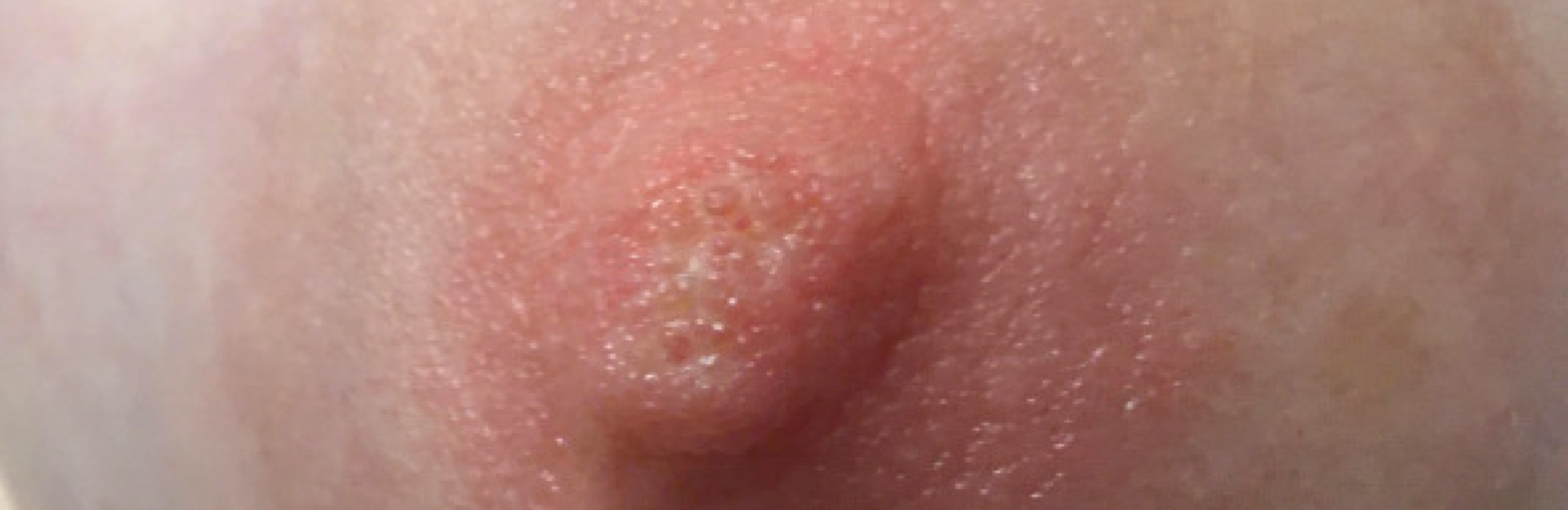
Anything that holds moisture against the skin of your nipple for long periods can overhydrate the skin. Both the outer layer of your skin (the epidermis) and the underlying layer (the dermis) can overhydrate, if you accidentally keep your nipple moist for too long.

Overhydration and what's known as moisture-associated skin damage make your nipple skin softer and more vulnerable to inflammation and damage than it would otherwise be.

This is why it's best to keep your nipples as dry as sensibly possible when you're lactating, and especially if you develop a crack or wound.

  • Nipples already often start off at a disadvantage when we're breastfeeding, because bras make it more difficult for the epidermis of the nipple to 'breathe', stay dry, and be surrounded by oxygen. You can find out about bras here.

  • Using balms, lotions, and other medicated or non-medicated applications to try to prevent or heal nipple pain or damage can quickly make everything worse, if we're not careful, because of moisture-associated skin damage.

There is no evidence to prove that moisture and moist wound applications help you heal quicker

Applying moist wound healing principles to nipples when you're breastfeeding is not an evidence-based approach. Saying this might seem very confusing though, because everywhere at the moment you'll hear that keeping your nipples moist helps with healing! You'll hear that moist wounding healing of nipples is evidence-based (even though it's not). It is true that we don't want your nipples sticking to or rubbing on a breast pad or your clothing when they're painful or damaged, though.

You can find out what to do to care for your nipples, including if you have pain or damage, here.

Selected references

Conde-Montero E, Moreau A, Schlager JG, Pastor D, Hafner J. Protocols in wound healing: evidence-based or mere rituals? International Wound Journal. 2024;21:e70062.https://doi.org/70010.71111/iwj.70062.

Douglas PS. Re-thinking lactation-related nipple pain and damage. Women's Health. 2022;18:17455057221087865.

Qi L, Zhao Q, Guo L. Prevention and care for moisture-associated skin damage: A scoping review. Journal of Tissue Viability. 2024;32:362-375.

Rippon MG, Ousey K, Cutting KF. Wound healing and hyper-hydration: a counterintuitive model. Journal of Wound Care. 2016;25(2):68-75.

Park E, Long SA, Seth AK, Geringer M. The use of desiccation to treat Staphylococcus aureus biofilm-infected wounds. Wound Repair and Regeneration. 2016;24:394-401.

Whitehead F, Giampieri S, Graham T, Grocott P. Identifying, managing and preventing skin maceration: a rapid review of the clinical evidence. Journal of Wound Care. 2017;26(4):159-165.
Finished

share this article

Next up in Start here for nipple pain and damage essentials

Does the kind of nipple or breast pain you're feeling during or between breastfeeds tell you what's going on?

x

Breaks of the nipple skin cause the worst kind of pain but inflammation alone is awful, too

The quality of pain that you're experiencing in your nipple and breast doesn't really tell us what's going on.

Visible cracks and ulcers and blisters hurt more than non-visible damage, as you’d expect. It's possible that if I got out the magnifying glass, we'd sometimes find tiny little breaks in the nipple epidermis which are contributing to the pain even though they aren't visible to the naked eye. But in the end identifying this doesn't help your situation.

Regardless of what we find under a magnifying glass, if you have pain, you need to find ways to eliminate the nipple…

Keep reading
logo‑possums

Possums in your inbox

Evidence-based insights, tips, and tools. Occasional updates.

For parents

parents homebrowse all programsfind answers nowprograms in audiogroup sessions with dr pam

For professionals

possums for professionals
(the ndc institute)
guest speakers

About

the science behind possums/ndcwho we arendc research publicationsdr pam’s books

More resources

free resourcesdr pam’s blog

Clinical consultation

consult with dr pamfind a possums clinicfind an ndc accredited practitioner

Help & support

contact usfaqour social enterpriseprivacy policyterms & conditions

Social

instagramlinked infacebook

Possums acknowledges the traditional owners of the lands upon which The Possums Programs have been created, the Yuggera and Turrbal Peoples. We acknowledge that First Nations have breastfed, slept with, and lovingly raised their children on Australian lands for at least 65,000 years, to become the oldest continuous living culture on Earth. Possums stands with the Uluru Statement from the Heart.