
Why damaged nipples need as much air exposure as possible and when to use lanolin, soothies, hydrogel discs, polymem, or other polymeric membrane dressings
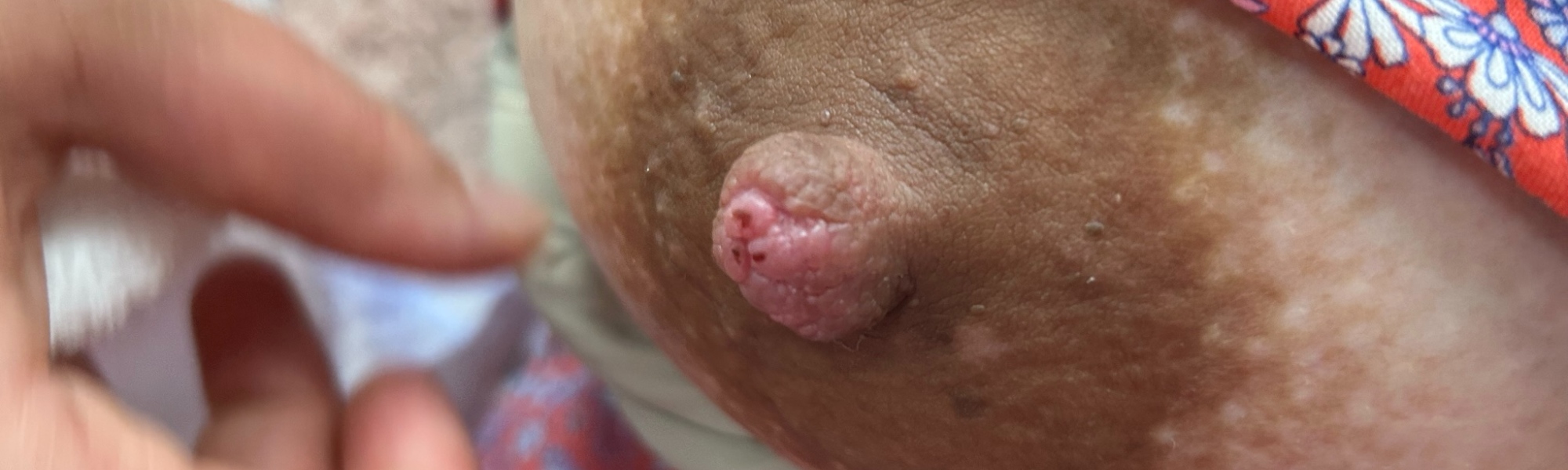
Nipple inflammation and damage heals best if your nipples are exposed to as much air as possible
Exposing your nipples to the air as much as is sensibly possible helps nipple skin heal.
Moist applications, like balms and lansinoh, overhydrate the skin of your nipple, which softens the skin and make your nipple more likely to become inflamed or damaged during breastfeeding. Other moist wound dressings like hydrogel and Polymem also quickly overhydrate wounds and the surrounding skin, resulting in increased tendency to inflammation and damage during breastfeeding.
It's important to be outside the home enjoying an active life with a lot of social activity when you are caring for a baby, as this dials baby down and makes the days easier and more manageable. Often women need to wear a bra when they are outside the house. Other women feel they need to wear a bra at all times during the day for musculoskeletal comfort. But the bra and bra pad create an occlusive environment, which tends to increase carbon dioxide and moisture levels, and may also increase acidity. Overhydration of the nipple skin then makes it more prone to inflammation and damage during breastfeeding.
Practically speaking, night-time is your best opportunity for airing your nipples. You might leak quite a lot of milk through the night, but you could place a towel underneath you, to soak up the milk.
Then during the day, expose your nipples to the air just as much as you sensibly can.
If your nipple skin is broken with a crack or ulcer, make sure that your nipple wound doesn't stick to the breast pad
This is when it helps to use lanolin, hydrogel or polymem discs, to prevent a nipple wound sticking to the breast pad and tearing open the wound when you remove the pad.
I often recommend moving between these different options, in an attempt to experiment with each and to see which seems to cause you the least overhydration or moisture-associated skin damage.
Although none of these preparations help your nipple wound heal faster, as long as you know to use them judiciously, they have a role in protecting your nipple wound when you feel you need to wear a bra.
Why is moist wound healing so popular when breastfeeding women have damaged nipples?
Moist wound healing has proven successful in the treatment of the non-healing wounds which are caused by chronic disease, such as diabetic ulcers, pressure ulcers, and venous ulcers. These chronic disease ulcers fail to organise and heal according to usual wound healing processes. Moist wound healing has also been shown to help with burns. But nipple cracks, blisters, or ulcers during lactation are nothing like a chronic wounds or burns!
There's no reliable evidence to support manufacturer's claims that their products help nipple wounds heal faster
Lanolin, hydrogel and other bio-membranes such as polymem have become popular recommendations for moist wound healing of nipples damaged during lactation, despite either
-
Lack of evidence showing they work, or
-
Evidence showing they actually don't work to heal damaged nipples!
This failure to show improved healing in research studies contradicts claim made by companies promoting these various moist-wound healing products for nipples. You can find out about the research in detail in the advanced section of Possums Breastfeeding & Lactation.
Your nipple and areola skin (made up of the epidermis and dermis) have special biological powers and also special vulnerabilities. Nipple wounds due to breastfeeding and pumping occur in an environment which is completely different to the ulcers of chronic disease.
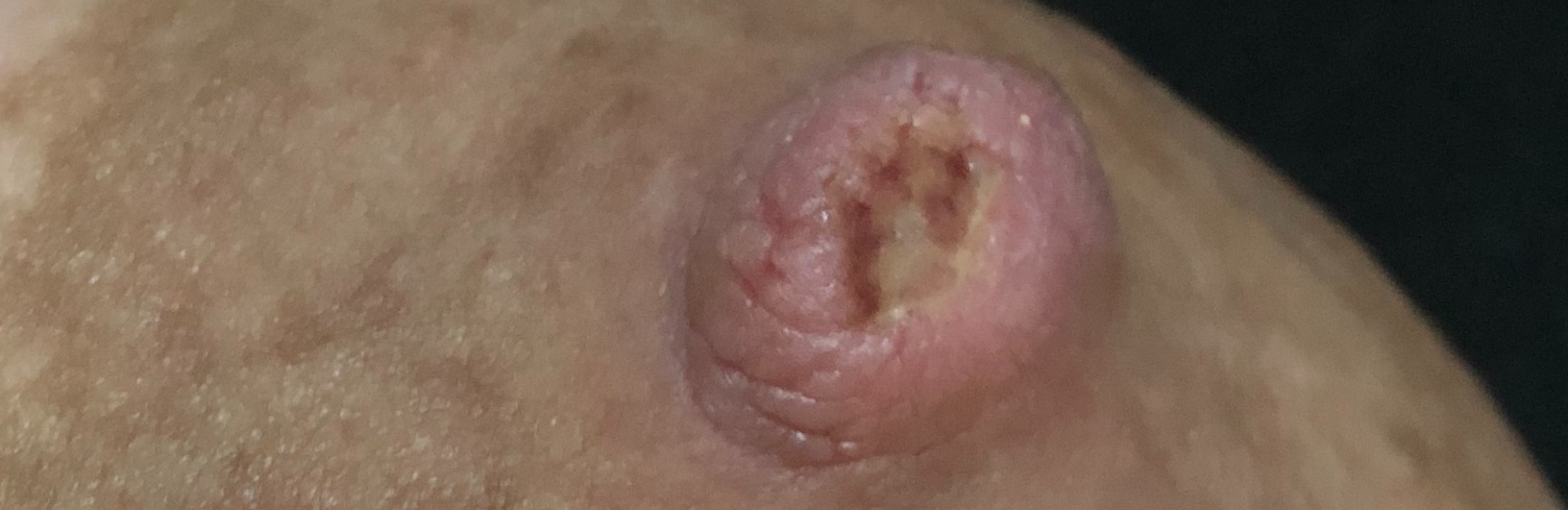
Nipple wounds during lactation result from repetitive and acute mechanical microtrauma
Importantly, nipple cracks and ulcers are acute wounds which result from repetitive mechanical microtrauma, even if they've been going on for a long time.
It might be surprising to learn that, despite a lot of effort, research studies still can't tell us how best to help acute skin wounds heal, in general. There is still no no international consensus on optimal wound care even after common skin procedures and excision, with patients receiving a wide variety of recommendations. So it’s not surprising, given the frontier status of clinical breastfeeding support, that there is very research into how best to heal nipple wounds.
But new research into moisture-associated skin damage suggests that moist wound healing, when applied to nipples, could make breastfeeding women more likely to suffer
-
Nipple pain and inflammation
-
Nipple damage (cracks, blisters, ulcers)
-
Nipple pain and damage from mechanical milk removal (or pumping)
-
Delayed healing from nipple inflammation and damage
-
A true infection of the nipple skin.
This is because moist applications (like lansinoh, polymem, hydrogel, and other similar products being regularly released by wound care businesses) overhydrate the nipple skin, and make it more prone to inflammation and damage.
Selected references
Douglas PS. Re-thinking lactation-related nipple pain and damage. Women's Health. 2022;18:17455057221087865.
Nguyen JK, Huang A, Siegel DM, Jagdeo J. Variability in wound care recommendations following dermatologic procedures. Dermatologic Surgery. 2020;46(2):186-191.
Qi L, Zhao Q, Guo L. Prevention and care for moisture-associated skin damage: A scoping review. Journal of Tissue Viability. 2024;32:362-375.
Park E, Long SA, Seth AK, Geringer M. The use of desiccation to treat Staphylococcus aureus biofilm-infected wounds. Wound Repair and Regeneration. 2016;24:394-401.
Rippon MG, Ousey K, Cutting KF. Wound healing and hyper-hydration: a counterintuitive model. Journal of Wound Care. 2016;25(2):68-75.
Sams-Dodd J, Sams-Dodd F. Time to abandon antimicrobial approaches in wound healing: a paradigm shift. Wounds: a compendium of clinical research and practice. 2018;30(11):345-352.
Whitehead F, Giampieri S, Graham T, Grocott P. Identifying, managing and preventing skin maceration: a rapid review of the clinical evidence. Journal of Wound Care. 2017;26(4):159-165.
-fotor-20240115155339.jpg)