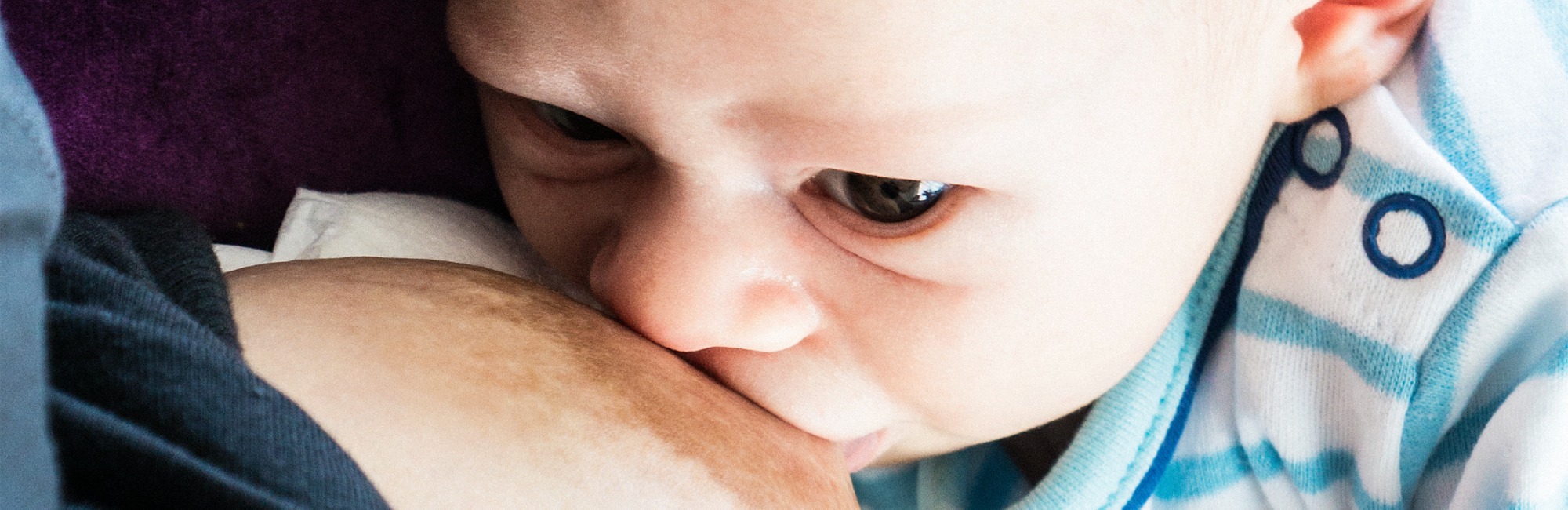
Does the kind of nipple or breast pain you're feeling during or between breastfeeds tell you what's going on?
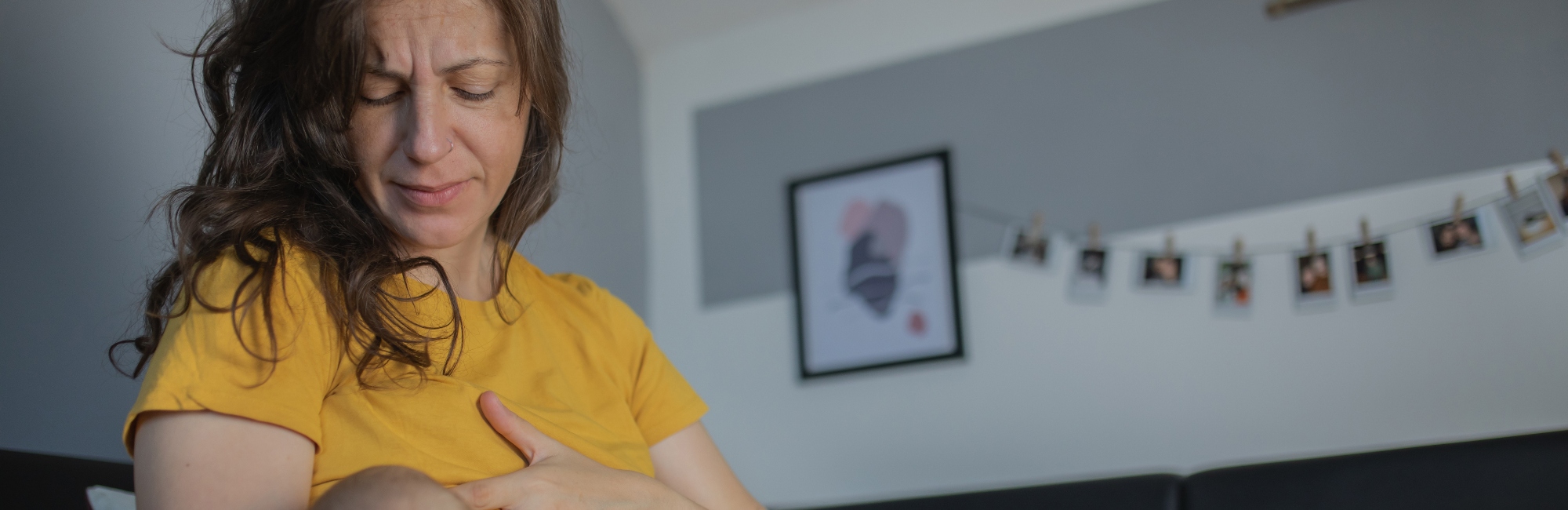
Breaks of the nipple skin cause the worst kind of pain but inflammation alone is awful, too
The quality of pain that you're experiencing in your nipple and breast doesn't really tell us what's going on.
Visible cracks and ulcers and blisters hurt more than non-visible damage, as you’d expect. It's possible that if I got out the magnifying glass, we'd sometimes find tiny little breaks in the nipple epidermis which are contributing to the pain even though they aren't visible to the naked eye. But in the end identifying this doesn't help your situation.
Regardless of what we find under a magnifying glass, if you have pain, you need to find ways to eliminate the nipple and breast tissue drag that is causing the problem.
-
You can find out what causes nipple pain here.
-
You can find out about the skin and microbiome of your nipple and areola during lactation here.
Women experience a range of symptoms when they have nipple inflammation and breaks in the skin (but these don't help us with diagnoses)
Attempts have been made to diagnose the cause of the nipple pain according to the way women describe their pain. But these efforts aren't helpful or evidence-based.
For a couple of decades until very recently, lactation support professionals believed that stabbing or burning breast pain which radiates into the breast between feeds, especially if the woman's nipples were pink and shiny and showing white flakes of skin, were signs of thrush infection of the breast. The way nipple thrush caused pain was prominently discussed as 'evidence-based' in conferences, courses, and in breastfeeding support groups. I knew that the research studies being cited didn't actually show that nipple or breast thrush caused the pain, but still the belief went on. I could see that the signs being attributed to thrush were just another way that inflammation from nipple and breast tissue drag showed up. It's only after my study on this topic was published in Women's Health in 2021 that health professionals have begun to stop diagnosing this routinely in breastfeeding women and their babies. Now, you might be told that this same kind of pain is neuropathic pain or neuralgia, which is also inaccurate.
Women experience a whole spectrum of symptoms when our nipples are repetitively subjected to extreme stretching forces inside the baby’s mouth due to nipple and breast tissue drag. Here are examples of what women describe.
-
Distressing sensations like stinging, aching, itching, cutting, throbbing, pinching.
-
Superficial pain which is throbbing, pulsing, or burning.
-
Pain which radiates deep into the breast, and is throbbing, pulsing, or burning.
-
Constant pain, or pain only whilst breastfeeding, or between feeds.
-
Pain that is sharp and stabbing, or shooting and burning, or a dull deep ache.
-
Pain on even the lightest contact with clothing or bedlinen or water in the shower.
-
Shooting pains with milk ejection, which might be more pronounced than the sensations of milk ejection used to be.
This whole spectrum of sensation is typical of superficial or deep tissue damage resulting from
-
Inflammation or breaks in the skin of the nipple and areola due to breast tissue drag. These are the effects of stretching, shearing and deformation forces on various parts of the nipple, superficial or deep. You can find out about mechanical forces in breastfeeding here.
-
Itchiness is believed to result from the release of anti-inflammatories, which stimulate nerve cells during the healing of wounds.
What we do know for sure is that you need get rid of the breast tissue drag when your baby is breastfeeding - and also during mechanical milk removal as much as possible too, if you're pumping.
Selected references
Douglas PS. Overdiagnosis and overtreatment of nipple and breast candidiasis: a review of the relationship between the diagnosis of mammary candidiasis and Candida albicans in breastfeeding women. Women's Health. 2021;17:17455065211031480.
McClellan HL, Hepworth AR, Garbin CP, Rowan MK, Deacon J, Hartmann PE, et al. Nipple pain during breastfeeding with or without visible trauma. Journal of Human Lactation. 2012;28(4):511-521.
Papanikolaou M, Paul J, Nattkemper LA. Prevalence and mechanisms of itch in chronic wounds: a narrative review. Journal of Clinical Medicine. 2025;14(9):2877 https://doi.org/2810.3390/jcm14092877.
Rodrigues M, Kosaric N, Bonham CA, Gurtner GC. Wound healing: a cellular perspective. Physiological Reviews. 2019;99(1):665-706.