
When you're caring for a baby or toddler, talk to yourself the way someone who deeply loves you would
"While the concept of the "good-enough mother" often gets translated into simplistic, quick reassurance about being OK with mistakes, it reflects a more profound truth. Imperfections are necessary for healthy development." Ed Tronick and Claudia Gold, The Power of Discord
"I would rather be the child of a mother who has all the inner conflicts of the human being than be mothered by someone fro whom all is easy and smooth, who knows all the answers, and is a stranger to doubt." D. W. Winnicott
Speaking to yourself as if you are someone who loves you very deeply is a powerful way of changing the unkindness that our mind often directs towards ourselves. Different people imagine this in different ways.
-
It might be that you speak to yourself as if you are your own best friend, who adores you, understands you, cares about you deeply. What would your best friend say to you in situations that you find difficult? She wouldn't be unkind. She would be barracking for you, she would be worrying about you, she would be confident you've got what it takes. She tells you she's there for you, every step of the way. Her tone of voice is kind and encouraging.
-
You might speak to yourself as if you are a little child. As if there are three of you (or more if you're caring for older children too) getting through the days and nights together: your baby or toddler, the frightened or lonely little girl inside you, and you. Speak to that little girl inside yourself using the same tone of voice, the same verbal caresses, the same deep empathy and warmth and concern that you offer your own baby or child.
-
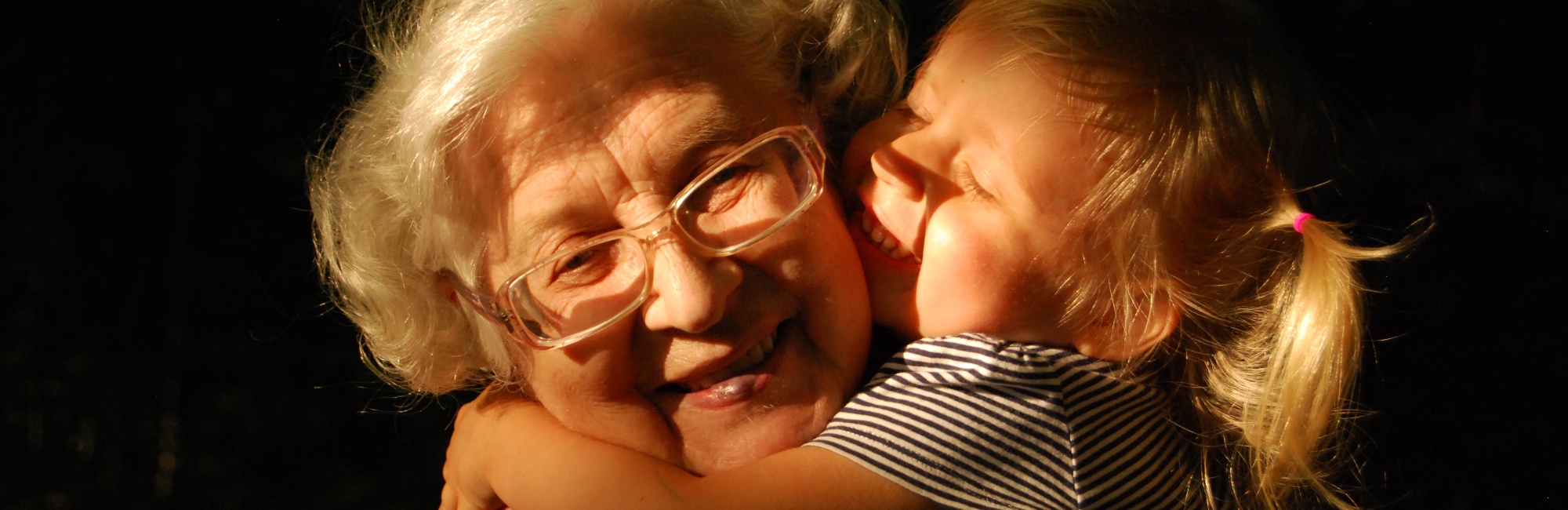
You might imagine an older wisdom figure or even your mother (if you were lucky enough to have known this deep acceptance, overall, from your mother), speaking to you as if you are her beloved daughter, someone for whom she feels deep love and tenderness and empathy. What would she say to you? In the photo at the top of this page, a grandmother cuddles her lively little granddaughter. The child adores her and feels completely safe with her. Imagine the affection, tenderness and loving humour with which that grandmother speaks to her precious little blonde-haired girl! That's the way to speak to yourself.
I read a sensitively written pandemic novel which tells the story of an older woman who was very successful in her field. This woman was raised in destitute and abusive circumstances. But she got through her life by regularly imagining the words that her "nice mother", the one she made up for herself, might say to her in any particular situation. This is a powerful way to practice self-compassion.
In truth, each of us needs to find ways to treat ourselves like this, to have that kind of deep acceptance available to us for the rest of our lives. You deserve to have a voice of deeply loving support and encouragement and sense of safety close by you at all times, you deserve nothing less. ... Yet each of us needs to find this in ourselves, for ourselves, because we will always be our own closest companion.
Recommended resources, acknowledgements, and selected references for the articles in the Caring for you section of The Possums Sleep Program are found here, including selected research evaluations of both Acceptance and Commitment Therapy and Compassion-focused Therapy in the perinatal period.

References
Tronick, E & Gold, Claudia. The power of discord. Scribe 2020
Winnicott, D W. Winnicott on the Child, 2009. Grand Central Publishing
-fotor-20230722144115.jpg)