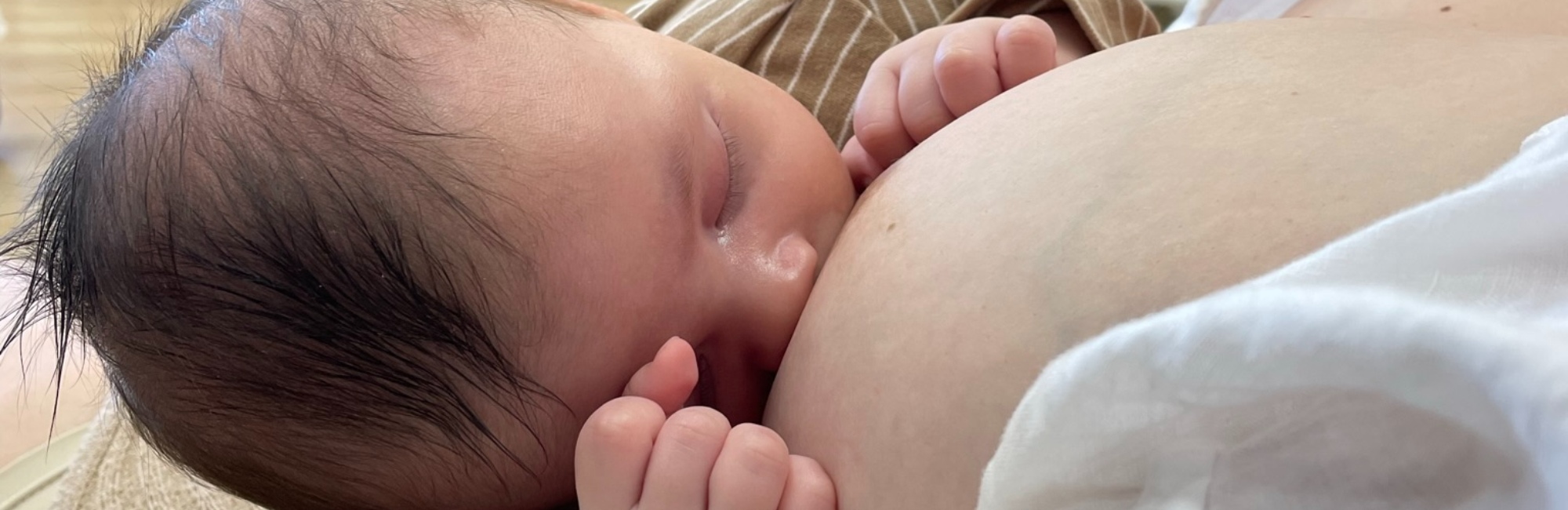
Why skin-to-skin contact in the bath is unlikely to help breastfeeding problems and might make things worse!
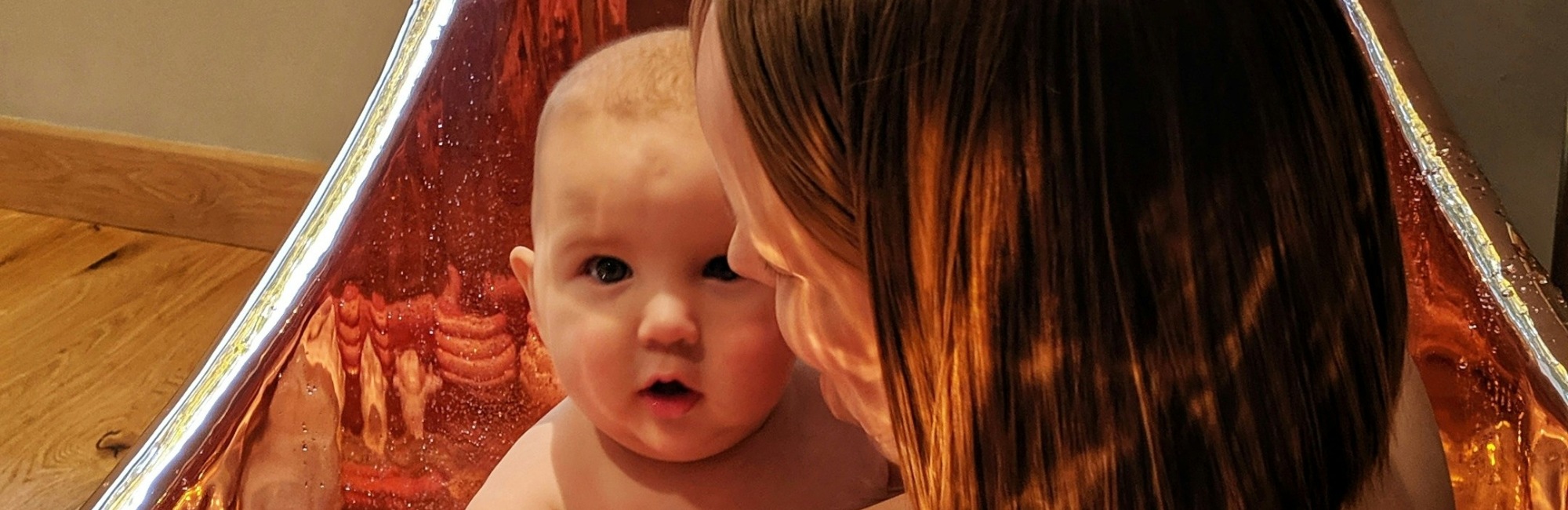
Bringing your baby into the bath or shower with you provides baby with an indoors sensory motor adventure
The bath or the shower is an rich sensory-motor experience for baby, and from very early on I encourage parents to take the baby into the bath or the shower with them each day. It's easier than running a special baby bath, and more fun (even if it takes the very young babies a little while to accustom themselves to the experience)! You can find out about this here.
Skin-to-skin time in the bath does not help with breastfeeding problems
But many breastfeeding support professionals suggest spending time in the bath with a baby who
-
Has difficulty coming on to the breast or
-
Is experiencing conditioned dialling up at the breast (which they may refer to as breast refusal).
Yet the the most common cause of difficulty coming onto the breast or conditioned dialing up at the breast is nipple and breast tissue drag. It's rarely possible to deal with breast tissue drag in the confines of a bath.
-
The sides of the bath close in tight, so that your baby kicks off the sides if you are using the horizontal or close-to-horizontal gestalt method for maximum stability.
-
You also lack back support, and it can be quite uncomfortable to adopt a semi-reclined position against the porcelain.
-
You might have to bring your knees up to stabilise yourself in that position, which closes up your lap and may worsen breast tissue drag for your baby.
-
If your baby is dialled up, undressing both of you and getting in the bath is quite a project, likely to worsen the baby's dialling up in the meantime. How much easier it is, usually, just to step outside onto a veranda or patio, or onto the street outside your home! This is a quick, powerful dose of sensory motor nourishment which often dials baby down straight away. You can find out about this here.
There are other ways too in which trying to breastfeed in a bath can worsen positional instability. For example, the 'laid back' or 'biological nurturing' method of fit and hold, which might seem achievable in the bath, is not effective as an intervention once breastfeeding problems have emerged, and may even worsen breast tissue drag and fussiness at the breast.
For these reasons, I don't recommend skin-to-skin contact in the bath as a strategy for dealing with a conditioned dialing up. Taking a bath together in the hope of helping with breastfeeding may even make things worse.
When might skin-to-skin experience in the bath help?
Skin-to-skin contact in the bath might be something you try if your baby needs a new and enjoyable sensory experience and you don't wish to leave the home, or can't leave the home because of pandemic lock-downs or truly severe weather events.
Don't imagine though that you can settle down for the baths of old, before baby, with fragrant candle and bath oils and deep relaxation! If you feel like relaxing in the bath, you might be lucky and find that the baby settles quietly on your chest and goes to sleep, but to be honest, this is quite unlikely to happen. I'm afraid it's much more likely that you'll need to actively engage your baby in the bath, playing with her, talking with her, and enjoying the sensory experience of swishing through the water and splashing together.
You might decide it's so much easier to be out walking: the complexity of the outdoor environment entertains baby for you, and you can simply relax into pushing the pram or stroller, or walking with the baby in the carrier, without having to work hard to keep her dialled down.
Selected references
Svensson KE, Velandia M, Matthiesen A-ST, Welles-Nystrom BL, Widstrom A-ME. Effects of mother-infant skin-to-skin contact on severe latch-on problems in older infants: a randomized trial. International Breastfeeding Journal. 2013;8:1.