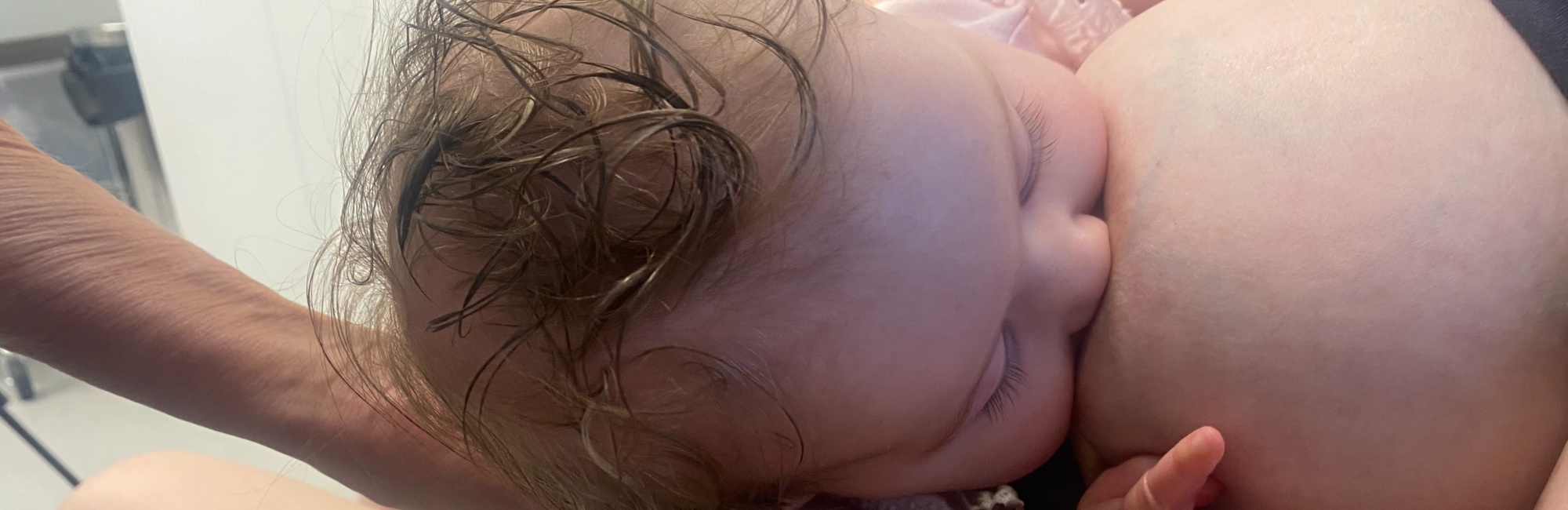
When baby's nose buries into the breast and airflow is obstructed
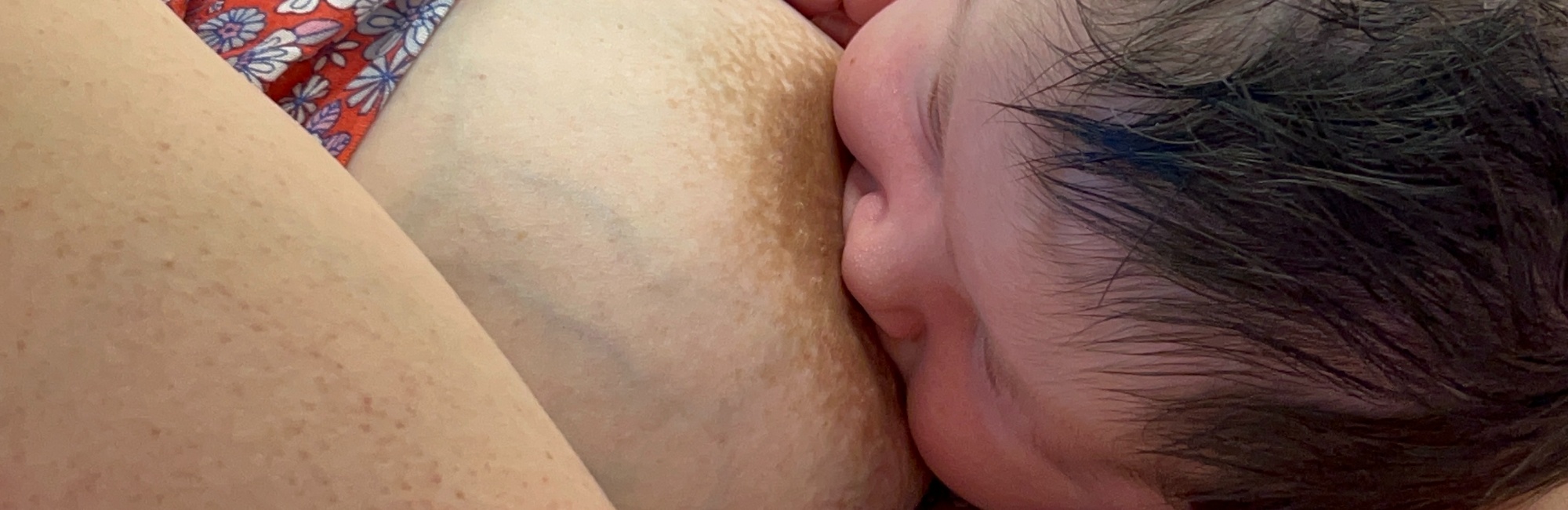
Blocked off nostrils is a common cause of babies fussing a lot at the breast
Babies can breathe freely with their little noses lightly touching the breast, and this position is best for fit and hold.
But blocked off nostrils are a common reason why babies fuss, back arch, and pull off the breast, even though this problem is often not picked up. Your baby might start relaxing her little body after the first avid sucking, but if she’s not stable, this relaxing means that she sinks in closer to the breast and her nostrils block off and she can’t breathe!
Using a finger to press your breast back from baby's nose isn't a workable solution
Pressing the breast back from baby's nose using a finger is not a solution for the following reasons:
-
You may get sore and tired trying to hold your finger in place, feed after feed
-
It can result in breast tissue drag for the baby, creating or worsening problems
-
It may cause breast inflammation (e.g. blocked ducts or mastitis)
-
It might decrease milk transfer since milk ducts lie close to the skin and compress with even light pressure.
What strategies are helpful if baby's nose keeps blocking off?
If your breast is accidentally closing off baby’s nostrils, use micromovements back towards the baby’s toes, with a little pressure from your ‘paddle hand’ between the shoulder blades over baby’s heart.
We do want your baby’s nostrils resting on your breast, as close as can be without obstruction, because this allows baby to draw up as much nipple and breast tissue as possible into his or her mouth.
Sometimes a particular breast shape or elasticity can mean that the face-breast bury results in the little nose burying in too far, despite the usual micro-movements, and it becomes quite difficult to get the face-breast bury without the nostrils obstructing.
Baby’s nostrils might be more likely to block off if you have a petite breasts or forward-looking nipples
I quite frequently see the problem of obstructed airflow when the woman has delicate breasts. Sometimes it’s occurring because her nipples look straight forwards or are even looking slightly towards the midline in her natural breastfall. It’s difficult for the baby’s head and neck to tilt back enough with this particular anatomic variation.
However, I don’t focus on the tilting back of the head and burying in of the chin however – focusing on these things isn’t very helpful! The slight tilting back looks after itself if you’re applying your paddle hand, and doing micromovements.
Baby’s nostrils might also be more likely to block off if you have generous breasts
Baby’s nostrils might also block off if you can’t see your baby’s face as you bring him on. It’s common for women not to be able to see what baby is doing at the breast because their breast obstructs their view. It’s a situation that occurs most commonly in generous-breasted women.
If this is your situation, try experimenting with the following strategies.
-
Listen to your baby’s breathing. When you hear the sound of baby’s air flow being impeded by the breast, release the baby’s face-breast bury a little, giving more room for air to flow in and out of his nostrils
-
Apply micromovements back towards baby’s toes to help release the nose
-
Apply a very snug ribcage wrap, up under the opposite breast to the one the baby is feeding on, which helps baby’s head tilt back as much as possible, and lifts baby’s nostrils so that they are just resting on the breast tissue but still allows a deep face-breast bury. If you have generous breasts, lift your breast and tuck baby underneath, resting your breast on the baby’s hips and body.
-
Use a paddle hand to apply pressure between the baby’s shoulder blades (that is, not fingers or hand on back of baby’s neck). This light pressure will help release the nostrils, as it helps the baby’s head and neck tilt back a little.