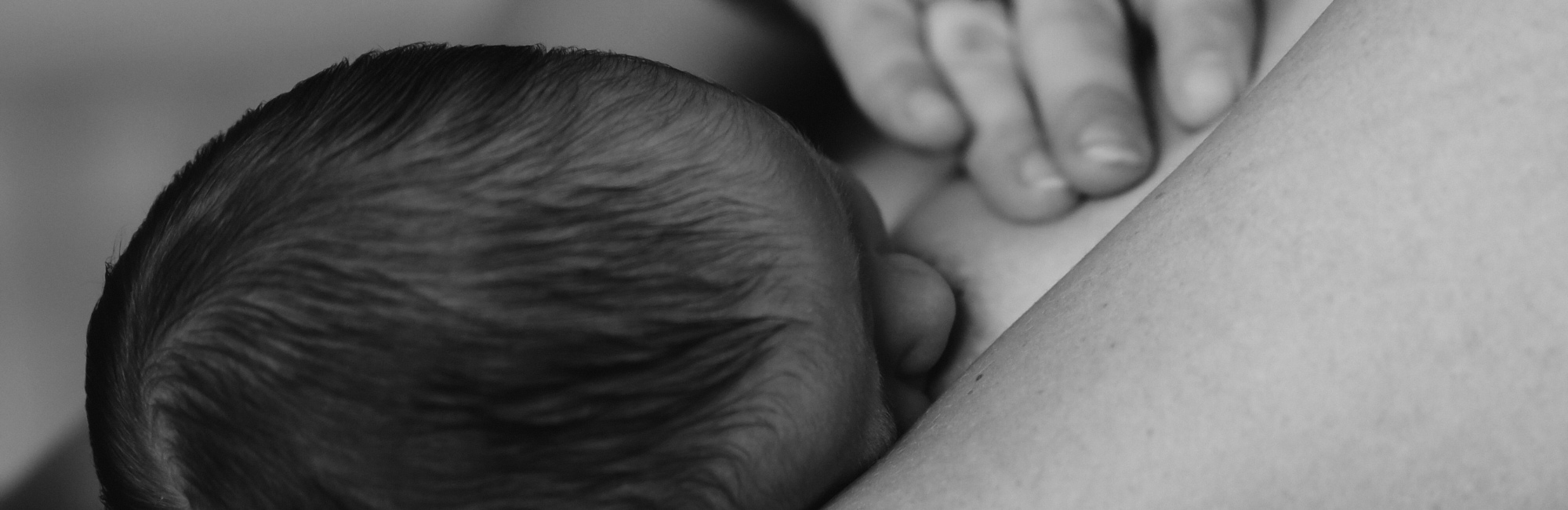
The three key elements of stable fit and hold for enjoyable breastfeeding
-fotor-20230709184421.jpg)
Your baby needs to be in a stable position so that you can eliminate nipple and breast tissue drag
Nipple and breast tissue drag (which I refer to as breast tissue drag for short) is the most commonly missed cause of breastfeeding problems. Breast tissue drag can result in
-
Nipple pain and damage, and
-
Baby dialling up at the breast.
These two problems often result in a cascade of other breastfeeding problems, for example, poor weight gain, breast inflammation or mastitis, and conditioned dialling up at the breast.
We need your baby in a stable position against your body before we can properly eliminate breast tissue drag. When your baby is positionally stable, she is relaxed and comfortable, with good spinal alignment, which means that there is no twisting of her little body.
Sometimes, your baby might seem to have a stable position, but is still dragging on your breast tissue as she suckles, causing you pain and damage. This is still positional instability, since that position definitely doesn't support sustainable breastfeeding for you!
How do you know if your baby is positionally stable?

There are three ways to know that your baby is positionally stable. Finding a stable position for your baby is like a three-legged stool upon which successful breastfeeding sits!
Each of the legs of a three-legged stool are required to make breastfeeding stable and enjoyable. These are
-
What you are feeling
-
What your baby is communicating
-
What you can see.
Here's a more detailed description of each leg of the stool.
-
You have no pain (or, if there are nipple cracks and ulcers and you are still putting the baby to the breast, the pain is significantly diminished and improving, and you're able to find the best possible fit).
-
Your baby is dialled down, relaxed and enjoying the feed. The cues that things are not quite right for your baby are often subtle to begin with. He may show slight agitation, with changes of facial expression, hands and leg movements, or sounds. Or she may show dramatic cues of instability, like back arching, pulling off, and crying.
-
Visually, your baby has
-
A symmetrical face-breast bury into your breast when viewed from both the side and from above. You can find out about face-breast bury here.
-
Good spinal alignment, that is no twisting of his spine, including of his neck and pelvis.
-
If you have any kind of breastfeeding problem related to fit and hold, each of these three aspects needs to be carefully considered. If you can't see much because of the shape of your breast, you'll work by feel, attending to your sensations and to your baby's subtle communications.
Babies and their mothers are amazingly resilient: sometimes one of the three pillars of positional stability never goes quite right, but a woman makes breastfeeding work nevertheless. Mostly though, we have to have all three in place to resolve fit and hold problems in breastfeeding.
You can find out about how to do this with the gestalt method, starting here.
Selected references
Douglas PS, Geddes DB. Practice-based interpretation of ultrasound studies leads the way to less pharmaceutical and surgical intervention for breastfeeding babies and more effective clinical support. Midwifery. 2018;58:145–155.
Douglas PS, Perrella SL, Geddes DT. A brief gestalt intervention changes ultrasound measures of tongue movement during breastfeeding: case series. BMC Pregnancy and Childbirth. 2022;22(1):94. DOI: 10.1186/s12884-12021-04363-12887.
Douglas PS, Keogh R. Gestalt breastfeeding: helping mothers and infants optimise positional stability and intra-oral breast tissue volume for effective, pain-free milk transfer. Journal of Human Lactation. 2017;33(3):509–518.