Logo - The Possums baby and toddler sleep program.
parents home
librarybrowse all programsfind answers nowaudioprograms in audiogroup sessionsgroup sessions with dr pam
menu icon NDC Institute
possums for professionals
(the ndc institute)
menu icon eventsguest speakers
menu icon the sciencethe science behind possums/ndcmenu icon who we arewho we aremenu icon evidence basendc research publicationsmenu icon dr pam's booksdr pam's books
menu icon free resourcesfree resourcesmenu icon dr pam's blogdr pam's blog
menu icon consult with dr pamconsult with dr pammenu icon consult with dr pamfind a possums clinicmenu icon find a NDC accredited practitionerfind an ndc accredited practitioner
login-iconlogin

Welcome back!

Forgot password
get access
search

Search programs

PBL Advanced icon

PBL Advanced


  • Key management principle #1. Eliminate repetitive mechanical microtrauma for prevention and management of nipple pain and wounds
  • Key management principle #2. Minimise epidermal overhydration and moisture-associated skin damage for prevention and management of nipple pain and wounds
  • Nipple pain in lactation: management summary
  • Nipple wounds in lactation: management, including exudate, scabs, and nipple rest
  • When are analgesics, antifungal medications and antibiotics indicated in management of nipple pain and wounds?
  • Nipple shields and breastfeeding support in the clinic
  • Treat classic tongue tie when indicated
  • Interventions which don't help lactation-related nipple pain and wounds
  • Case study: Manon has nipple damage from the first week of her baby's life

Next article

Sign up now
  • PBL Advanced
  • S6: Lactation-related nipple pain + wounds
  • CH 4: Management of lactation-related nipple pain and wounds

Nipple shields and breastfeeding support in the clinic

Dr Pamela Douglas28th of Jun 202428th of Oct 2025

x

Nipple shields may be useful in management of three clinical presentations

Nipple shields may have a role, at the same time as primary interventions are applied, in the following three presentations:

  1. Severe pain and/or damage

  2. Conditioned sympathetic hyperarousal at the breast in association with nipple pain, commonly due to unidentified positional instability

  3. Very low-height nipple, contributing to difficulties bringing the baby on to the breast despite ongoing intervention to eliminate conflicting intra-oral vectors of force.

Nipple shields are a useful secondary or adjunct intervention for nipple pain and wounds

Although nipple shields are often used as compensation for failure to identify and address underlying problems of positional instability or conditioned dialing up at the breast, they remain an important adjunct intervention for nipple pain and damage.

  • Both a 2015 systematic review and a 2021 review conclude that nipple shield use substantially benefits breastfeeding when problems emerge, both in measurable outcomes and in reports by mothers.1,2

  • In a study by Coentro et al 2021, which randomized nipple shield use in a group of 20 mothers with nipple pain and 28 without breastfeeding problems, nipple shields improved maternal comfort and did not impact milk removal or sucking strength in the pain group.3

The Academy of Breastfeeding Medicines Clinical Protocol #36 recommendation to avoid nipple shields does not align with the evidence

The Academy of Breastfeeding Medicine's Clinical Protocol #36 'The mastitis spectrum' recommends: “Avoid the use of nipple shields. Available evidence does not support the use of nipple shields. Neither safety nor effectiveness has been demonstrated. Nipple shields … result in inadequate breast milk extraction.[McKenchie & Eglash 2010]”. This recommendation is rated: Level of Evidence 3. Strength of recommendation C.5 You can find a critical analysis of Clinical Protocol #36 here.

  • A 2010 McKechnie & Eglash study, co-authored by one of Clinical Protocol $36's co-authors, is the only study cited by Clinical Protocol #36 as underlying evidence for this statement, and is out of date.4

How to help breastfeeding women use nipple shields

A case which describes the use of nipple shields is found here.

The breastfeeding woman in this photo below is using a nipple shield. However, baby's lips are visible - a classic sign of poor fit and hold. The mother's hand is holding the side of the baby's head and the baby is positioned vertically relative to the woman's breast. Unfortunately holding baby's head in this way can 'switch off' baby's breastfeeding reflexes, or result in backarching and fussing at the breast. It is likely that this woman is using the nipple shield for nipple pain, or for difficulty bringing baby on to the breast, but the underlying fit and hold problems - which will result in nipple and breast tissue drag, and fussy behaviour at the breast, are not addressed.

x

References

  1. Chow S, Chow R, Popovic M, et al. The use of nipple shields: a review. Frontiers in Public Health 2015;3:doi:10.3389/fpubh.2015.00236.

  2. Geddes DT, Gridneva Z, Perrella SL, et al. 25 years of research in human lactation: from discovery to translation. Nutrients 2021;13:1307.

  3. Coentro VS, Perrella SL, Lai CT, et al. Nipple shield use does not impact sucking dynamics in breastfeeding infants of mothers with nipple pain. European Journal of Pediatrics 2021;180:1537-43.

  4. Mitchell KB, Johnson HM, Rodriguez JM, Eglash A, Scherzinger C, Cash KW, et al. Academy of Breastfeeding Medicine Clinical Protocol #36: The Mastitis Spectrum, Revised 2022. Breastfeeding Medicine. 2022;17(5):360-375.
Finished

share this article

Next up in Management of lactation-related nipple pain and wounds

Treat classic tongue tie when indicated

x

Ankyloglossia and nipple pain

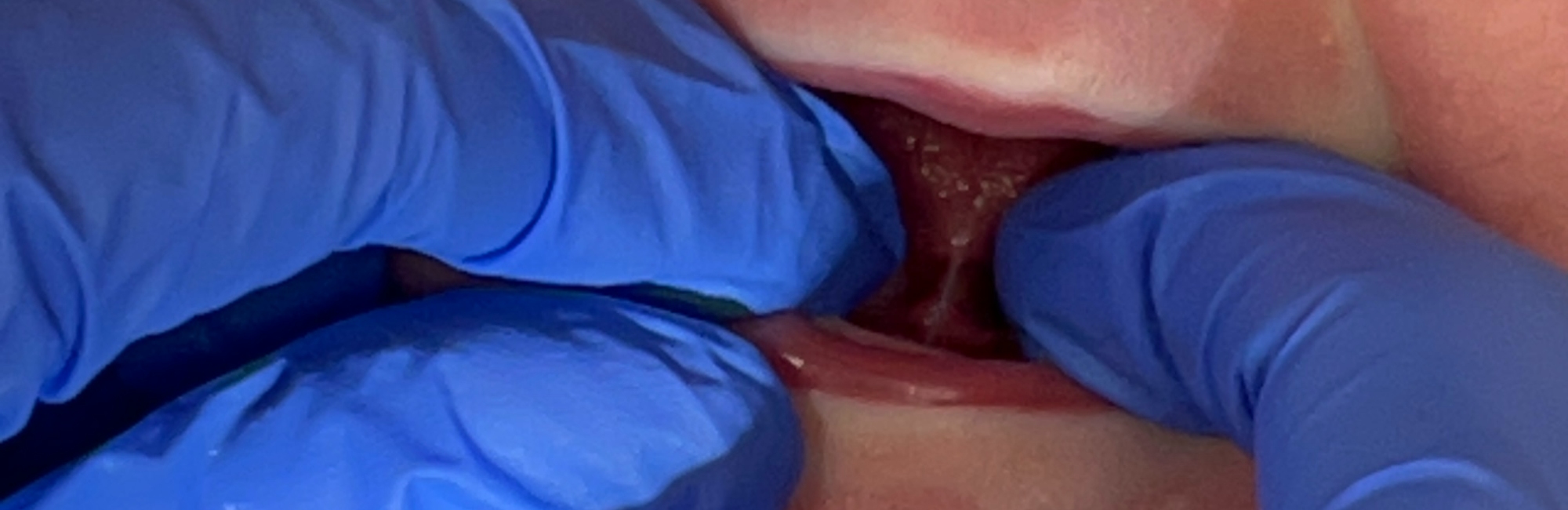
Ankyloglossia is a congenital abnormality of the lingual frenulum which significantly restricts movement of the infant’s tongue and has been linked with maternal nipple pain. Prevalence estimates vary between 3-10%, in the absence of agreed definitions and demonstrated overdiagnosis.61 You can find out more about ankyloglossia here.

Although many infants have a prominent and membranous frenulum, which may attach anywhere along the ventral surface of the tongue, a tongue-tie is a variation of frenulum which may attach close to the tip of tongue, often to the alveolar ridge instead of the floor of the mouth, and is assessed clinically as impacting on the infant’s capacity to suckle without causing maternal nipple pain.

Lack…

Keep reading
logo‑possums

Possums in your inbox

Evidence-based insights, tips, and tools. Occasional updates.

For parents

parents homebrowse all programsfind answers nowprograms in audiogroup sessions with dr pam

For professionals

possums for professionals
(the ndc institute)
guest speakers

About

the science behind possums/ndcwho we arendc research publicationsdr pam’s books

More resources

free resourcesdr pam’s blog

Clinical consultation

consult with dr pamfind a possums clinicfind an ndc accredited practitioner

Help & support

contact usfaqour social enterpriseprivacy policyterms & conditions

Social

instagramlinked infacebook

Possums acknowledges the traditional owners of the lands upon which The Possums Programs have been created, the Yuggera and Turrbal Peoples. We acknowledge that First Nations have breastfed, slept with, and lovingly raised their children on Australian lands for at least 65,000 years, to become the oldest continuous living culture on Earth. Possums stands with the Uluru Statement from the Heart.