Logo - The Possums baby and toddler sleep program.
parents home
librarybrowse all programsfind answers nowaudioprograms in audiogroup sessionsgroup sessions with dr pam
menu icon NDC Institute
possums for professionals
(the ndc institute)
menu icon eventsguest speakers
menu icon the sciencethe science behind possums/ndcmenu icon who we arewho we aremenu icon evidence basendc research publicationsmenu icon dr pam's booksdr pam's books
menu icon free resourcesfree resourcesmenu icon dr pam's blogdr pam's blog
menu icon consult with dr pamconsult with dr pammenu icon consult with dr pamfind a possums clinicmenu icon find a NDC accredited practitionerfind an ndc accredited practitioner
login-iconlogin

Welcome back!

Forgot password
get access
search

Search programs

PBL Advanced icon

PBL Advanced


  • Key management principle #1. Eliminate repetitive mechanical microtrauma for prevention and management of nipple pain and wounds
  • Key management principle #2. Minimise epidermal overhydration and moisture-associated skin damage for prevention and management of nipple pain and wounds
  • Nipple pain in lactation: management summary
  • Nipple wounds in lactation: management, including exudate, scabs, and nipple rest
  • When are analgesics, antifungal medications and antibiotics indicated in management of nipple pain and wounds?
  • Nipple shields and breastfeeding support in the clinic
  • Treat classic tongue tie when indicated
  • Interventions which don't help lactation-related nipple pain and wounds
  • Case study: Manon has nipple damage from the first week of her baby's life

Next article

Sign up now
  • PBL Advanced
  • S6: Lactation-related nipple pain + wounds
  • CH 4: Management of lactation-related nipple pain and wounds

Treat classic tongue tie when indicated
Dr Pamela Douglas26th of Jun 202423rd of Dec 2025

x

Ankyloglossia and nipple pain

Ankyloglossia is a congenital abnormality of the lingual frenulum which significantly restricts movement of the infant’s tongue and has been linked with maternal nipple pain. Prevalence estimates vary between 3-10%, in the absence of agreed definitions and demonstrated overdiagnosis.61 You can find out more about ankyloglossia here.

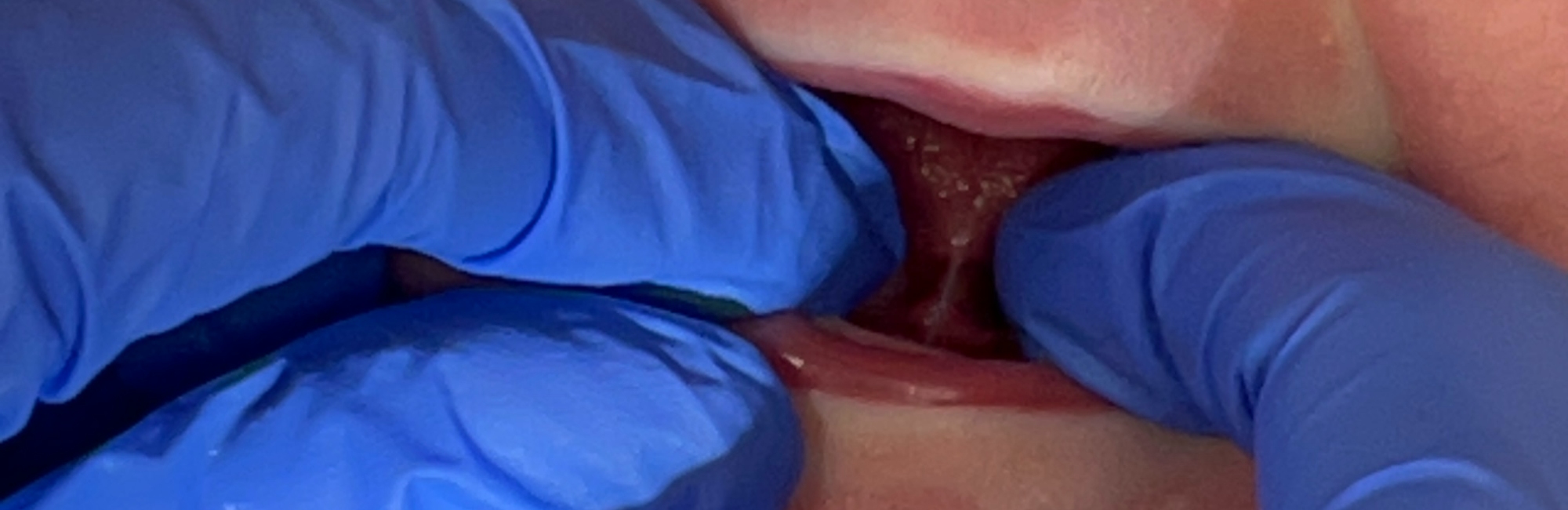
Although many infants have a prominent and membranous frenulum, which may attach anywhere along the ventral surface of the tongue, a tongue-tie is a variation of frenulum which may attach close to the tip of tongue, often to the alveolar ridge instead of the floor of the mouth, and is assessed clinically as impacting on the infant’s capacity to suckle without causing maternal nipple pain.

Lack of consensus definition of ankyloglossia is a methodological flaw in all investigations into this condition, and there are no studies comparing the effects of optimal fit and hold intervention with frenotomy.

  • A small case series of breastfeeding pairs showed that the effects of a brief gestalt intervention on tongue contour, measured by ultrasound imaging, was the same as had been measured elsewhere post-frenotomy.40 A classic tongue-tie typically requires a simple scissors frenotomy.45 62

NDC Clinical Guidelines for Anklylossia in summary

Simple scissors frenotomy is indicated for classic ankyloglossia.

There is no indication for laser frenotomy in non-syndromic infants with classic tongue tie. The diagnosis of posterior tongue tie has been disproved as both an anatomic and functional entity. There are no indications for labial frenotomy, nor buccal frenotomies.

The risks of laser lingual frenotomy include

  • Thermal damage to branches of the lingual nerve, resulting in loss of sensation of dorsum of tongue

  • Conditioned dialling up with breast or bottle feeds

  • Haemorrhage

  • Infection.

Infants with syndromic, complicated ankyloglossia require referral to an Ear, Nose and Throat surgeon, who may treat with laser technologies.

The image above is of a baby who had been referred with concern about tongue-tie, but who has a normal variation of lingual frenula. The baby and her mother had fit and hold problems whilst breastfeeding, which resolved with implementation of the gestalt method.

Recommended resources

The hypothesis that nipple pain and damage results from tongue friction, pinching, or compression lacks biological plausibility

Is infant frenotomy for breastfeeding problems an evidence-based solution?

What drives overdiagnosis and overtreatment of restricted oral connective tissues in breastfeeding babies?

How to perform a simple scissors frenotomy. Dr Pamela Douglas, F2F Masterclass Redcliffe 2019

Finished

share this article

Next up in Management of lactation-related nipple pain and wounds

Interventions which don't help lactation-related nipple pain and wounds

x

The research is heterogenous but does suggest that prevention and early intervention are important for nipple pain

A 2025 meta-analysis by Jia et al of interventions for lactation0related nipple pain concluded that

  1. Prevention and early intervention are more effective than delayed help

  2. The research on this topic is heterogenous.

There's no evidence to show that silver nipple protectors help nipple wounds heal

As background, it's helpful to know that silver-containing dressings or topical agents have not been shown to improve skin wound healing or prevent infection. Multiple studies show that silver exhibits cytotoxicity and slows the action of both keratinocytes and fibroblasts,…

Keep reading
logo‑possums

Possums in your inbox

Evidence-based insights, tips, and tools. Occasional updates.

For parents

parents homebrowse all programsfind answers nowprograms in audiogroup sessions with dr pam

For professionals

possums for professionals
(the ndc institute)
guest speakers

About

the science behind possums/ndcwho we arendc research publicationsdr pam’s books

More resources

free resourcesdr pam’s blog

Clinical consultation

consult with dr pamfind a possums clinicfind an ndc accredited practitioner

Help & support

contact usfaqour social enterpriseprivacy policyterms & conditions

Social

instagramlinked infacebook

Possums acknowledges the traditional owners of the lands upon which The Possums Programs have been created, the Yuggera and Turrbal Peoples. We acknowledge that First Nations have breastfed, slept with, and lovingly raised their children on Australian lands for at least 65,000 years, to become the oldest continuous living culture on Earth. Possums stands with the Uluru Statement from the Heart.