Logo - The Possums baby and toddler sleep program.
parents home
librarybrowse all programsfind answers nowaudioprograms in audiogroup sessionsgroup sessions with dr pam
menu icon NDC Institute
possums for professionals
(the ndc institute)
menu icon eventsguest speakers
menu icon the sciencethe science behind possums/ndcmenu icon who we arewho we aremenu icon evidence basendc research publicationsmenu icon dr pam's booksdr pam's books
menu icon free resourcesfree resourcesmenu icon dr pam's blogdr pam's blog
menu icon consult with dr pamconsult with dr pammenu icon consult with dr pamfind a possums clinicmenu icon find a NDC accredited practitionerfind an ndc accredited practitioner
login-iconlogin

Welcome back!

Forgot password
get access
search

Search programs

PBL Advanced icon

PBL Advanced


  • Key management principle #1. Eliminate repetitive mechanical microtrauma for prevention and management of nipple pain and wounds
  • Key management principle #2. Minimise epidermal overhydration and moisture-associated skin damage for prevention and management of nipple pain and wounds
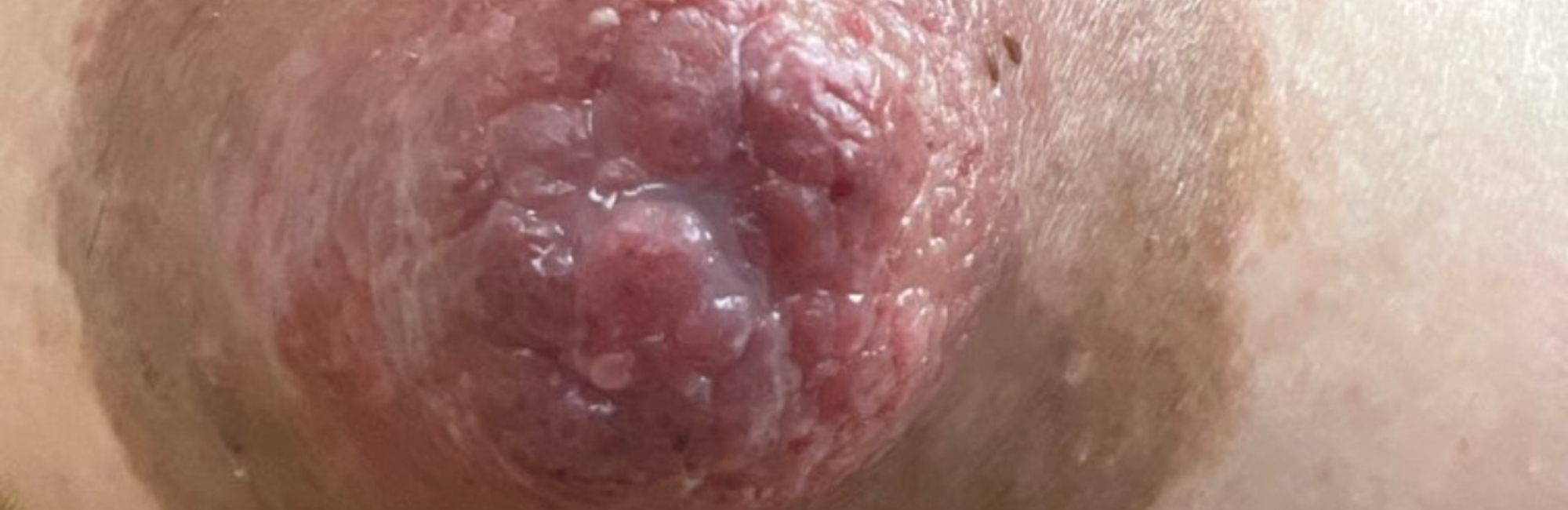
  • Nipple pain in lactation: management summary
  • Nipple wounds in lactation: management, including exudate, scabs, and nipple rest
  • When are analgesics, antifungal medications and antibiotics indicated in management of nipple pain and wounds?
  • Nipple shields and breastfeeding support in the clinic
  • Treat classic tongue tie when indicated
  • Interventions which don't help lactation-related nipple pain and wounds
  • Case study: Manon has nipple damage from the first week of her baby's life

Next article

Sign up now
  • PBL Advanced
  • S6: Lactation-related nipple pain + wounds
  • CH 4: Management of lactation-related nipple pain and wounds

Key management principle #2. Minimise epidermal overhydration and moisture-associated skin damage for prevention and management of nipple pain and wounds

Dr Pamela Douglas26th of Jun 202419th of Oct 2025

x

There is no evidence to suggest that topical applications to the nipple during lactation prevent pain and damage or improve healing

A range of topical applications on nipples during lactation have been shown to be ineffective for the healing of nipple pain and damage, including

  • Anti-fungal treatments

  • Mupirocin antibiotic cream

  • Hydrogel discs

  • Lanolin

  • Vitamin A and E

  • Vaseline

  • Sundry emollients, and

  • ‘All Purpose Nipple Ointment’.

You can read the research on these preparations here.

In addition, moist preparations increase the risk of epithelial overhydration and moisture-associated skin damage (MASD). You can find out about this here.

Why it's important to educate women about the risks of overhydration and moisture-associated skin damage when they have nipple pain and wounds

Here are the reasons why every breastfeeding or lactating women has the right to be informed about the risks of overhydration and moisture-associated skin damage.

  • Overhydration and MASD places the nipple-areolar complex at

    • Increased risk of pain and damage, and

    • Increased risk of damage or delayed healing.

  • Overhydration and MASD may be confused with an irritant contact dermatitis or an allergic contact dermatitis.1 - MASD results in an erythematous rash with clearly defined edges visible on the areola, corresponding with topical application.

Environmental humidity from occlusion, including from a bra and breastpad, alters skin pH and microbiome, and hydrates the epithelium. This interferes with the cohesive strength of the desmosomes, resulting in worsened epidermal deformation, increased length of crack propagation pathways, secondary crack formation, and oblique crack interfaces in the stratum corneum.

You can review the evidence concerning moist wound healing of nipples during lactation here.

Selected references

Khattak S, Ullah I, Yousaf M. Advancements in hydrogels: a comprehensive review of natural, synthetic, and hybrid innovations for wound healing. International Journal of Biological Macromolecules. 2025;327:147270.
Finished

share this article

Next up in Management of lactation-related nipple pain and wounds

Nipple pain in lactation: management summary

x

Primary interventions when a breastfeeding woman has nipple pain

Key management principle #1

  • Aim to eliminate mechanical microtrauma in breastfeeding, here.

  • Aim to eliminate mechanical microtrauma in mechanical milk removal (pumping), here.

Key management principle #2

  • Educate the lactating woman about the risks of overhydration and moisture-associated skin damage, here. This is so that she can make informed decisions as she finds her way through, deciding when she needs to wear a bra and when she can expose her nipples to the air.

  • Explain the benefits of exposing the nipples to the air as much…

Keep reading
logo‑possums

Possums in your inbox

Evidence-based insights, tips, and tools. Occasional updates.

For parents

parents homebrowse all programsfind answers nowprograms in audiogroup sessions with dr pam

For professionals

possums for professionals
(the ndc institute)
guest speakers

About

the science behind possums/ndcwho we arendc research publicationsdr pam’s books

More resources

free resourcesdr pam’s blog

Clinical consultation

consult with dr pamfind a possums clinicfind an ndc accredited practitioner

Help & support

contact usfaqour social enterpriseprivacy policyterms & conditions

Social

instagramlinked infacebook

Possums acknowledges the traditional owners of the lands upon which The Possums Programs have been created, the Yuggera and Turrbal Peoples. We acknowledge that First Nations have breastfed, slept with, and lovingly raised their children on Australian lands for at least 65,000 years, to become the oldest continuous living culture on Earth. Possums stands with the Uluru Statement from the Heart.