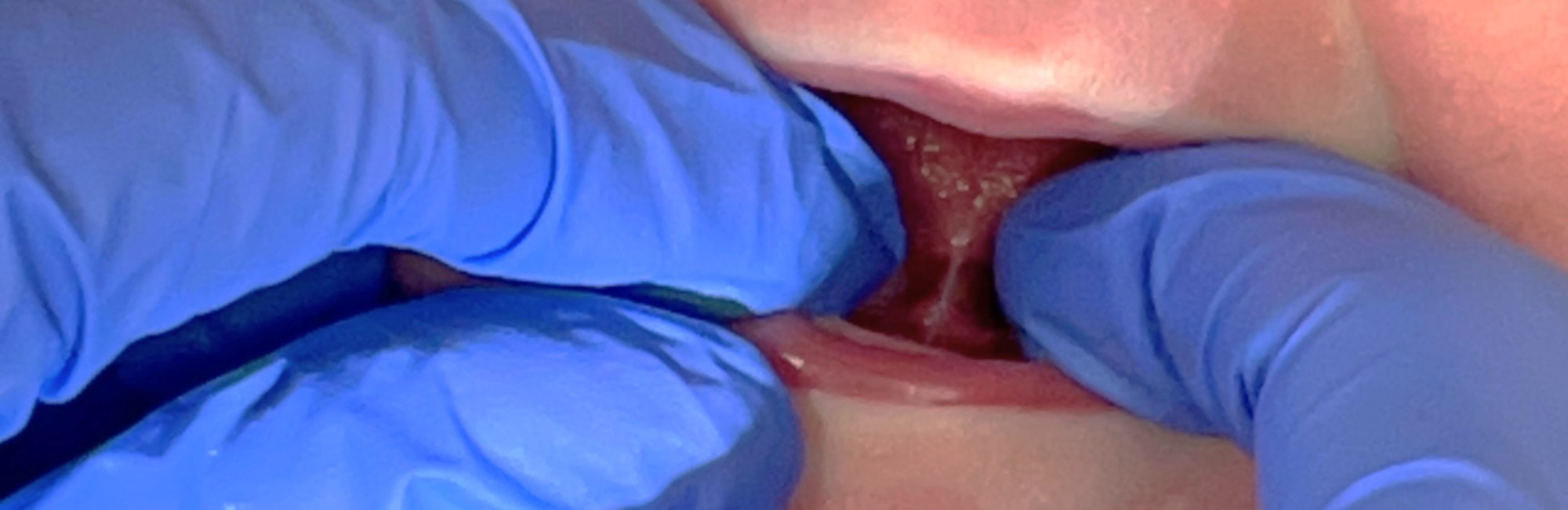
Busting the myth that baby's tongue isn't working properly when you face breastfeeding problems

You might be told that your baby's tongue is incompetent
Today, many breastfeeding support professionals claim that the 21st century infant tongue is failing to do what the baby Homo sapien's tongue has done successfully for three hundred thousand years, or what our baby Homo ancestors have done successfully for four million years before that, and or what all baby mammals have done successfully for two hundred million years. Now, whole conferences and professions are devoted to what is believed to be the problem of our babies' incompetent tongues.
-
You might be given the impression that your baby's tongue is a fierce, hard, tissue-ripping aggressor. You might have heard that your baby's tongue grasps at the breast.
-
You might be told that your baby's tongue, pulled tight by restricted connective tissues, is rubbing and burning and pinching your nipple, compressing and wedging, cutting and ulcerating.
-
You might have heard that your baby fusses a lot at the breast because she has developed dysfunctional neuromuscular pathways in her tongue and mouth.
-
You might even have heard that the innocent newborn tongue, bearing the weight of these terrible projections, drives the function - or dysfunction - of your baby's entire fascial and musculoskeletal system!
None of this is true.
Have you been advised to fix your baby's tongue and mouth movements by doing stretches and exercises on him?
Because the baby's tongue is believed to be incompetent (even when there's no classic tongue-tie, which occasionally does impact on functthe tongue's capacity to function), because the cranial nerves innervating the tongue are believed to be incompetent (even when there's no objective medical injury), because baby's reflexes are believed to be abnormal (even when baby is neurologically intact and well), you might be advised to massage and press and stretch inside your baby's mouth and perform other exercises on your baby's little body for a number of weeks, or more.
You might also be advised to work with your baby's joints to release nerves that are said to be compressed, or to move baby's body and limbs in ways which elicit certain reflexes. You'll hear it said that these manourvres reset faulty neural pathways, which affect the tongue. You might be asked to apply these exercises to your baby many times a day.
And you'll hear that if the tight oral tissues can't be fixed by exercises, then in order to protect baby's long-term orofacial or speech or behavioural development, they need be tamed by the burn of a laser or the scissor's cut.
But there is no credible evidence to support bodywork interventions for breastfeeding problems, nor frenotomy other than scissors frenotomy for a classic tongue-tie.
You'll even hear it said that these baby tongue troubles are because of traumatic births, or births with technological and medical interventions. This is not true. Historically, breastfeeding rates were much higher during periods when there were very high rates of childbirth-related maternal and infant injury, illness, or death. Similarly, in low and middle income countries today, where there are higher maternal mortality rates and higher risks of maternal injury during birth (- a situation that should not be tolerated by the global community), we nevertheless typically find higher breastfeeding rates.
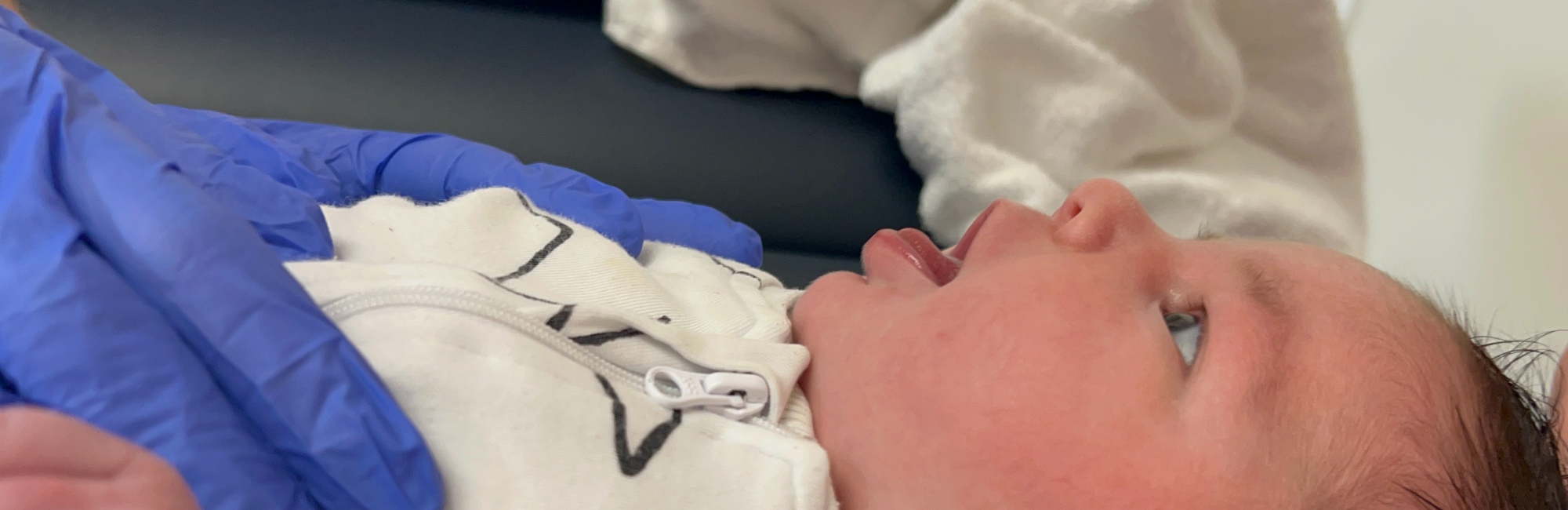
How sad I feel for the supple, sensing, incredibly sensitive little baby tongue! How sad it is that the soft little infant tongue has been so much maligned!
Recommended resources
-
You can find out about bodywork and breastfeeding here.
-
You can find out about frenotomy here.
-
You can find out about the possible side-effects of frentomy here.
Selected references
Douglas PS, Keogh R. Gestalt breastfeeding: helping mothers and infants optimise positional stability and intra-oral breast tissue volume for effective, pain-free milk transfer. Journal of Human Lactation. 2017;33(3):509–518.
Douglas PS, Geddes DB. Practice-based interpretation of ultrasound studies leads the way to less pharmaceutical and surgical intervention for breastfeeding babies and more effective clinical support. Midwifery. 2018;58:145–155.
Douglas PS, Perrella SL, Geddes DT. A brief gestalt intervention changes ultrasound measures of tongue movement during breastfeeding: case series. BMC Pregnancy and Childbirth. 2022;22(1):94. DOI: 10.1186/s12884-12021-04363-12887.
Mills N, Keough N, Geddes DT, Pransky S. Defining the anatomy of the neonatal lingual frenulum. Clinical Anatomy. 2019;32:824-835.
Mills N, Lydon A-M, Davies-Payne D, Keesing M, Mirjalili SA, Geddes DT. Imaging the breastfeeding swallow: pilot study utilizing real-time MRI. Laryngoscope Investigative Otolaryngology. 2020;5:572-579.