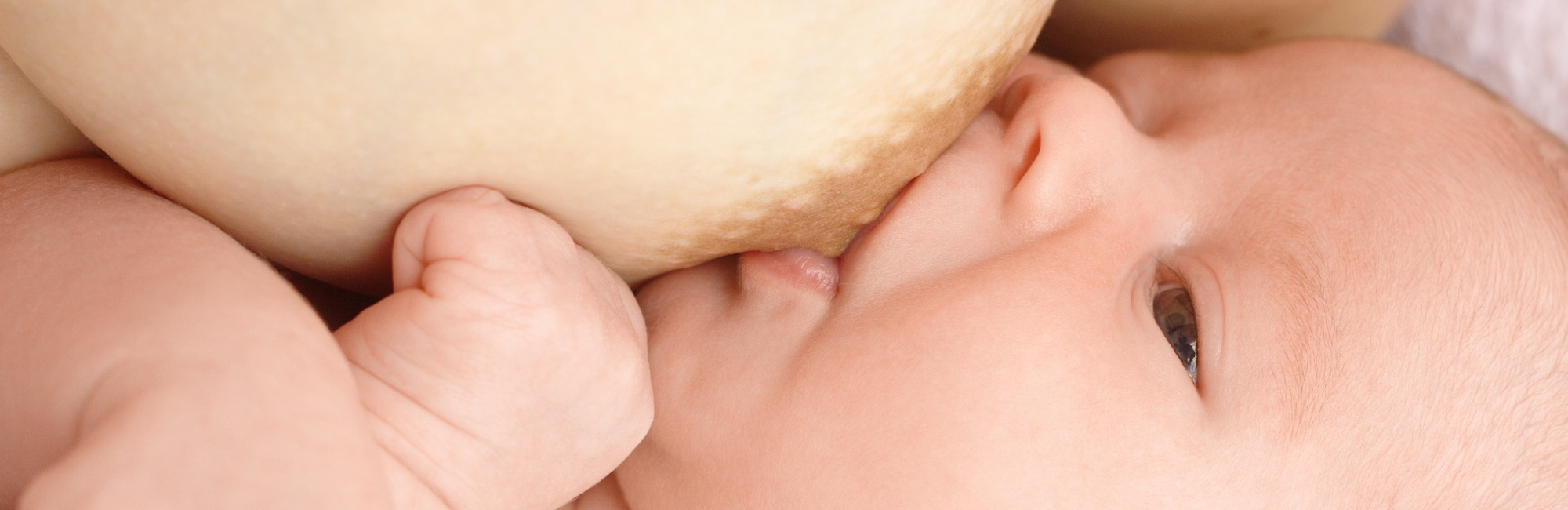
What are your baby's oral frenula?

What is a frenulum?
A frenulum is the name given to connective tissue which secures an organ inside the human body. A frenulum is a necessary tissue tether or anchor. It's not meant to be too loose! A frenulum is meant to blanch at its insertion when it's pulled on - that's a sign that it's doing its job, holding tension and securing two kinds of tissues or organs together.
Just as human faces have very different shapes, so the tissues inside our babies' mouths have highly variable shapes and tensions. Humans have a
-
Lingual frenulum (under the tongue)
-
Maxillary labial frenulum (under the upper lip)
-
Buccal frenula (which secure the upper cheek to the upper gum)
-
Mandibular labial frenulum (under the lower lip).
Your baby's frenula will look very different to other babies' frenula, but there is a very high likelihood that they are all normal. All infant buccal and labial frenula are normal, on a spectrum of variation - unless your baby is born with a rare congenital syndrome which includes oral fusions, which isn't relevant to our discussions here.
Why is there so much misunderstanding about a baby's oral connective tissues?
The research suggests that a small percentage of breastfeeding babies might benefit from a lingual frenotomy, although benefit is still not clearly established.
Despite what you hear, baby oral connective tissues don't actually change shape or release or have less tension in response to traditional bodywork therapy. These are pristine tissues, freshly made! They have not been exposed to years of dysfunctional movement patterns which gradually affect cells and fibres and their function.
Baby's oral connective tissues and your baby's motor patterns during sucking and swallowing respond very flexibly to context (that is, to how much breast tissue is drawn up into your baby's mouth, which depends on how your baby fits into your body). You can find out about this here.
The frenula inside your baby's mouth are a 'continuous variation trait'. Some human traits, like eye colour, or a cleft palate, are either present or absent. But a continuous variation trait exists on a spectrum. A person's height, weight, cognitive capacity, and blood pressure are examples of continuous variation traits.
Defining a continuous variation trait as normal or abnormal can be difficult because any boundary we set on the spectrum is arbitrary, and affected by a range of factors which are unique and variable within any one individual.
A great deal of research clarification is required to work out what parts of the spectrum (e.g. high blood pressure cut-offs) are more likely to cause health problems. Even then, many other pieces of contextual information need to be taken into account. This is the situation with a baby's lingual frenulum, too.
-
You can find out about the anatomy of the frenulum under your baby's tongue here.
-
You can find out how babies suck in breastfeeding here.
-
You can find out about classic tongue-tie here, upper-lip and buccal ties here, and posterior tongue-tie here.
-
You can find out about bodywork therapy and when it might help here.
The mother of the four-month-old baby in the photo at the top of this page brought him in to see me for a second opinion. The baby had been diagnosed with tongue-tie, and the mother had been told by her previous breastfeeding support professionals that this explained his fussy behaviour, both during and between breastfeeds. Whilst the baby's frenulum was a prominent transparent anterior membrane which inserted at the bottom of the inner lower gum and ran about 60% of the way along the undersurface of the anterior tongue, this baby's fussiness completely resolved with fit and hold work and also the Possums 5-domain approach to unsettled infant behaviour. I was able to say with confidence that this baby's prominent anterior frenulum was not a tongue-tie.
Selected references
Kummer AW. Ankyloglossia: misinformation vs. evidence regarding its effects on feeding, speech, and other functions. Journal of Otolaryngology - ENT research. 2024:DOI: 10.15406/joentr.12024.15416.00552.
Mills N, Keough N, Geddes DT, Pransky S. Defining the anatomy of the neonatal lingual frenulum. Clinical Anatomy. 2019;32:824-835.