Logo - The Possums baby and toddler sleep program.
parents home
librarybrowse all programsfind answers nowaudioprograms in audiogroup sessionsgroup sessions with dr pam
menu icon NDC Institute
possums for professionals
(the ndc institute)
menu icon eventsguest speakers
menu icon the sciencethe science behind possums/ndcmenu icon who we arewho we aremenu icon evidence basendc research publicationsmenu icon dr pam's booksdr pam's books
menu icon free resourcesfree resourcesmenu icon dr pam's blogdr pam's blog
menu icon consult with dr pamconsult with dr pammenu icon consult with dr pamfind a possums clinicmenu icon find a NDC accredited practitionerfind an ndc accredited practitioner
login-iconlogin

Welcome back!

Forgot password
get access
search

Search programs

PBL Foundations icon

PBL Foundations


  • Does your baby have tongue-tie or other oral connective tissue or fascial restrictions resulting in breastfeeding problems?
  • What are your baby's oral frenula?
  • Does it seem as if your baby's tongue is causing friction burns, pinching, or painful compression?
  • Does your baby have a classic tongue-tie (or true ankyloglossia)?
  • Does your baby have a posterior tongue-tie?
  • Does your baby have an upper lip-tie or buccal ties?
  • Is your baby's torticollis causing tongue or other fascial restrictions which interfere with breastfeeding?

Next article

Sign up now
  • PBL Foundations
  • S10: Infant tongue-tie and fascial restrictions
  • CH 2: Working out if your baby has oral connective tissue restriction

Does it seem as if your baby's tongue is causing friction burns, pinching, or painful compression?
Dr Pamela Douglas26th of Aug 20248th of Feb 2026

x

Why baby's tongue isn't doing the damage (despite what you might hear)

It's not the tongue, but high stretching forces from nipple and breast tissue drag which damage the skin (or epidermis) of the nipple.

Your little baby's tongue is an unusual muscle which is able to change shape very easily. This allows the tongue to mould flexibly around the nipple and breast tissue which baby draws up into his mouth. And your baby's tongue is moist, covered with slippery mucous and saliva secretions, which form a highly effective natural lubricant.

You don't need to worry about your baby's tongue's strength and endurance, the way you hear - unless your baby has a true medical condition, tongue strength and endurance are not relevant to breastfeeding. All the tongue has to do is drop in tandem with the jaw, nestling around the nipple and breast tissue, then follow the jaw back up.

The functions of the visible part of your baby's tongue during breastfeeding are

  1. To participate in the detection of your nipple entering your baby's mouth, which triggers the ongoing reflex of baby's jaw drop

  2. To mould around and support the nipple and breast tissue inside baby's mouth

  3. To create a warm, moist, soft and slippery cushioning (which I refer to as a sensory bath) around the nipple and breast tissue, which triggers oxytocin release and your milk ejection.

Saliva and mucous in baby's mouth (as well as breast milk) protect against friction burns of baby's mouth and your nipple

It doesn’t make sense to think that nipple damage is caused by rubbing of baby’s tongue, although you'll often hear this said.

Your baby’s mouth is moistened with copious amounts of saliva and mucous from birth, and, after a few days, by your breast milk too. The surface of the tongue slides with minimal friction against the mucosa covering baby's inner cheeks, palate, and gums.

A burn or graze caused by tongue friction would look quite different to the cracks and ulcers that characterise nipple damage. They would be broader, less specific, and would occur on one side of the nipple (depending on the angle your baby is breastfeeding from), but not in the locations where cracks and ulcers form.

Cracks are often at the base of the nipple, as well as on the face. Nipple cracks or fissures are quite different to friction burns!

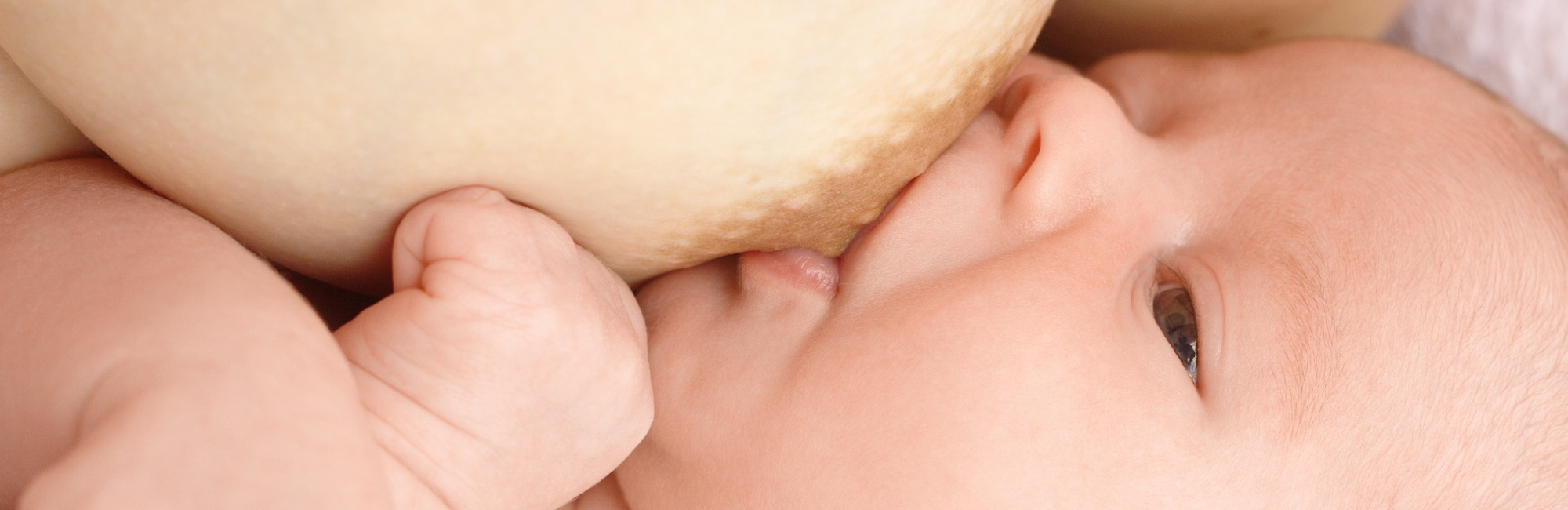
The picture at the top of this page shows a baby who is positioned in a very unstable way at the breast, with his little lower arm stuck between the mother's body and his body. You can just see that his chest and tummy are turning out away from his mother's body too. As a result, he is on the breast asymmetrically, with lots of his lips visible - unfortunately a recipe for nipple and breast tissue drag (not to mention fussing at the breast), whcih is likely to result in nipple pain and damage.

Recommended resources

  • You can find out what's actually causing nipple pain or damage here.

  • You can find out more about the terribly misunderstood baby tongue here.

  • You can find out about tongue-tie here.

  • A more detailed analysis of the research showing that your baby's tongue is not responsible for nipple and areola pain and damage is here.
Finished

share this article

Next up in Working out if your baby has oral connective tissue restriction

Does your baby have a classic tongue-tie (or true ankyloglossia)?

tongue-tie

What is a true or classic tongue-tie?

It's not possible for me to give you information here which determines whether or not your baby has a true tongue-tie which is causing or contributing to the breastfeeding problems that you and your baby are experiencing. It is important to make this decision in consultation with your own local GP, midwife, or other health professional, who is able to properly examine you and your baby,…

Keep reading
logo‑possums

Possums in your inbox

Evidence-based insights, tips, and tools. Occasional updates.

For parents

parents homebrowse all programsfind answers nowprograms in audiogroup sessions with dr pam

For professionals

possums for professionals
(the ndc institute)
guest speakers

About

the science behind possums/ndcwho we arendc research publicationsdr pam’s books

More resources

free resourcesdr pam’s blog

Clinical consultation

consult with dr pamfind a possums clinicfind an ndc accredited practitioner

Help & support

contact usfaqour social enterpriseprivacy policyterms & conditions

Social

instagramlinked infacebook

Possums acknowledges the traditional owners of the lands upon which The Possums Programs have been created, the Yuggera and Turrbal Peoples. We acknowledge that First Nations have breastfed, slept with, and lovingly raised their children on Australian lands for at least 65,000 years, to become the oldest continuous living culture on Earth. Possums stands with the Uluru Statement from the Heart.