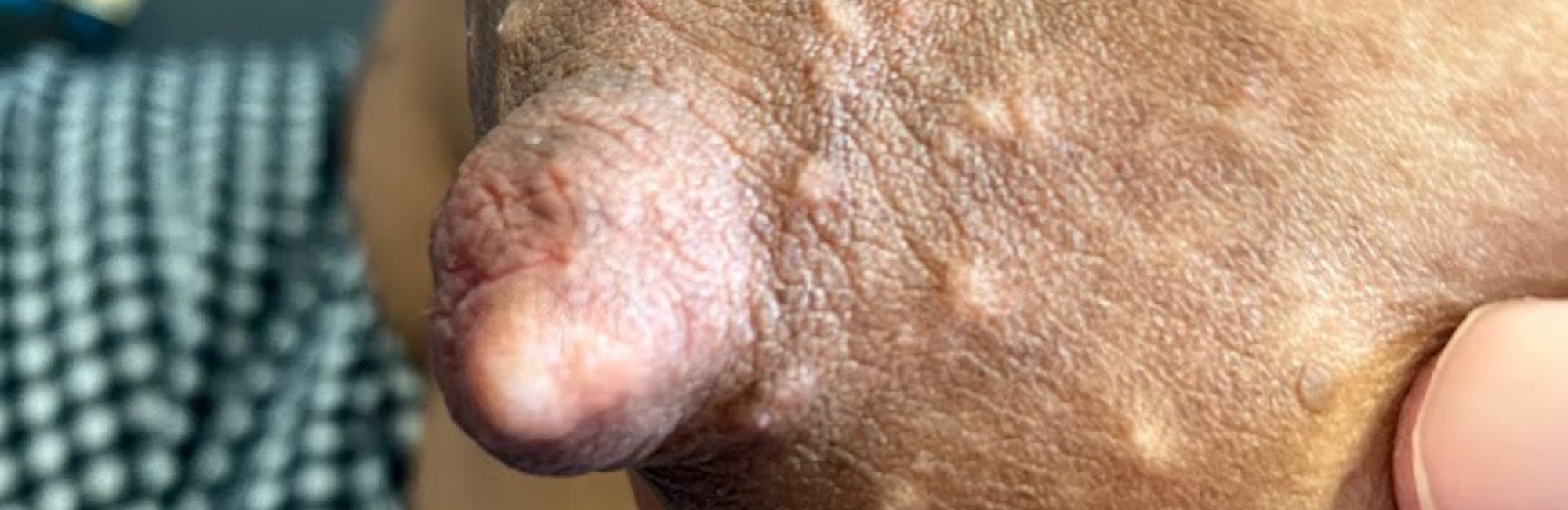
Nipple white spot during breastfeeding #1: hyperkeratosis
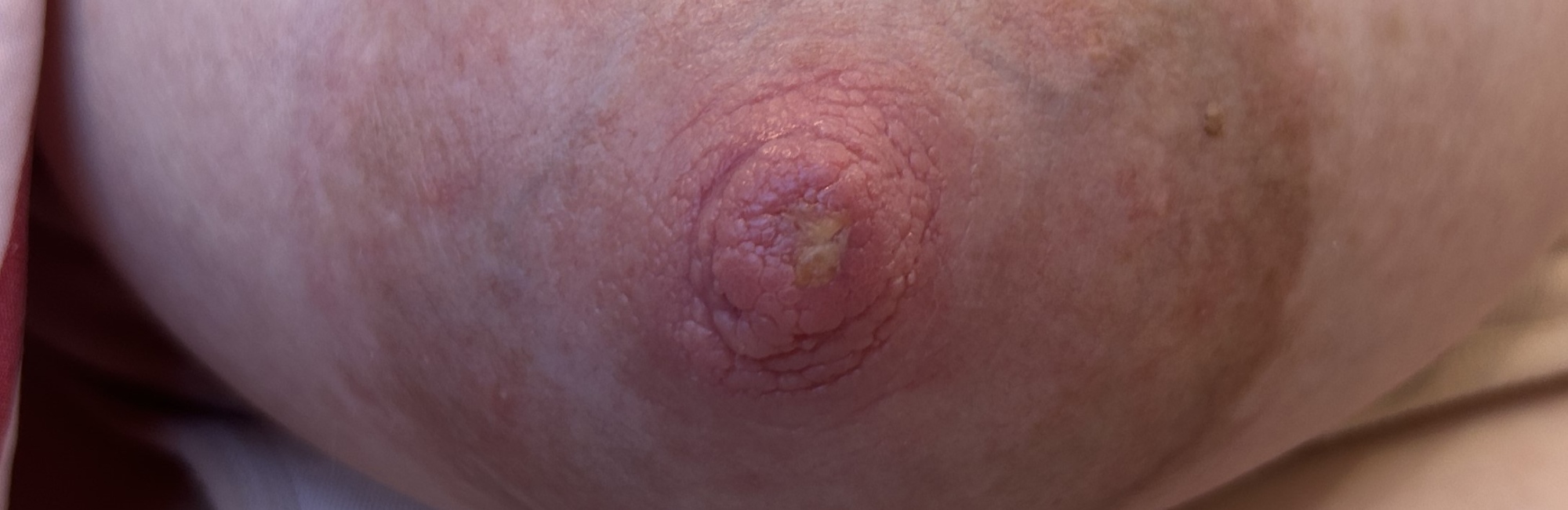
Three kinds of nipple white spots can develop during lactation
These are three kinds of white spots that might occur on your nipple while your lactating:
-
Hyperkeratosis
I've put them in what I estimate to be the order of frequency, based on my clinical experience, since there's not been any research on the prevalence of white spots that I can find!
What is a hyperkeratotic white spot?
The most common kind of white spot which can develop on your lactating nipple is due to hyperkeratosis. Here's what happens.
The outermost layer of your skin, known as the stratum corneum, protects your skin from penetration by water and damage by other things including mechanical forces. Corneocytes are flattened dead cells, full of the tough protein keratin, which make up the outermost layer of your skin. Corneocytes are embedded in piled up layers of lipids.
When repeated mechanical forces are applied to any one focussed spot on your skin or nipple, the area may become very tender and inflamed. The layers of corneocytes increase and the stratum corneum thickens up, to protect you. This thickening of the stratum corneum is known as hyperkeratosis.
-
Hyperkeratosis is the most common reason why breastfeeding women develop pale white, cream, yellowish or creamy-yellow spots on their nipples.
-
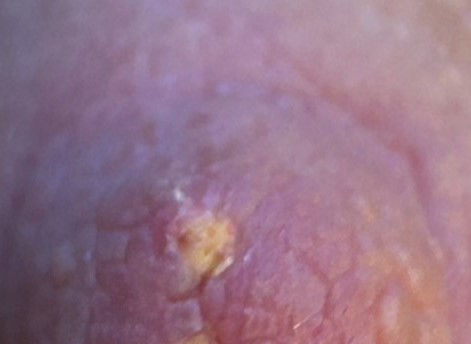
Before a breastfeed, when allowed to dry, the hyperkeratotic spot might be a dull yellowish colour.
-
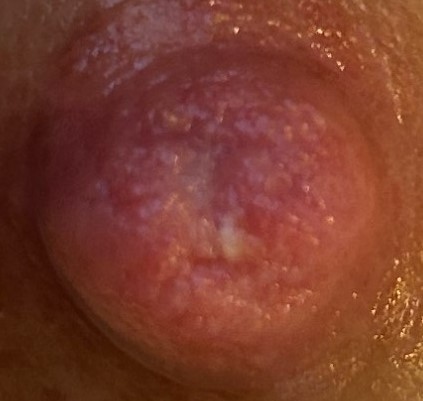
After a breastfeed, the hyperkeratotic spot may be a bright white, because hydration of the outer layers of your nipple skin with milk and saliva makes changes the colour of that small thickened patch.
-
-
A hyperkeratotic spot usually has an irregular or more defuse border.
-
The hyperkeratotic spot usually (though not always) hurts, on a spectrum of sensation from tender to very painful. A hyperkeratotic spot is often exquisitely painful, because of the many sensory nerve endings found in the dermis of the nipple. The hard layer distorts or presses upon the sensitive underlying dermis during feeds.
-
Multiple, irregular sized hyperkeratotic spots may also form on the face of a nipple which is subject to repetitive microtrauma.
-
Cutting out hyperkeratosis while you're still breastfeeding is never recommended since this might leave a thickened or scarred area which could worsen symptoms for some women.
Below is a photo of a painful hyperkeratotic spot, before breastfeeding. You can see how the border of a hyperkeratotic spot is irregular and poorly defined (quite different to the clearly defined margin and circular, even sometimes bulging shape of a milk blister, which is much less common).
Below is a photo of a painful hyperkeratotic spot, after breastfeeding. A hyperkeratotic spot tends to look whiter and perhaps more clearly defined after a breastfeed.
What to do if you have an area of hyperkeratosis on your nipple
-
Attempting to remove a hyperkeratotic spot (either by 'exfoliation' in the shower or by using a fingernail or needle) will only worsen the mechanical microtrauma, which worsens the hyperkeratosis and means it will take longer to resolve.
-
The most important step to remove repetitive mechanical microtrauma impacting that one spot on your nipple during breastfeeding, as best you can. This requires a gestalt intervention for fit and hold, to spread the stretching forces more evenly over the nipple and breast tissue when your baby suckles, instead of having a stretching pressure focussing too much on this one spot. You can find out about the gestalt method starting here.
-
Sometimes a patch of hyperkeratosis is so painful that you may need to stop feeding from that breast until it has healed. It may take weeks to resolve completely, but a break of five to seven days might be enough, if you then return to breastfeeding using the gestalt method, to eliminate nipple and breast tissue drag.
-
Sometimes a nipple shield can give temporary relief, providing some protection from stretching forces and helping the skin heal while you deal with the underlying fit and hold problem.
-
Although there is no evidence to support this approach, either, I sometimes suggest using a steroid cream like mometasone daily for a week, in the hope that its anti-inflammatory effects might help the hyperkeratosis to resolve. There is no need to wrap your nipple in plastic wrap or cover it after you've applied a steroid cream, as this may result in overhydration or moisture-associated skin damage, which makes your nipple more vulnerable to inflammation and damage. You can find out about moisture-associated skin damage here.
-
There is no evidence to suggest laser or light therapy will help, but there is some evidence suggesting (but certainly not proving!) that light therapy might have a role in treatment of persistent nipple pain more generally. There are physiological reasons to think it could be worth a try. Please talk this over with your GP or breastfeeding support health professional.
The way of categorising white spots which I offer you here is developed from my clinical experience and knowledge of the research literature, and is the NDC or Possums categorisation of white spots, building on the NDC mechanobiological model. It was published in the Women's Health journal in 2022.
Recommended resources
Nipple white spot during breastfeeding #2: epidermal inclusion cyst
Nipple white spot during breastfeeding #3: milk blister
Selected references
Douglas PS. Re-thinking lactation-related nipple pain and damage. Women's Health. 2022;18:17455057221087865.
Douglas PS. Does the Academy of Breastfeeding Medicine Clinical Protocol #36 'The Mastitis Spectrum' promote overtreatment and risk worsened outcomes for breastfeeding families? Commentary. International Breastfeeding Journal. 2023;18:Article no. 51 https://doi.org/10.1186/s13006-13023-00588-13008.
O’Hara M. Bleb histology reveals inflammatory infiltrate that regresses with topic steroids: a case series. Breastfeed Med 2012; 7(Suppl. 1): S2.