Knowledge of mechanobiology is essential for clinical management of breastfeeding and lactation-related problems

The frontier science of mechanobiology offers vital insights into how breastfeeding works
Mechanical signals are a constant feature of the natural world, resulting in finely tuned coordination among signalling networks and genes. You can find out about this here.
The powerful effects of the physical forces which act upon and within our body and our baby's body have been largely overlooked in the science of human lactation, but are fundamental to breastfeeding and lactation, and therefore to the Neuroprotective Developmental Care (NDC) or Possums programs. The mammary gland is highly mechanoresponsive tissue, yet the critical role of mechanical factors in the signalling networks of lactation is only beginning to be elucidated.
On the macroscopic scale, it's not surprising that the effects of embodied physical forces have been overlooked, since our society's relationship with the bodies of cis-women (and even more for so for the bodies of non-binary or transgendered people, or people with differences in sex development) remains highly problematic.
-
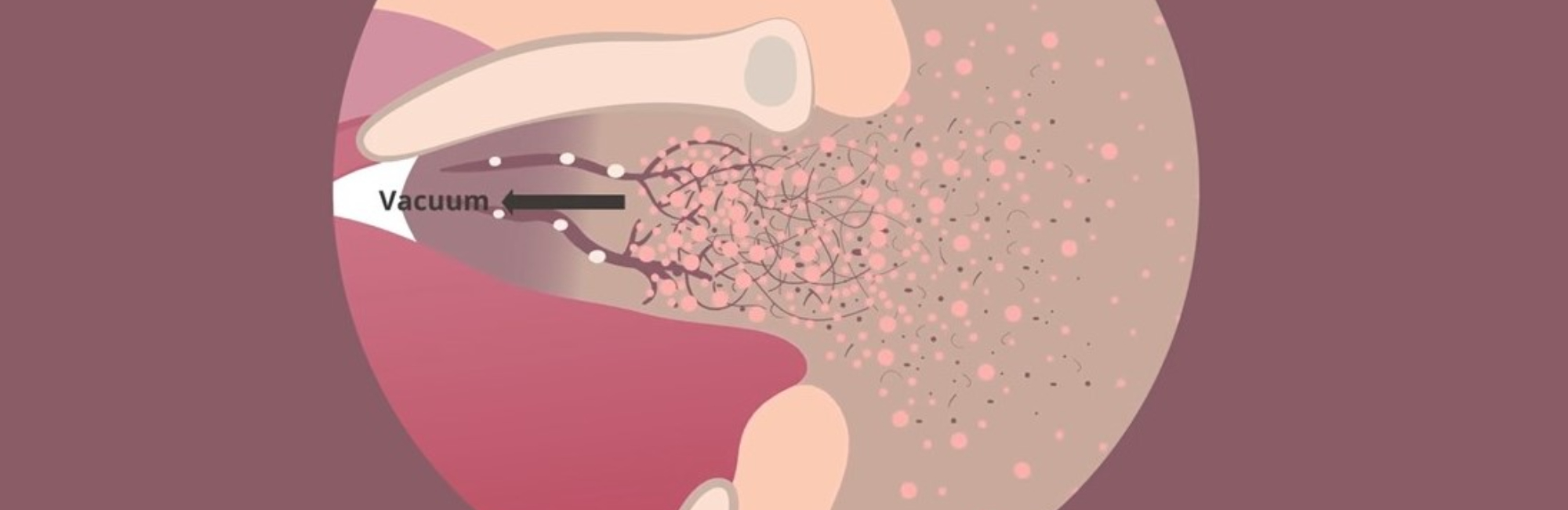
Yet the physicality of milk flow involves mechanical forces on both macro- and microscales. The physicality of two human bodies interacting involves the mechanical forces of touch - pressure on the skin, whether light or firm. Baby's mouth suckling on the breast applies mechanical forces of touch and of vacuum - contextually, affected by the way your baby fits into your body.
-
Microscopically, cells are constantly exposed to mechanical pressures. This is even more the case with the oscillating hydrostatic pressures within the lactiferous ducts and alveoli of the mammary gland which occur as milk volumes rise and fall in response to milk removal.
The exploration of mechanobiology and the mammary gland is currently mostly located in the breast cancer research literature, where it's been observed that: "The biochemical signals that regulate morphogenesis and remodeling of the mammary gland are well characterized [but] occur in the context of a less well explored mechanical microenvironment." (Anlas and Nelson 2024 p. 434, bolding mine)
The mechanobiology of lactation is foundational to the NDC Clinical Guidelines for lactation-related problems
The NDC Clinical Guidelines are clinical translations of the innovative NDC mechanobiological models of the regulation of the human mammary gland in lactation. NDC proposes that understanding mechanobiology is fundamental to holistic clinical assessment and management of the following lactation-related problems
-
Maternal nipple pain and damage (starting here)
-
Maternal breast inflammation (starting here)
-
Maternal musculoskeletal pain associated with breastfeeding (here)
-
Other clinical presentations which result from positional instability and mechanical breast tissue drag as baby suckles, such as
-
Production mismatch (either higher or lower than infant need). You can find out about the NDC mechanobiological models of milk secretion downregulation here and upregulation here.
Mechanical forces and the lactating mammary gland
Cell signalling and function during lactation are affected by mechanical stressors from
-
Cell-intrinsic forces, for example
-
Contractile forces exerted by the actin-myosin skeleton of myoepithelial cells.
-
Contraction of myoepithelial cells of milk glands creates pressure. This pressure causes the alveolar gland to contract and take on a random scrunched up shape. This in turn places pressure or mechanical stress upon any milk that is inside the alveolar lumen, so that the milk flows out into the duct at a high pressure, where any milk present is resting at a lower pressure.
-
Contraction of myoepithelial cells of the lactiferous ducts creates pressure in the stroma, as the ducts dilate and accommodate milk flow under pressure from the alveolar glands.
-
-
Cell-cell interactions which provide intrinsic mechanical cues and regulate normal mammary gland development and homeostasis. Mammary epithelial cells are tightly interconnected via desmosomes, tight junctions and adherens junctions, and interact closely with the basement membrane via hemidesmosomes.
-
-
Cell-extrinsic forces created by extracellular tissue tension and resulting in lactocyte stretching, loss of lactocyte apical extensions, inter-lactocyte tight junction strain or rupture arising from elevated intraluminal pressure (also known as hydrostatic pressure). Extrinsic forces can be
-
Compressive (aligned and inward pushing),
-
Tensile (aligned and outward stretching), or
-
Shear (unaligned) e.g. mechanical effect of milk flowing through ducts on ductal epithelial cells.
-
-
Stromal substrate mechanics, that is, stromal tissue density and tension or pressure, including interstitial fluid tension or pressure, which act upon the easily compressed lactiferous ducts;
-
Environmental force on stroma and ducts, for example
-
Intra-oral mechanical forces during suckling
-
Direct external pressure on an area of the breast resulting in micro-vascular trauma and elevated stromal tension or
-
Direct external pressure on an area of the breast resulting in prolonged ductal compression.
-
-
Effects of mechanical forces on the nipple of the lactating breast, either
-
Stretching of nipple epidermis, or
-
Deformational force applied to nipple stroma.
-
Recommended resources
Mechanical pressures are the engine room of breastfeeding and lactation
The NDC mechanobiological model explains downregulation of breast milk production
The NDC mechanobiological model explains clinically inflamed lactating breast stroma
Adipocytes and mechanical sensing
Selected references
Basree M, Shinde N, Koivisto C. Abrupt involution induces inflammation, estrogenic signaling, and hyperplasia linking lack of breastfeeding with increased risk of breast cancer. Breast Cancer Research. 2019;21(80):https://doi.org/10.1186/s31058-019-1163-7
Boyle ST, Poltavets V, Samuel MS. Mechanical signaling in the mammary microenvironment: from homeostasis to cancer. In: In: Birbrair Ae, editor. Tumor Microenvironment Advances in Experimental Medicine and Biology. 1329. Cham.: Springer; 2021. p. https://doi.org/10.1007/1978-1003-1030-73119-73119_73119.
Douglas P. Re-thinking benign inflammation of the lactating breast: a mechanobiological model. Women's Health. 2022;18:17455065221075907.
Douglas PS. Re-thinking benign inflammation of the lactating breast: classification, prevention, and management. Women's Health. 2022;18:17455057221091349.
Douglas PS. Re-thinking lactation-related nipple pain and damage. Women's Health. 2022;18:17455057221087865.
Fetherstone C. Mastitis in lactating women: physiology or pathology? Breastfeeding Review. 2001;9:5-12.
Ingman WV, Glynn DJ, Hutchinson MR. Inflammatory mediators in mastitis and lactation insufficiency. Journal of Mammary Gland Biology and Neoplasia. 2014;19:161-7.
Jindal S, Narasimhan J, Vorges VF, Schedin P. Characterization of weaning-induced breast involution in women: implications for young women's breast cancer. Breast Cancer. 2020;6(55):https://doi.org/10.1038/s41523-020-00196-3.
Kim T-J. Mechanobiology: a new frontier in biology. Biology. 2021;10(570):https://doi.org/10.3390/biology10070570.
Kobayashi K, Han L, Lu S-N, Ninomiya K, Isobe N, Nishimura T. Effects of hydrostatic ompression on milk production-related signaling pathways in mouse mammary epithelial cells. Experimental Cell Research. 2023;432:113762.
Noam Zuela-Sopilniak, Lammerding J. Can’t handle the stress? Mechanobiology and disease. Trends in Molecular Medicine. 2022;28(9):710-725.
Stewart TA, Hughes K, Stevenson AJ, Marino N, Ju AL, Morehead M, et al. Mammary mechanobiology - investigating roles for mechanically activated ion channels in lactation and involution. Journal of Cell Science. 2021;134:doi:10.124/jcs.248849.
Weaver SR, Hernandez LL. Autocrine-paracrine regulation of the mammary gland. Journal of Dairy Science. 2016;99:842-53.
Zaragoza R, Garcia-Trevijano ER, Lluch A, Ribas G, Vina JR. Involvement of different networks in the mammary gland involution after the pregnancy/lactation cycle: implications in breast cancer. International Union of Biochemistry and Molecular Biology. 2015;67(4):227-38.