Toddlers are messy eaters!
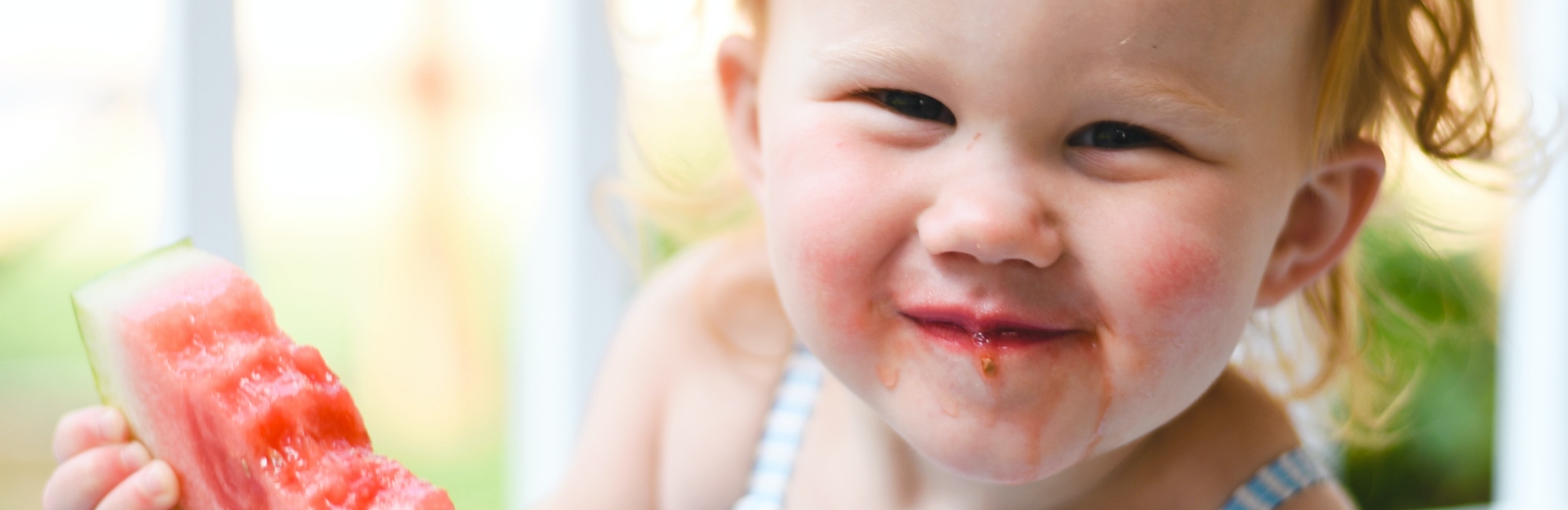
Toddlers are messy eaters!
Well, first up – this is going to be messy! Making a big mess is a normal part of your child’s developing relationship with food.
When feeding a toddler, just relax and enjoy sharing foods together as best you can, even though your toddler might not eat much. It’s important never to pressure your little one to eat, but to offer a wide variety of options from your own diet. We want your toddler to develop a positive, no-stress relationship with food.
Some days you might not have much energy for the clean-up, and you’ll try to keep it contained. But overall, it’s best to set it up so that there's no problem if your little one makes a mess. Experimenting with the feel and taste of food is an important way your child develops positive feelings about food and eating.
All around the world, families make mealtimes a special opportunity to enjoy each other’s company and the company of friends. We want your toddler to develop this kind of enjoyable, social relationship with food.
This is the best way to help your toddler develop a positive, no-stress relationship with different foods that your family normally eats.
Some helpful tips!
Everywhere you look at the moment, you'll find complicated rules about little people and food. Possums aims to make the mix between little people and food simple, safe, and enjoyable. Here are some useful tips for feeding a toddler.
-
Sit your toddler down with you each time you eat. Don’t worry if your toddler’s mealtime doesn’t last more than a few minutes!
-
It’s normal for toddlers to eat only small amounts and at different times, often quite erratically, so have plenty of good quality snacks (especially fruit) available in between meals.
-
Limit cow’s milk to around 2 cups (about 500 mls) in a 24-hour period.
-
Don’t worry if your toddler seems quite picky and doesn't eat much – as long as overall, as the months pass and you go in for check-ups, your doctor or maternal child health nurse is happy with your child’s overall weight gains.
-
Toddler's formula is not better for your little one's brain or immunity than cow's milk, but contains extra carbohydrates and sugars which aren't good for your toddler's health.
Recommended resources
Introduction to toddlers and food
Things to avoid with infants and foods
Would weaning from the breast or increasing the amount of solids your toddler eats help with sleep?
Selected references
Pjetraj D, Pjetraj A, Sayed D, Severini M, Falcioni L, Svarca LE, Gatti S, Lionetti ME. Decoding Picky Eating in Children: A Temporary Phase or a Hidden Health Concern? Nutrients. 2025 Dec 12;17(24):3884. doi: 10.3390/nu17243884. PMID: 41470829; PMCID: PMC12736178.
McCann J, Woods J, Mohebbi M, Russell C. Regulated nutrition claims increase perceived healthiness of an ultra-processed, discretionary toddler snack food and ultra-processed toddler milks: a discrete choice experiment. Appetite. 2022;106044:106044.
Acknowledgements
I'm grateful to Professor Sophie Havighurst, Ros June, and Caroline Ma at Mindful, The University of Melbourne, for their feedback on the articles and videos in Little people + food.