Things to avoid with infants and foods
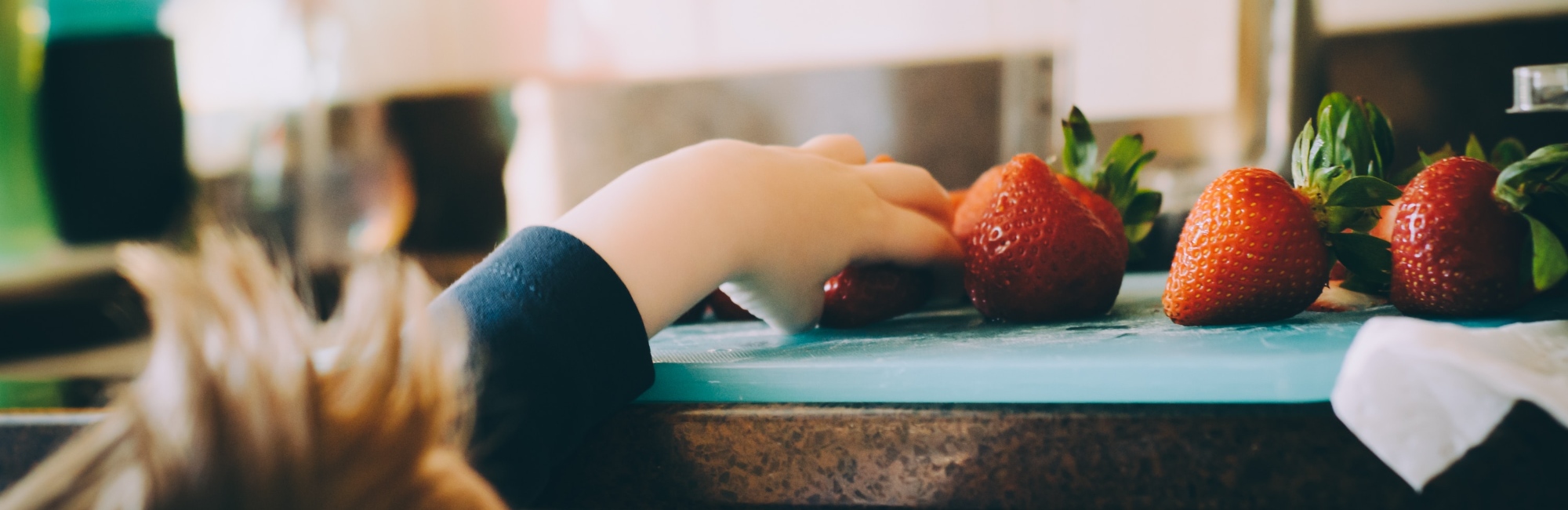
Aim to keep food simple, varied, abundant - and enjoyable!
In the Possums approach to little people and food, we're aim to keep an infant's relationshp with food as enjoyable, social, and relaxed as possible. For this reason, we don't offer many instructions about what not to do, since these kinds of lists and instructions are often not evidence-based and can even backfire and disrupt the relationship with food for some babies and toddlers. But in this article, we list a few things that you do need to know about, for safety.
... And there are just a few things to know about, and to avoid
Here are the things to avoid.
-
Not watching your baby or toddler while they are eating. They always needs to be a responsible person around who is keeping an eye on them.
-
Your toddler lying back or lying down to eat. Your child needs to be sitting or standing upright.
-
Hard foods cut in circles that are difficult to chew and swallow and which could be inhaled, such as whole nuts, chopped raw carrot, grapes, or cherries.
-
Honey, which is not suitable for infants until they are older than 12 months of age. This is because raw honey can contain spores of Clostridium botulinun, a bacteria which releases toxins and causes botulism.
-
Soft drinks, fruit juices, flavoured milk or water, sports drinks, energy drinks. These are high in sugars and offer little nutritional value.
-
Added salt in your baby's or toddler's food. (It's also best not to add salt to your own food!) As well as creating a preference for salty foods, too much salt can impact upon a small child's kidneys. However, it's important to keep this in perspective - sodium is a necessary part of your little one's diet, and it's not that you need to eliminate all salt. Just keeping to the principle of mostly providing home cooked food and not adding salt to food is enough - but some purchased foods that contain salt and some mildly salted food off your own plate is ok at times.
-
Toddler formulas. Because toddler formulas contain twice the carbohydrates and sugars of cow's milk, they're not good for your little one's health. After 12 months, your child is ready for full-fat cow’s milk (unless they have a true dairy allergy. Please talk to your GP if you have concerns.)
-
More than about 500 mls of milk daily. This is because too much milk interferes with your child’s appetite for other foods.
-
Eating in front of screens. This is because we want eating to be an enjoyable and relaxed time together as a family. Your toddler will watch you and experiment with different foods if you are all interacting together and having a good time over food. They do this less so when either of you are distracted.
Selected references
McCann J, Woods J, Mohebbi M, Russell C. Regulated nutrition claims increase perceived healthiness of an ultra-processed, discretionary toddler snack food and ultra-processed toddler milks: a discrete choice experiment. Appetite. 2022;106044:106044.
Pjetraj D, Pjetraj A, Sayed D, Severini M, Falcioni L, Svarca LE, Gatti S, Lionetti ME. Decoding Picky Eating in Children: A Temporary Phase or a Hidden Health Concern? Nutrients. 2025 Dec 12;17(24):3884. doi: 10.3390/nu17243884. PMID: 41470829; PMCID: PMC12736178.
Yang S, Wang H. Avoidance of added salt for 6-12-month-old infants: a narrative review. Archives de pediatrie. 2023;30:595-599.
Recommended resources
https://theconversation.com/why-is-toddler-milk-so-popular-follow-the-money-225668
Starting solids in a way that's easy and enjoyable - for both you and your baby
When is your baby ready for solids?
What's the difference between gagging and choking?
Acknowledgements
I'm grateful to Professor Sophie Havighurst, Ros June, and Caroline Ma at Mindful, The University of Melbourne, for their feedback on the articles and videos in Little people + food.