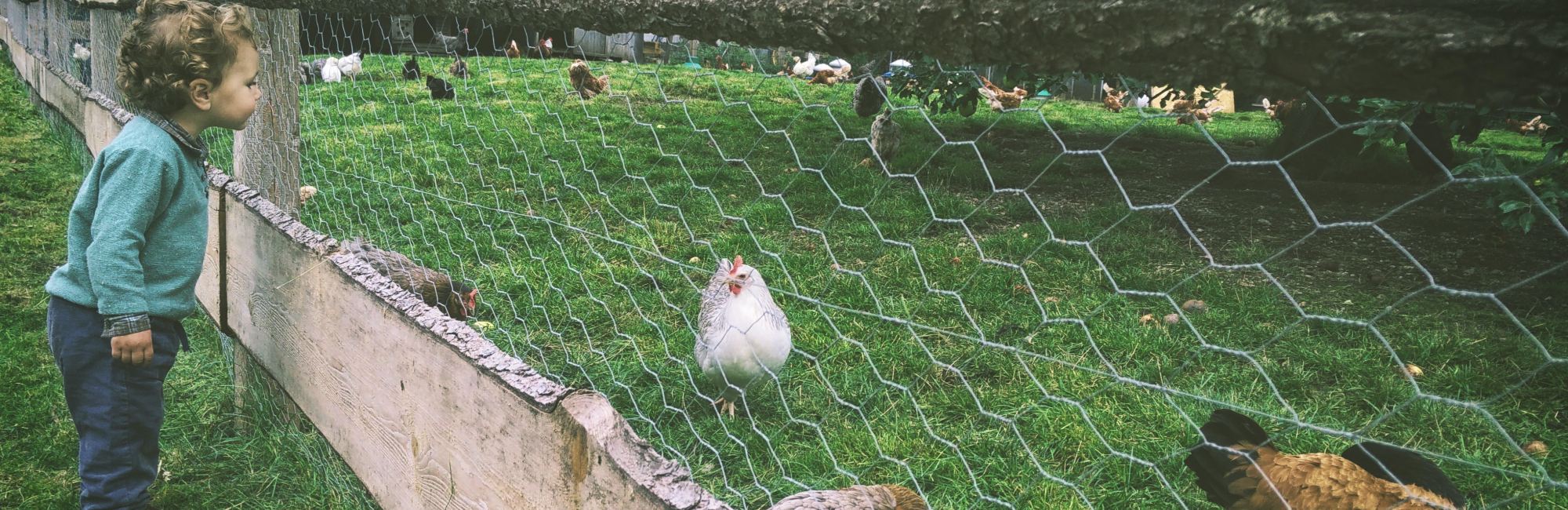
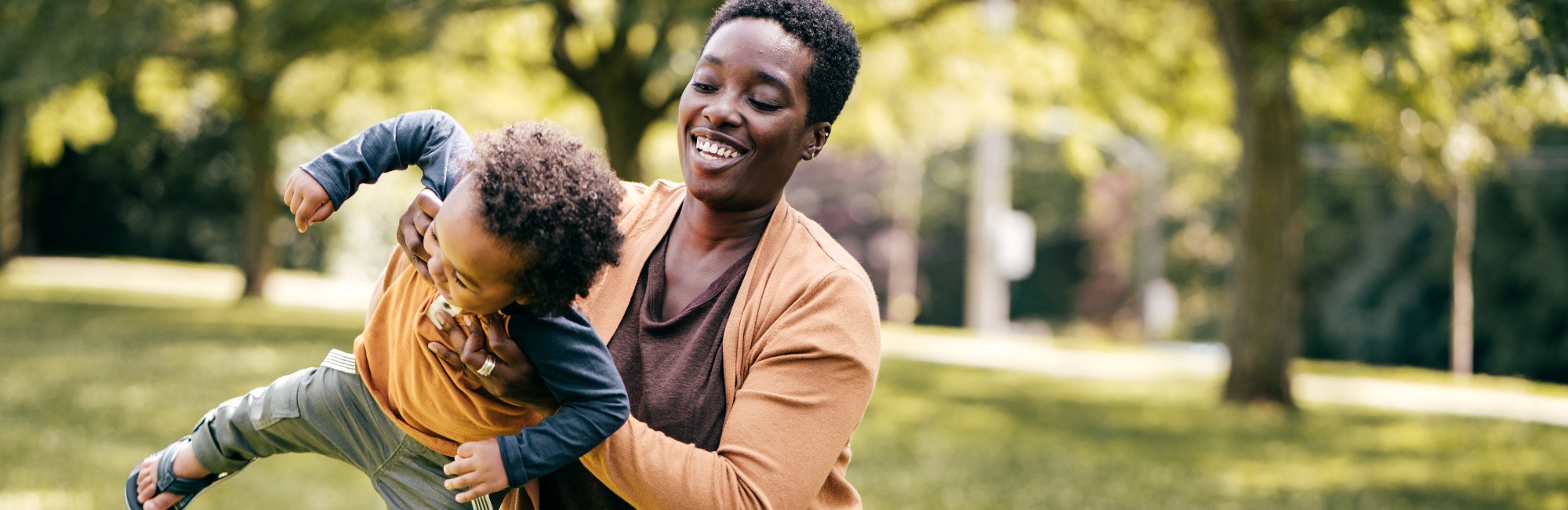
Outdoor play is good for toddlers and good for sleep
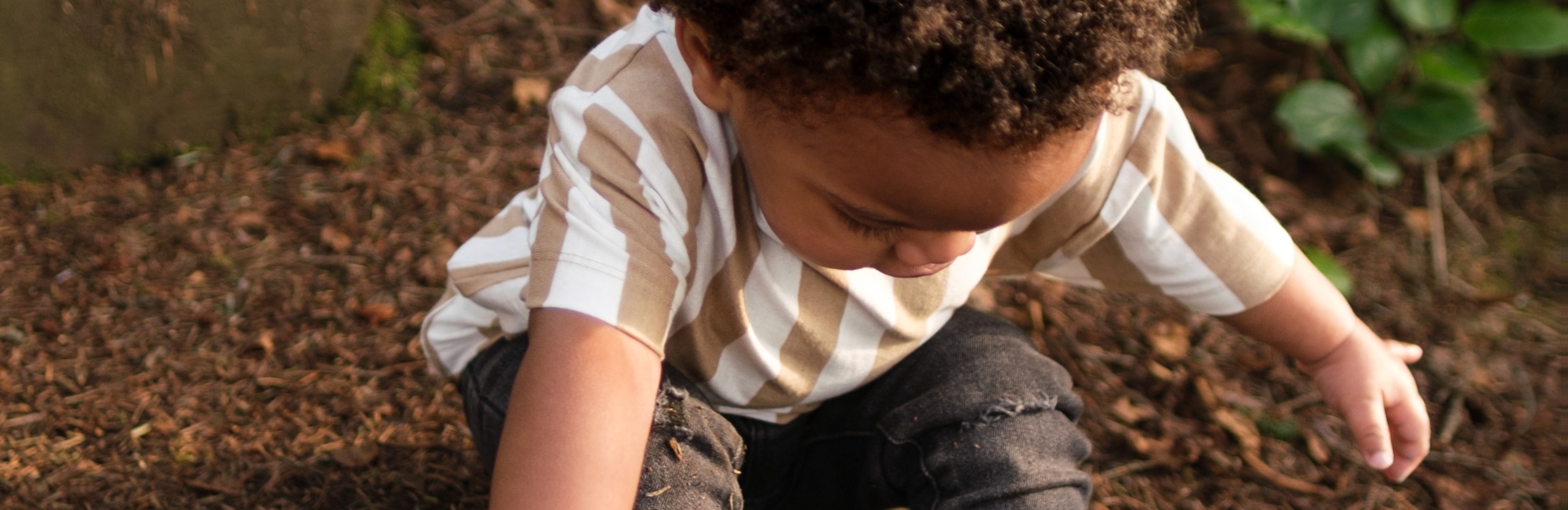
Your toddler's extraordinarily mouldable little brain will develop best with lots of opportunities for outdoor play, every day or most days. Toddlers love to be in outdoor spaces because it meets their powerful biological drive for rich and diverse sensory motor nourishment. Playing outside dials your toddler down, so that both sleep and life together in general are easier and more enjoyable.
Spending time in green or blue spaces (that is, in natural environments) is also very good for you, as the primary carer of a baby or toddler. You can find out about this here.
What things does the research tell us about toddlers and outdoor play? Research has found that outdoor play
-
Is good for your little ones' circadian rhythms and emotional regulation, more here. This confirms what I've been saying in The Possums Sleep Program for many years now, that rich and changing sensory motor nourishment, most easily provided outside the home, helps keep your toddler's body clock settings healthy, which helps make sleep as easy as possible. Outdoor play has this effect because of
-
The regulating effects of sunlight on your toddler's body clock and circadian rhythm (you can take a deeper dive into the science here)
-
The way sensory motor adventures keep your little one dialled down while the sleep pressure is rising.
-
-
Increases a child's physical activity. Not surprisingly, children are more physically active when they're playing outside compared to inside the home or daycare setting. Outdoor play is great for your little one's motor development. All that excited running, climbing, jumping, sitting and standing, bending, rolling, twisting! You and your toddler's carers might plan to provide outdoor environments which bring little ones together in a way that encourages interaction and play. You can find out about protecting your toddler's motor development here.
-
Protects against nearsightedness. Children who spend at least two hours a day outside are less likely to become nearsighted. Not only that, but if a child has already become nearsighted, eye specialists suggest that spending as much time outside as possible could be the most cheap and effective way to slow down its progression.
-
Stimulates your toddler's vitamin D production. Vitamin D supports immune health, bone health, and growth. Healthy amounts of sunlight on your toddler's skin (in ways that remain sun safe) is a simple way to protect against needing to use vitamin D supplementation. You can find out about protecting your little one from the sun's harmful rays, at the same time as you bathe her in plenty of health-giving sunlight overall, here.
-
Improves learning, and small children's social and emotional development. I propose this is because outdoor play meets toddler's powerful biological needs for rich and changing sensory motor nourishment, and dials them down. Dialled down toddlers learn best, including learning how to cooperate with others.
-
Nurtures the development of your toddler's imagination. Sticks, stones and objects in the natural environment become, in a toddler's highly creative brain, other imagined kinds of objects, which fit into the stories your little one creates in play.
-
Protects against the effects of screen time on our toddler's developing brains and language skills.
You don't need to count up the hours that you spend outside with your toddler. Just be outside as much as you sensibly can, each day! It can be helpful to live as far as possible by the saying "there's no such thing as bad weather, only bad clothing", discussed here.
Selected references
Brusche ME, Haag DG, Melhuish EC. Screen time and parent-child talk when children are aged 12-36 months. JAMA Pediatrics. 2024;178(4):369-375.
Heffler KF, Acharya B, Subedi K, Bennett DS. Early-life digital media experiences and development of atypical sensory processing. JAMA Pediatrics. 2024:doi:10.1001/jamapediatrics.2023.5923.
Ho C-L, Wu W-F, Liou YM. Dose-response relationship of outdoor exposure and myopia indicators: a systematic review and meta-analysis of various research methods. International Journal of Environmental Research and Public Health. 2019;16(14):2595.
Lingham G, Mackey DA, Lucas R, Yazar S. How does spending timeoutdoors protect against myopia? A review. British Journal of Opthalmology. 2019;104(5):593-597.
Nava E, Giraud M, Bolognini N. The emergence of the multisensory brain: from the womb to the first steps. iScience. 2024;108758:http://creativecommons.org/licenses/by/4.0
Tandon PS, Saelens BE, Zhou C, Christakis DA. A comparison of preschooler's physical activity indoors versus outdoors at child care. International Journal of Environmental Research and Public Health. 2018;15:2463.
Vega-Perona H, Estevan I, Bernabe-Villodre MdM. Correlates of toddlers' physical activity levels and sedentary behavior during unstructure outdoor play in early childhood education and daycare settings. Perceptual and Motor Skills. 2024;13(1):39-58.
Von Hurst P, Mazahery H, Reynolds E. Knowledge, attitudes and behaviours towards vitamin D and sun exposure of parents of infants and young children and health professionals in New Zealand. Nutrition and Health. 2023:DOI: 10.1177/02601060231185190.