What is conditioned dialling up in the first 16 weeks of life?
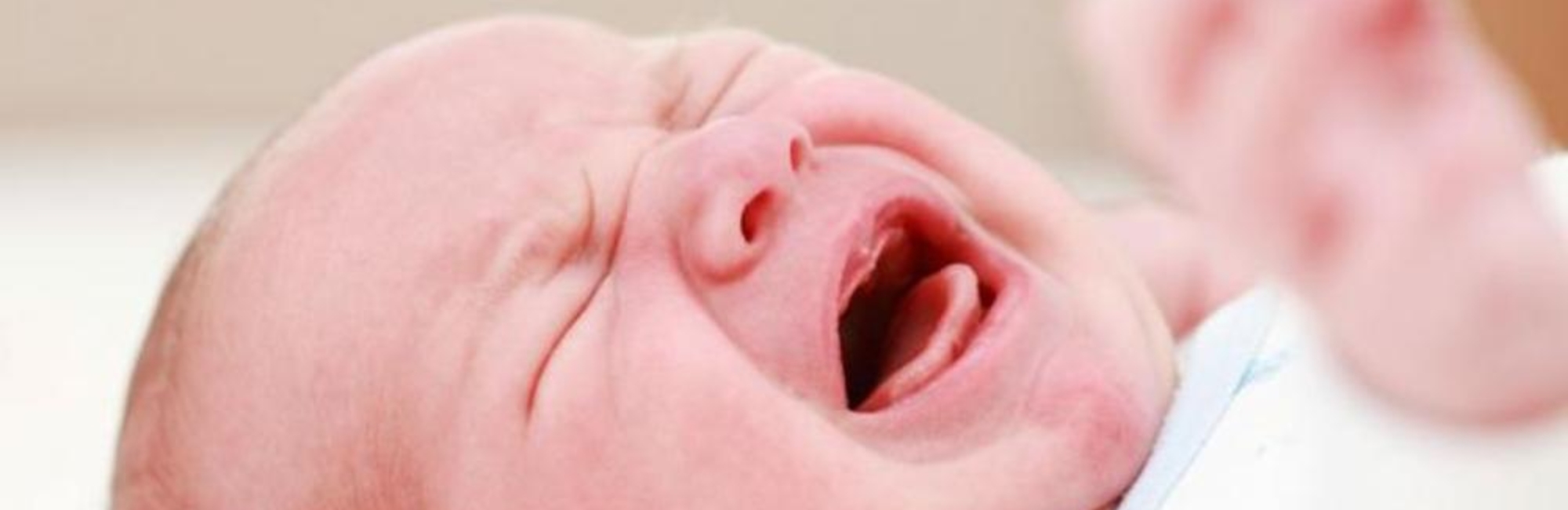
This page belongs to collection of short articles and videos in plain language, called When baby cries a lot. Together, these articles and videos will give you a brief and simple summary of the Possums 5-domain approach to the crying baby in the first 16 weeks of life. For comprehensive information on this topic, please go deeper into the Possums programs, or you might consider reading The discontented little baby book.
What is conditioned dialling up in the first 16 weeks of life?
In the NDC or Possums programs, we make sense of babies who cry a lot in the first 16 weeks of life using the concept of conditioned dialling up. Before reading this page, I suggest you find out about the dial on your baby's sympathetic nervous system here, and about conditioned dialling up here.
In the NDC or Possums' programs, excessive crying in the first few months of life is an hour by hour, day by day, generalised form of conditioned dialling up. I think of it this way: your precious little baby is, or has become, very sensitive. Often, it's very hard to know why.
Perhaps you and your little one had a difficult start, with the birth or with time in special care or various medical interventions - necessary for protecting life and wellbeing, but which have made it harder for him to get in sync with you in various ways.
But it's often impossible to know why your little one cries a lot. As mothers and parents we try so incredibly hard to do the right thing by our tiny child. Who wants to think that our precious little newborn or bubby is experiencing fearfulness or is distressed, when you're doing everything humanly possible to wrap her in love and care?
Crying a lot doesn't cause your baby long-term harm, but is very distressing for parents. Life with your precious little baby is a lot harder than I'd want it to be for you, when your little one is crying a lot.
The neurobiological model for cry-fuss problems in early life, upon which the Possums 5-domain approach has been developed, proposes that
-
Babies can get into crying loops. High levels of sympathetic nervous system activity trigger more sympathetic nervous system activity, in feedback loops which can be hard to dial down. This is why we try to get in early with our responses, though of course that doesn't always work, especially once our baby has become very sensitive.
-
The stress response threshold lowers in response to conditioned dialling up, which results in conditioned sympathetic nervous system hyperarousal in response to very small things, or even things which are undetectable to parents, but which the baby reacts to. I call this a "dial which is stuck on high". The good thing to know is that it usually "unsticks" after about 16 weeks of age.
What are the main things to consider if baby cries a lot in the first 16 weeks of life?
-
If your baby is crying a lot, it's important to have your baby checked over by your local GP. You might also, in discussions with your GP, like to find an NDC Accredited Practitioner near you, for specialised help.
-
You can go directly to steps you might work through when your baby cries a lot here.
Recommended resources
About conditioned dialling up in babies or toddlers and how to prevent it
Selected references
Barr RG. The early crying paradox: a modest proposal. Human Nature. 1990;1(4):355-389.
Barr RG. Infant crying behavior and colic: an interpretation in evolutionary perspective. In: Trevathan WR, Smith EO, McKenna JJ, editors. Evolutionary Medicine. New York: Oxford University Press; 1999. p. 28-51.
Bilgin A, Baumann N, Jaekel J, Breeman LD, Bartmann P, Bauml JG, et al. Early crying, sleeping, and feeding problems and trajectories of attention problems from childhood to adulthood. Child Development. 2020;91(1):e77-e91.
Cook F, Giallo R, Hiscock H, Mensah FK, Sanchez K, Reilly S. Infant regulation and child mental health concerns: a longitudinal study. Pediatics. 2019;143(3):e20180977.
Douglas PS. Pre-emptive intervention for Autism Spectrum Disorder: theoretical foundations and clinical translation. Frontiers in Integrative Neuroscience. 2019;13(66):doi.org/10.3389/fnint.2019.00066.
Douglas P, Miller Y, Bucetti A, Hill PS, Creedy D. Preliminary evaluation of a primary care intervention for cry-fuss behaviours in the first three to four months of life ("The Possums Approach"): effects on cry-fuss behaviours and maternal mood. Australian Journal of Primary Health. 2013; 18:332-338.
Douglas P. Diagnosing gastro-oesophageal reflux disease or lactose intolerance in babies who cry alot in the first few months overlooks feeding problems. J Paediatr Child Health. 2013;49(4):e252-e256.
Douglas PS, Hill PS. A neurobiological model for cry-fuss problems in the first three to four months of life. Med Hypotheses. 2013;81:816-822.
Douglas P, Mares R, Hill P. Interdisciplinary perspectives on the management of the unsettled baby: key strategies for improved outcomes. Australian Journal of Primary Health. 2012;18:332-338.
Douglas PS, Hill PS. The crying baby: what approach? Curr Opin Pediatr. 2011;23:523-529.
Douglas P, Hill P. Managing infants who cry excessively in the first few months of life. BMJ. 2011;343:d7772.
Douglas PS, Hill PS, Brodribb W. The unsettled baby: how complexity science helps. Arch Dis Child. 2011;96:793-797.
Douglas P, Hiscock H. The unsettled baby: crying out for an integrated, multidisciplinary, primary care intervention. Med J Aust. 2010;193:533-536.
Douglas PS. Crying Baby. Hecate. 2007;33(2):74-75.
Douglas PS. Excessive crying and gastro-oesophageal reflux disease in infants: misalignment of biology and culture. Med Hypotheses. 2005;64:887-898.