Probiotics (including Qiara) don't help prevent or treat breast inflammation
There is no reason to think that probiotics help with breast inflammation
There is no reliable evidence that probiotics are effective for either the prevention of or treatment of mastitis, and no convincing physiological rationale.
Yet probiotics, for example, containing Lactobacillus fermentum (‘Qiara’) and Lactobacillus salivarius, are commonly recommended for lactating women who have breast inflammation.
Probiotics are claimed to outcompete pathogenic bacteria in human milk, and to restore and maintain healthy balance of the microbiome, either for prevention of or treatment of lactation-related breast inflammation. This is not supported by the research.
What does the research say about probiotics and breast inflammation?
Here is an analysis of studies investigating probiotics and breast inflammation.
-
Simpson et al 2018 showed that probiotics did not change human milk microbiome composition when 415 breastfeeding women were randomized to receive probiotics or placebo.
-
In a 2020 review, Barker et al identified five randomised controlled trials (RCTs) investigating probiotic consumption for treatment or prevention of mastitis concluded there is no reliable supporting evidence. Although each RCT reported a lower incidence of mastitis in the probiotic group, there were significant methodological limitations concerning baseline characteristics, study hypotheses, lack of power calculations, definitional issues, and potential conflicts of interest.
-
In a 2020 Cochrane Review, Crepinsek et al conclude that the evidence relied upon to to support probiotic use as prevention or intervention for mastitis is low certainty, and there is no clarity concerning the efficacy of probiotics in reduction of the incidence of breast pain or nipple damage due to very low certainty evidence. Crepinsek et al note that the findings of the biggest study they could locate of probiotic use for mastitis prevention were withheld by the manufacturer, and surmise that the findings did not advance the manufacturer’s commercial interest.
-
The authors of a 2020 systematic review and meta-analysis, Yu et al, who investigated the effects of probiotics in preventing and treating lactational mastitis, concluded that probiotics "could bring some benefit in preventing the occurence of mastitis or improving related symptoms ... there is still a lack of uniformity and scientificity in the selection of probiotic strains and intervention doses, and the diagnositic criteria and efficacy evaluation indicators of lactation mastitis are inconsistent." Yu et al conclude there is
-
No statistically significant change in breast pain associated with use of probiotics in breastfeeding
-
Both Lactobacillus fermentum (sold as 'Qiara') and Lactobacillus salivarius reduced the bacterial load in human milk. However, this finding has no demonstrated clinical significance.
-
Karlsson et al of more than 50,000 women in Norway showed that those taking a probiotic milk during pregnancy had a decreased incidence of breastfeeding complications, including mastitis, but Karsson et al state this is unlikely to be a causal relationship.
-
-
In 2021 a multi-country study by Jiminez et al, funded by Danone Nutricia, randomized 328 women at the 35th week of their pregnancy to either placebo or Ligilactobacillus salivarius PS2 supplementation until 12 weeks postpartum. 9.7% (29 of 156) women who received the probiotic experienced mastitis, compared to 14% (20 of 144) who received placebo. Both groups exclusively breastfed for a median duration of 77 days. Further investigation in larger trials is required.108
-
A close analysis of a 2024 review by Saifi et al which investigates the association between what the authors call Lactational Infective Mastitis and the microbiome does not change the conclusion that there is no reliable evidence supporting the use of probiotics for mastitis.
Acknowledgements
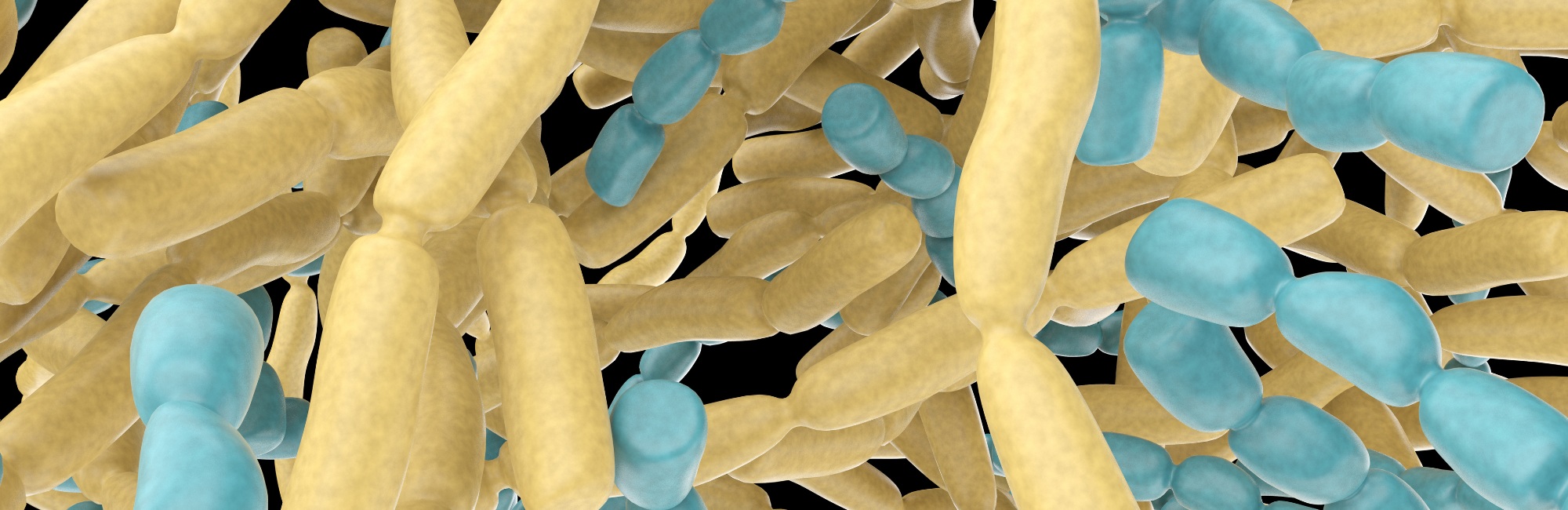
The image on this page is of Lactobacillus bacteria.
Selected references
Amir LH, Griffin L, Cullinane M, Garland SM. Probiotics and mastitis: evidence-based marketing? International Breastfeeding Journal. 2016;111(19):doi:10.1186/s13006-13016-10078-13005.
Barker M, Adelson P, Peters MDJ, Steen M. Probiotics and human lactational mastitis: a scoping review. Women and Birth. 2020;d33:e483-e491.
Crepinsek MA, Taylor EA, Michener K, Stewart F. Interventions for preventing mastitis after childbirth. Cochrane Database of Systematic Reviews. 2020(9):CD007239.
Jimenez E, Manzano S, Schlembach D. Ligilactobacillus salivarius PS2 supplementation during pregnancy and lactation prevents mastitis: a randomised controlled trial. Microorganisms. 2021;9(1933):https://doi.org/10.3390/microorganisms9091933.
Saifi F, Jeoboam B, Beckler MD, Costin JM. The association between Lactational Infective Mastitis and the microbiome: development, onset, and treatments. Cureus. 2024:DOI: 10.7759/cureus.62717.
Simpson MR, Avershina E, Sstorre O, Johnsen R, Rudi K, Oien T. Breastfeeding-associated microbiota in human milk following supplementation with Lactobacillus rhamnosus GG, Lactobacillus acidophilus La-5, and Bifidobacterium animalis ssp. lactis Bb-12. Journal of Diary Science. 2018;101(2):889-899.
Yu Q, Xu C, Wang M. The preventive and therapeutic effects of probiotics on mastitis: a systematic review and meta-analysis. Plos One. 2022;17(9):e0274467.