Micromovements in breastfeeding: helping you find 'the sweet spot'
What are micromovements?
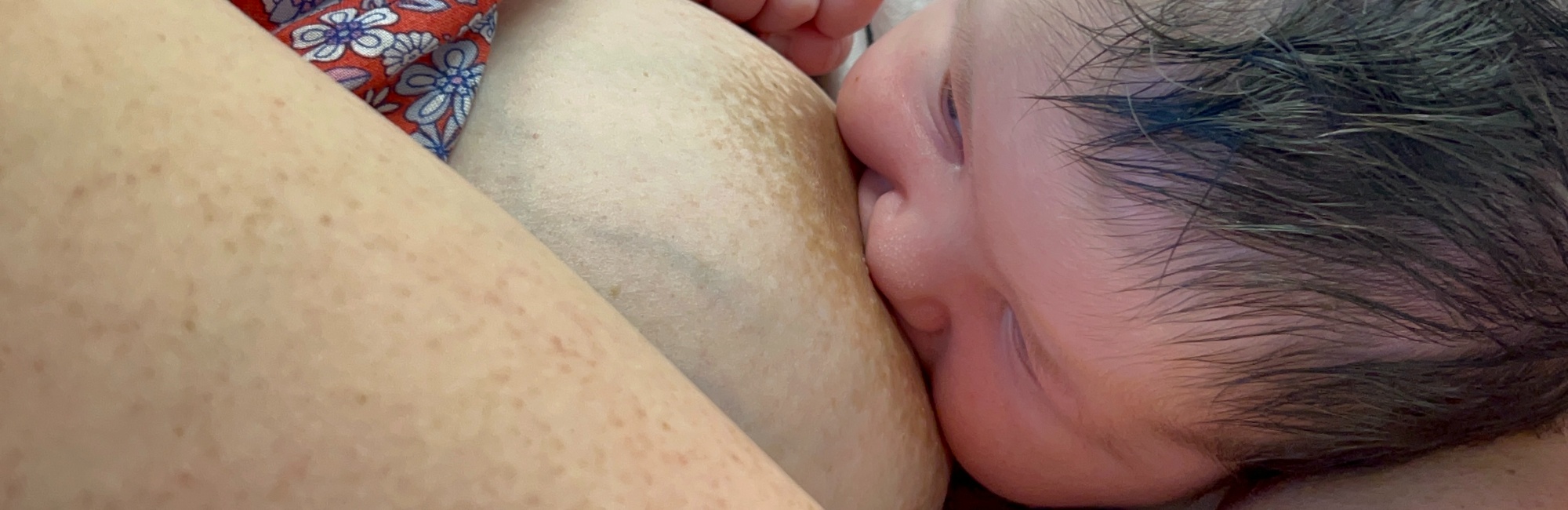
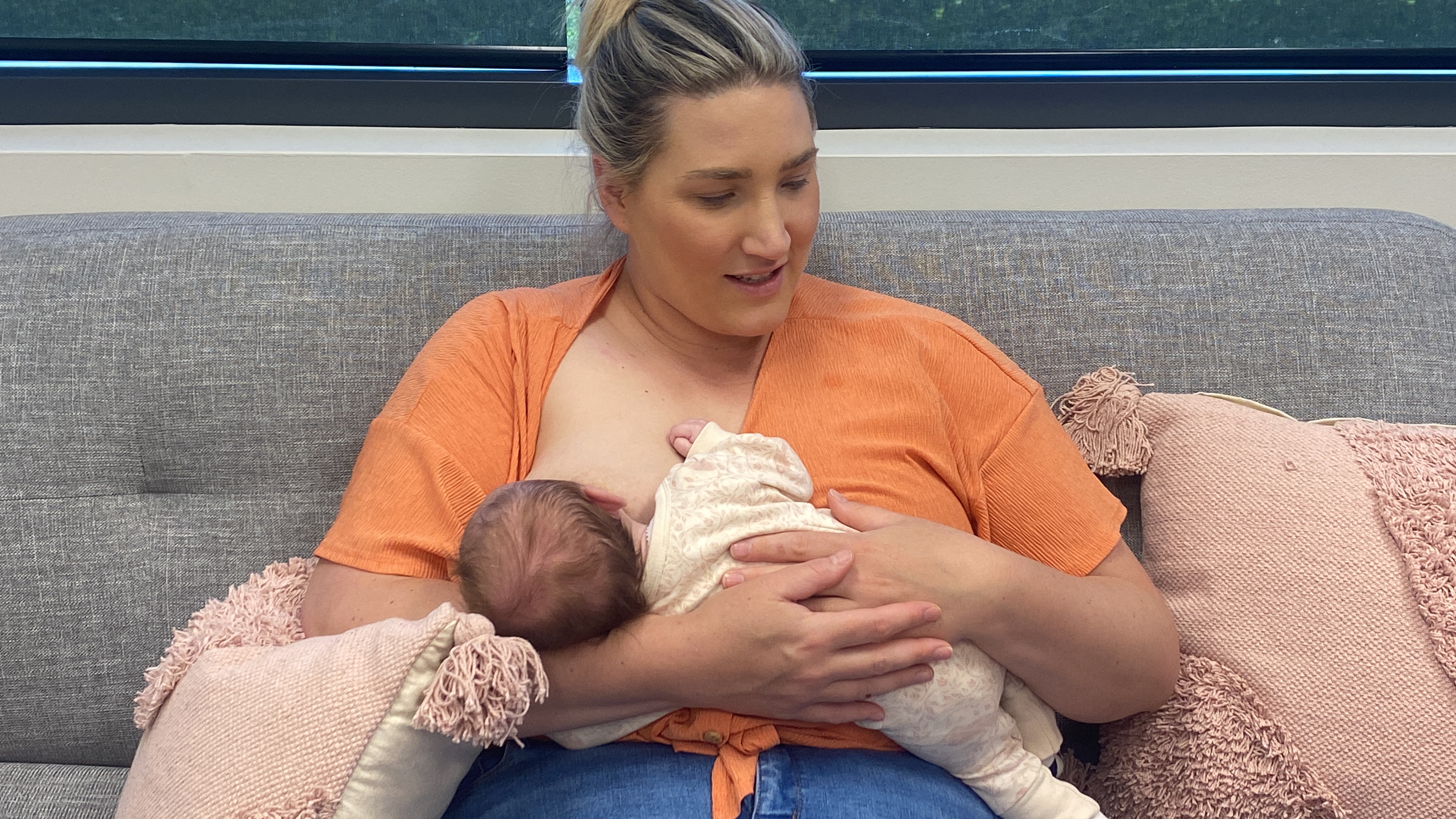
As soon as your baby is on, and even if baby has come on towards the end of your nipple (which is usual), draw your baby in close to your breast for a deep face-breast bury and begin to apply micromovements.
Micromovements are tiny steady movements of the baby in various directions, mostly just a millimetre or two at a time, to find what
-
Feels best for your breast and nipple
-
Gives your baby the best face-breast bury, and
-
Is most relaxing for baby.
There are three kinds of micromovements to experiment with, millimetre by millimetre.
-
Your forearm gives you control over vertical movements, higher or lower relative to your breast's natural fall in response to gravity when you're semi-reclined
-
You cuddle baby in and slide your baby's body against your own, in tiny horizontal movements either towards baby's toes or toward baby's nose
-
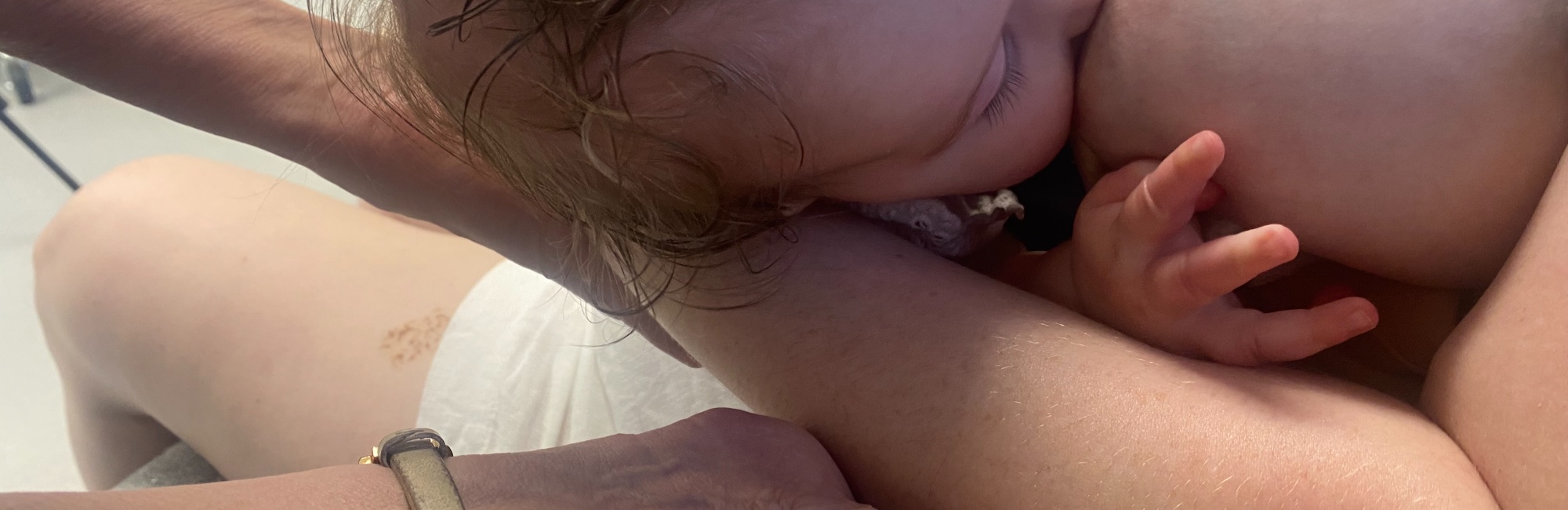
Your forearm moves as a lever, changing your baby's face's angle of contact with your breast with slight rolling movements.

The sweet spot
As you do these little exploratory micromovements, you are paying attention to the sensations of your breast and nipple. You are looking for a deep drawing sensation of your breast, which has no discomfort.
This is the 'sweet spot', where the nipple, areola and breast tissue are being pulled directly and deeply into the baby's mouth, without any drag. Once the baby has this big mouthful of breast tissue, the nipple is safely up near the junction of the hard and soft palate, and best protected from damage.
You are also looking for where the baby seems to be most relaxed and stable, not pulling off or fretting.
Babies are often restless at the breast because of nipple and breast tissue drag. This is also a common cause of breastfeeding problems in older babies, who have grown much longer but who are still being accidentally positioned as if they were younger. One way to tell if baby has this kind of positional instability is to notice if the nipple falls towards the baby's chin or ear when she pulls off the breast.
Your forearm as lever
In the gestalt method of fit and hold, we use the forearm that is supporting the baby's head (on the same side as the breast she is feeding from) as a lever to control how baby's face falls into the breast.
Often, as you experiment with micromovements using your forearm as a lever, it's most comfortable to have your wrist resting neutral (not bent or flexed). That is, your hand sits out, relaxed and perhaps looking weirdly redundant, not bent in to rest against your baby!
But this protects your wrist from strain and injury (which is quite common actually after having a baby), and gives you best use of your forearm as a lever for micromovements.
Acknowledgements
I first introduced the term micromovement into clinical breastfeeding support as a foundational part of the gestalt method in 2015. I borrowed this term from NIA dance. My NIA teachers used the term micromovement when describing women's relationships with their bodies and particular movements. In 2015, I had not heard the term micromovement used in any other context.
Recommended resources
Paying attention to micromovements is the best way to heal up nipple pain and damage
The power of micromovements
Selected references
Douglas PS, Keogh R. Gestalt breastfeeding: helping mothers and infants optimise positional stability and intra-oral breast tissue volume for effective, pain-free milk transfer. Journal of Human Lactation. 2017;33(3):509–518.
Douglas PS, Geddes DB. Practice-based interpretation of ultrasound studies leads the way to less pharmaceutical and surgical intervention for breastfeeding babies and more effective clinical support. Midwifery. 2018;58:145–155.
Douglas PS, Perrella SL, Geddes DT. A brief gestalt intervention changes ultrasound measures of tongue movement during breastfeeding: case series. BMC Pregnancy and Childbirth. 2022;22(1):94. DOI: 10.1186/s12884-12021-04363-12887.