Logo - The Possums baby and toddler sleep program.
parents home
librarybrowse all programsfind answers nowaudioprograms in audiogroup sessionsgroup sessions with dr pam
menu icon NDC Institute
possums for professionals
(the ndc institute)
menu icon eventsguest speakers
menu icon the sciencethe science behind possums/ndcmenu icon who we arewho we aremenu icon evidence basendc research publicationsmenu icon dr pam's booksdr pam's books
menu icon free resourcesfree resourcesmenu icon dr pam's blogdr pam's blog
menu icon consult with dr pamconsult with dr pammenu icon consult with dr pamfind a possums clinicmenu icon find a NDC accredited practitionerfind an ndc accredited practitioner
login-iconlogin

Welcome back!

Forgot password
get access
search

Search programs

PBL Foundations icon

PBL Foundations


  • Micromovements in breastfeeding: helping you find 'the sweet spot'
  • Micromovements in breastfeeding: horizontal, vertical, and angle-control
  • Why firm elbow support matters when you're sorting out breastfeeding problems

Next article

Sign up now
  • PBL Foundations
  • S3: Fit and hold: #1 breastfeeding superpower
  • CH 7: Step 4: The power of micromovements

Why firm elbow support matters when you're sorting out breastfeeding problems
Dr Pamela Douglas25th of Dec 202426th of Dec 2024

x

Our first priority is to use your forearm lever to discover, millimetre by millimetre, where the baby is most stable and dialled down, or where you don't have nipple pain.

That means that once we've found the right fit and hold, your elbow is likely to be out in the air somewhere. This of course will quickly result in neck and shoulder pain, and can't be sustained for long.

Some women are taught to breastfeed with their upper arm hanging straight down from their shoulder, held in by the side of their body. This certainly protects the shoulder and neck from tension and pain - but unfortunately seriously limits the amount of experimentation you can do with micromovements. It can be very difficult to find a stable pain-free position for your baby at the breast when your upper arm is tucked in against your side, hanging vertically like this.

In the gestalt method, we find the right position first, which means your arm and elbow are often out in the air, and then we bring in very firm support under the elbow on the side you're feeding from just as soon as possible.

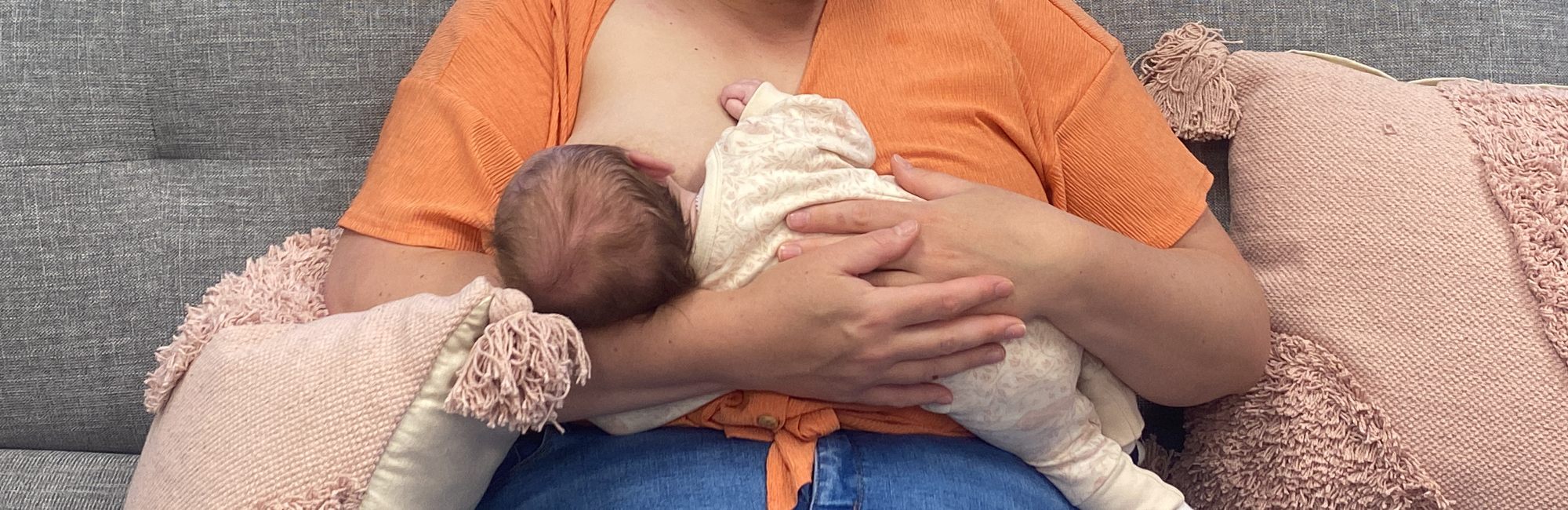
In the clinic I use buckwheat cushions, which work well. I choose the best sized buckwheat cushion, then mould it to fit exactly where the woman's elbow is now that we've found 'the sweet spot', without disrupting her and her baby's position. I make sure she can relax her shoulder and arm completely, letting the cushion securely take her weight.

You might use a pile of folded up towels, or a yoga block which is helped to reach the right height with a folded up towel or two on it, or a very firm cushion if you have one. Needless to say, given how diverse our human anatomies are, the height required varies dramatically between women.

In the photo at the top of the page, the breastfeeding mother and I improvised with the cushions that were at hand. She was able to completely relax her shoulder and let that pink cushion take the weight of her elbow. But it was somewhat saggy. If a cushion is too saggy, a breastfeeding woman is unable to completely relax her arm and shoulder while keeping baby stable in the pain-free position that she's found. A pile of folded towels might work best.


x

Finished

share this article

Next up in Side-lying breastfeeding using the gestalt method

How to use the gestalt method when you're lying down to breastfeed

x

How do you apply the gestalt method when you're side-lying to breastfeed?

Here are the steps you'd take as you apply the gestalt method in the side-lying position.

  • Lie on your side, with the breast you want to feed your baby from against the mattress.

  • Place a long very firm pillow behind your back and bottom for support in side-lying breastfeeding, since your hips and knees need to be in a straight line with the front of your torso, not bent up at all, to accommodate the length of baby's body. Bending up your hips or knees often results in breast tissue drag or baby fussing at the breast.

  • Your head…

Keep reading
logo‑possums

Possums in your inbox

Evidence-based insights, tips, and tools. Occasional updates.

For parents

parents homebrowse all programsfind answers nowprograms in audiogroup sessions with dr pam

For professionals

possums for professionals
(the ndc institute)
guest speakers

About

the science behind possums/ndcwho we arendc research publicationsdr pam’s books

More resources

free resourcesdr pam’s blog

Clinical consultation

consult with dr pamfind a possums clinicfind an ndc accredited practitioner

Help & support

contact usfaqour social enterpriseprivacy policyterms & conditions

Social

instagramlinked infacebook

Possums acknowledges the traditional owners of the lands upon which The Possums Programs have been created, the Yuggera and Turrbal Peoples. We acknowledge that First Nations have breastfed, slept with, and lovingly raised their children on Australian lands for at least 65,000 years, to become the oldest continuous living culture on Earth. Possums stands with the Uluru Statement from the Heart.