Logo - The Possums baby and toddler sleep program.
parents home
librarybrowse all programsfind answers nowaudioprograms in audiogroup sessionsgroup sessions with dr pam
menu icon NDC Institute
possums for professionals
(the ndc institute)
menu icon eventsguest speakers
menu icon the sciencethe science behind possums/ndcmenu icon who we arewho we aremenu icon evidence basendc research publicationsmenu icon dr pam's booksdr pam's books
menu icon free resourcesfree resourcesmenu icon dr pam's blogdr pam's blog
menu icon consult with dr pamconsult with dr pammenu icon consult with dr pamfind a possums clinicmenu icon find a NDC accredited practitionerfind an ndc accredited practitioner
login-iconlogin

Welcome back!

Forgot password
get access
search

Search programs

PBL Advanced icon

PBL Advanced


  • Principle #1. Frequent flexible breastfeeds or milk removal activate the stromal pump to relieve breast inflammation
  • Principle #2. Eliminate problematic mechanical forces
  • Principle #3. If weaning, downregulate milk production gradually
  • Principle #4. Avoid increasing milk production beyond baby's needs
  • Principle #5 (for generous-breasted women). Bra management and gentle movement of the breasts with woman's own palms of hands

Next article

Sign up now
  • PBL Advanced
  • S8: Lactation-related breast inflammation
  • CH 3: Classification and management of lactation-related breast inflammation
  • PT 3.2: The five key principles for management of lactation-related inflammation

Principle #4. Avoid increasing milk production beyond baby's needs
Dr Pamela Douglas23rd of Jun 20249th of Dec 2024

x

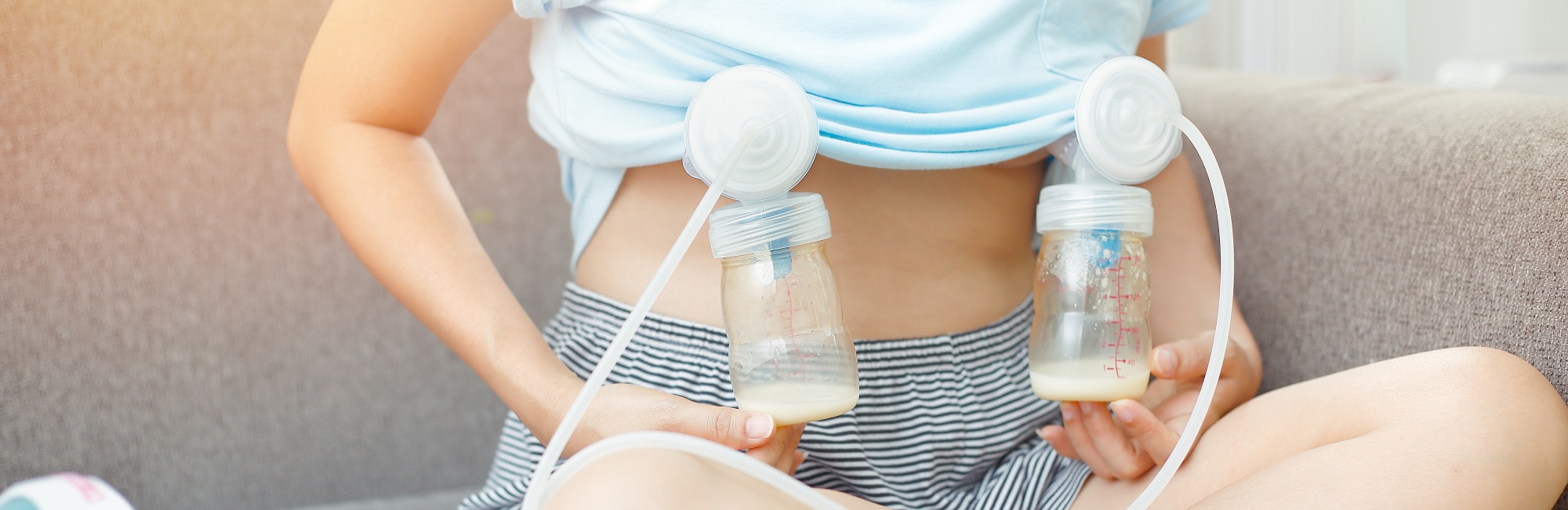
When a lactating woman removes her milk mechanically, that is, by pumping, it is important she pumps milk that corresponds with her infant's needs.

A cohort study of 346 breastfeeding women by Cullinane et al in 2015 showed that breastfeeding women who pumped a few times a day were at increased risk of mastitis. (Reasons for pumping were not investigated.)1

From the mechanobiological perspective, milk production which exceeds the infant’s needs increases the risk of excessively high intraluminal pressures and breast inflammation.

However, frequent flexible milk removal, directly from the breast by the infant, offering the affected breast first, will not result in a production mismatch. This is because we can trust infants to self-regulate at the breast, and refuse the breast when they don't want it. You can read more about this here.

Frequent flexible milk removal by hand expression or a pump is a necessary response to breast inflammation if the woman has been predominantly mechanically expressing her milk. Any mismatch in supply needs to be dealt with once the breast inflammation has resolved.

You can read more about this here.

References

  1. Cullinane M, Amir LH, Donath SM, Garland SM, Tabrizi SN, Payne MS, et al. Determinants of mastitis in women in the CASTLE study: a cohort study. BMC Family Practice. 2015;16:181.

Finished

share this article

Next up in The five key principles for management of lactation-related inflammation

Principle #5 (for generous-breasted women). Bra management and gentle movement of the breasts with woman's own palms of hands

gentle breast massage; lactation

Bra wearing increases risk but also helps with comfort for some women during lactation

Neuroprotective Developmental Care applies an evolutionary lens to argue that in Homo sapiens’ environment of evolutionary adaptedness, the mammary gland was subject to constant and irregular movement, occurring in the context of frequent and flexible breastfeeds.

In the human's environment of evolutionary adaptedness, breast position and conformation shifted in relation to gravity repeatedly throughout the day, including with tissue vibration in response to rapid fall or movements of the breast in space.

NDC hypothesises that the regular change of stromal pressure gradients in response to gravity constantly and irregularly tugged on the filaments which connect to the endothelial cells of…

Keep reading
logo‑possums

Possums in your inbox

Evidence-based insights, tips, and tools. Occasional updates.

For parents

parents homebrowse all programsfind answers nowprograms in audiogroup sessions with dr pam

For professionals

possums for professionals
(the ndc institute)
guest speakers

About

the science behind possums/ndcwho we arendc research publicationsdr pam’s books

More resources

free resourcesdr pam’s blog

Clinical consultation

consult with dr pamfind a possums clinicfind an ndc accredited practitioner

Help & support

contact usfaqour social enterpriseprivacy policyterms & conditions

Social

instagramlinked infacebook

Possums acknowledges the traditional owners of the lands upon which The Possums Programs have been created, the Yuggera and Turrbal Peoples. We acknowledge that First Nations have breastfed, slept with, and lovingly raised their children on Australian lands for at least 65,000 years, to become the oldest continuous living culture on Earth. Possums stands with the Uluru Statement from the Heart.