Logo - The Possums baby and toddler sleep program.
parents home
librarybrowse all programsfind answers nowaudioprograms in audiogroup sessionsgroup sessions with dr pam
menu icon NDC Institute
possums for professionals
(the ndc institute)
menu icon eventsguest speakers
menu icon the sciencethe science behind possums/ndcmenu icon who we arewho we aremenu icon evidence basendc research publicationsmenu icon dr pam's booksdr pam's books
menu icon free resourcesfree resourcesmenu icon dr pam's blogdr pam's blog
menu icon consult with dr pamconsult with dr pammenu icon consult with dr pamfind a possums clinicmenu icon find a NDC accredited practitionerfind an ndc accredited practitioner
login-iconlogin

Welcome back!

Forgot password
get access
search

Search programs

PBL Advanced icon

PBL Advanced


  • Principle #1. Frequent flexible breastfeeds or milk removal activate the stromal pump to relieve breast inflammation
  • Principle #2. Eliminate problematic mechanical forces
  • Principle #3. If weaning, downregulate milk production gradually
  • Principle #4. Avoid increasing milk production beyond baby's needs
  • Principle #5 (for generous-breasted women). Bra management and gentle movement of the breasts with woman's own palms of hands

Next article

Sign up now
  • PBL Advanced
  • S8: Lactation-related breast inflammation
  • CH 3: Classification and management of lactation-related breast inflammation
  • PT 3.2: The five key principles for management of lactation-related inflammation

Principle #3. If weaning, downregulate milk production gradually

Dr Pamela Douglas23rd of Jun 202425th of Aug 2024

x

Cessation of breastfeeding or milk removal results in widespread alveolar rupture, subclinical inflammatory or wound-healing response, and involution throughout a woman's breasts or mammary glands. This microscopic whole-of-breast inflammatory response risks the emergence of generalised or localised clinical inflammation.1, 2

Mammary glands from mice which underwent abrupt involution exhibited higher levels of mammary gland inflammation and cell proliferation, resulting in denser stroma and altered collagen composition.3

A woman wishing to downregulate her supply or wean her infant is best doing this gradually, over a week or two at least, depending on her situation, to avoid breast inflammation as she calibrates her breasts’ response.

Often, it is kindest to wean an older child from the breast by completely ceasing breastfeeds from the appointed day of weaning onwards. In this case, a woman needs to manage her full breasts, in which alveoli are in widespread microscopic process of rupture and involution, by hand expression (or light pumping) to comfort, in order to avoid a clinical presentation of breast inflammation.

Selected references

  1. Jindal S, Narasimhan J, Vorges VF, Schedin P. Characterization of weaning-induced breast involution in women: implications for young women's breast cancer. Breast Cancer. 2020;6(55):https://doi.org/10.1038/s41523-41020-00196-41523.

  2. Zaragoza R, Garcia-Trevijano ER, Lluch A, Ribas G, Vina JR. Involvement of different networks in the mammary gland involution after the pregnancy/lactation cycle: implications in breast cancer. International Union of Biochemistry and Molecular Biology. 2015;67(4):227-238.

  3. Basree M, Shinde N, Koivisto C. Abrupt involution induces inflammation, estrogenic signaling, and hyperplasia linking lack of breastfeeding with increased risk of breast cancer. Breast Cancer Research. 2019;21(80):https://doi.org/10.1186/s31058-31019-31163-31057.
Finished

share this article

Next up in The five key principles for management of lactation-related inflammation

Principle #4. Avoid increasing milk production beyond baby's needs

x

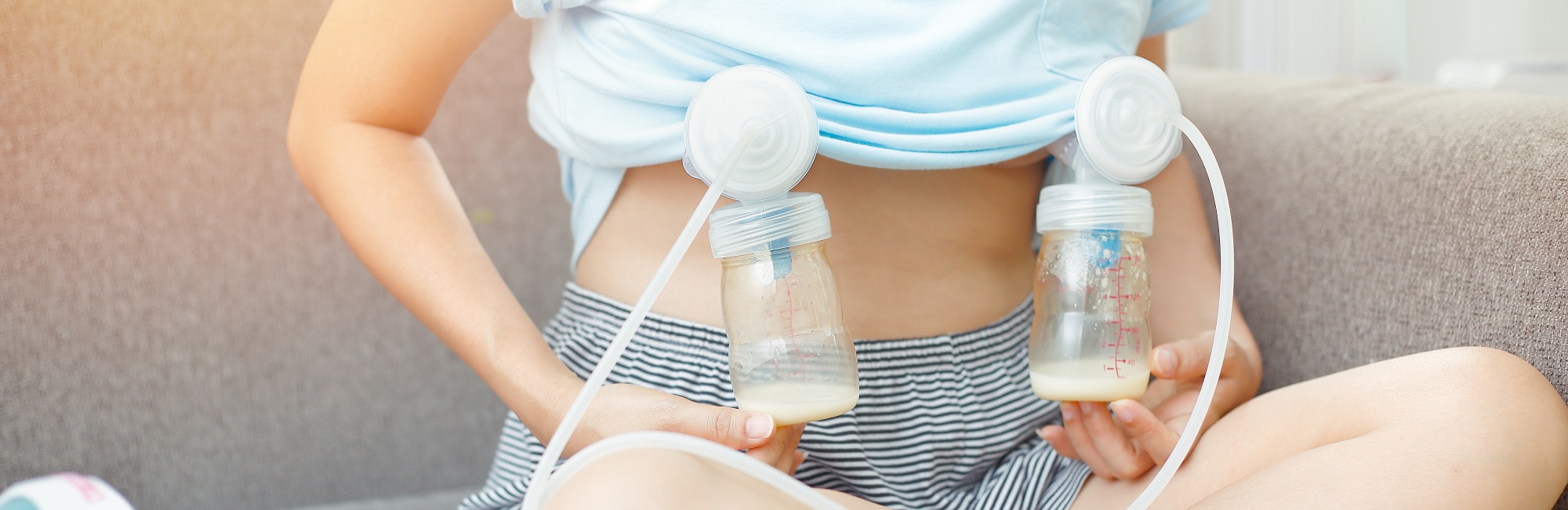
When a lactating woman removes her milk mechanically, that is, by pumping, it is important she pumps milk that corresponds with her infant's needs.

A cohort study of 346 breastfeeding women by Cullinane et al in 2015 showed that breastfeeding women who pumped a few times a day were at increased risk of mastitis. (Reasons for pumping were not investigated.)1

From the mechanobiological perspective, milk production which exceeds the infant’s needs increases the risk of excessively high intraluminal pressures and breast inflammation.

However, frequent flexible milk removal, directly from the breast by the infant, offering the affected breast first, will not result in a production mismatch. This is because we can trust infants to self-regulate at the…

Keep reading
logo‑possums

Possums in your inbox

Evidence-based insights, tips, and tools. Occasional updates.

For parents

parents homebrowse all programsfind answers nowprograms in audiogroup sessions with dr pam

For professionals

possums for professionals
(the ndc institute)
guest speakers

About

the science behind possums/ndcwho we arendc research publicationsdr pam’s books

More resources

free resourcesdr pam’s blog

Clinical consultation

consult with dr pamfind a possums clinicfind an ndc accredited practitioner

Help & support

contact usfaqour social enterpriseprivacy policyterms & conditions

Social

instagramlinked infacebook

Possums acknowledges the traditional owners of the lands upon which The Possums Programs have been created, the Yuggera and Turrbal Peoples. We acknowledge that First Nations have breastfed, slept with, and lovingly raised their children on Australian lands for at least 65,000 years, to become the oldest continuous living culture on Earth. Possums stands with the Uluru Statement from the Heart.