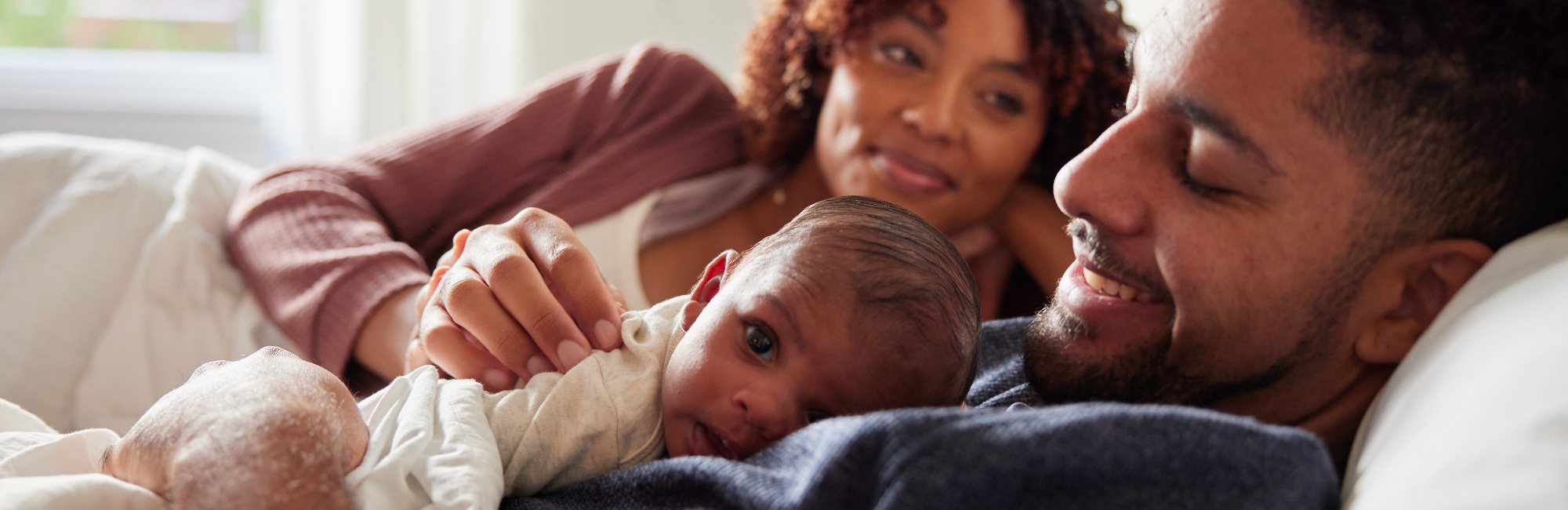
Evolutionary biology basics for health professionals who work with parents and infants
The Possums programs are foundationally embedded in the most up-to-date understandings of evolutionary biology
Evolutionary biology foundationally informs the Possums programs (or Neuroprotective Developmental Care). We learn from evolutionary biology that in a time-developmental universe, systems diversify - or complexify - over time. Therefore, complexity science also foundationally informs the Possums programs, since we are focussed on how to support the flourishing of certain biological systems (in our case, of the mother and baby, the family, and the health systems who care for them).
Homo sapiens is a biocultural species - a site of biological and cultural entanglement
A key evolutionary biology concept is that Home sapiens is, uniquely amongst all life forms, a biocultural species.
-
Our heredity is determined by DNA coding, which holds instructions for building and operating life passed down from Deep Time in an extraordinary process of natural selection from the last universal common ancestor (a single celled organism) 3.8 billion years ago.
-
Our heredity as Homo sapiens is also uniquely determined by cultural coding, which holds instructions for nurturing and operating human life, initially in oral traditions and stories, then also in writing - science, humanities, the arts - and these days increasingly mediated through, and explosively expanding in, our extraordinary digital realm.
-
Over the past 300,000 years, humans have complexified exponentially due to the way we have used tools to break free from the constraints of natural selection.
-
We've complexified and spread to inhabit all of the planet's biomes without altering our bodies anatomically, because of our staggeringly brilliant capacity to invent tools and technologies, which are passed down through cultural coding.
-
New humans, too, in evolutionary terms, are an entanglement of the biological and sociocultural. The cultural needs to support (not obstruct) the biological, for human flourishing.
A mismatch between biology and culture can impact negatively on the flourishing of biological systems
Each of these two forms of coding, genetic and cultural, are fundamental to the nature of our humanness. As health professionals who work with mothers and babies, we are adept at understanding and working with both. Each of us, in our professional role, forms part of a woman and her baby's experience of cultural heredity, as we act to support the flourishing of their biological processes.
-
If health systems promote a culture-biology mismatch, our interventions risk interfering with the flourishing of human development.
-
Because of the resilience of complex systems, most mother-baby pairs are resilient and flourish anyway despite cultural (health system) interventions which misalign with biological processes. But a small subset of susceptible infants and their families may suffer long-term adverse consequences. These are the families who urgently need our protection, through support in which biology and culture align.
This is why what you do every working day matters - now, and for future generations!
Infant biological expectation is shaped in Homo sapiens' environment of evolutionary adaptedness
In our environment of evolutionary adaptedness, the human infant evolved as an exterogestate foetus for first 9 months of life. As a result, the human infant's developmental outcomes are likely to be optimised in the context of
-
Rich environmental stimulation, including
-
Prolonged physical contact with older children and adults
-
Diverse and constant social sensory-motor enrichment
-
High levels of postural variability
-
-
Multi-centric social interactions
-
Complex non-social environmental stimulation e.g. outdoors
-
-
Affect-driven, increasingly long, sensory-motor reciprocity chains with caring older children and adults
-
Breastfeeding, which optimises gut microbiome and metabolic, endocrine, and immune protection.
NDC hypothesis: biology-culture mismatch might affect developmental trajectories in a small group of genetically susceptible infants
You can find out more about this hypothesis here.

Recommended resources
Busting myths about evolutionary biology and infant care generally
Breastfeeding durations in ancestral environments. A little extra something - part 3
Busting myths about evolutionary biology and breastfeeding
A timeline of relevant evolutionary events for health professionals who care for parents and infants
Selected references
Cordey C, Webb NM, Haeusler M. Take it to the limit: the limitations of energetic explanations for birth timing in humans. Evolution, Medicine, and Public Health. 2023;11(1):415-428. doi: 410.1093/emph/eoad1035.
Douglas PS. Appendix 2: Neurodevelopmental challenges and the crying baby. The discontented little baby book: all you need to know about feeds, sleep and crying. St Lucia, Queensland: UQP; 2014.
Douglas PS. Pre-emptive intervention for Autism Spectrum Disorder: theoretical foundations and clinical translation. Frontiers in Integrative Neuroscience. 2019;13(66):doi.org/10.3389/fnint.2019.00066.
Dunsworth HM. There is no 'obstetrical dilemma': towards a braver medicine with fewer childbirth interventions. Perspectives in Biology and Medicine. 2018;61(2):249-263.
Dunsworth HM, Warrener AG, Deacon T, Ellison PT, Pontzer H. Metabolic hypothesis for human altriciality. Proceedings of the National Academy of Science in the USA 2011;109:15212–15216, doi: 15210.11073/pnas.1205282109.
Falk D. Evolution of brain and culture: the neurological and cognitive journey from Australopithecus to Albert Einstein. Journal of Anthropological Sciences. 2016;94:99-111.
Grunstra NDS, Betti L, Fischer B. There is an obstetrical dilemma: misconceptions about the evolution of human childbirth and pelvic form. American Journal of Biological Anthropology. 2023;181:535-544.
McGilchrist, I. The Master and His Emissary: The Divided Brain and the Making of the Western World (New expanded edition) 2019. Yale University Press.
Brian Swimme and Monica DeRaspe Bolles. The Noosophere: the thinking layer of Earth. 2024