All agree that fit and hold problems are the most common cause of nipple pain. So why isn't every woman shown how to prevent it, or how to do a quick and early repair?
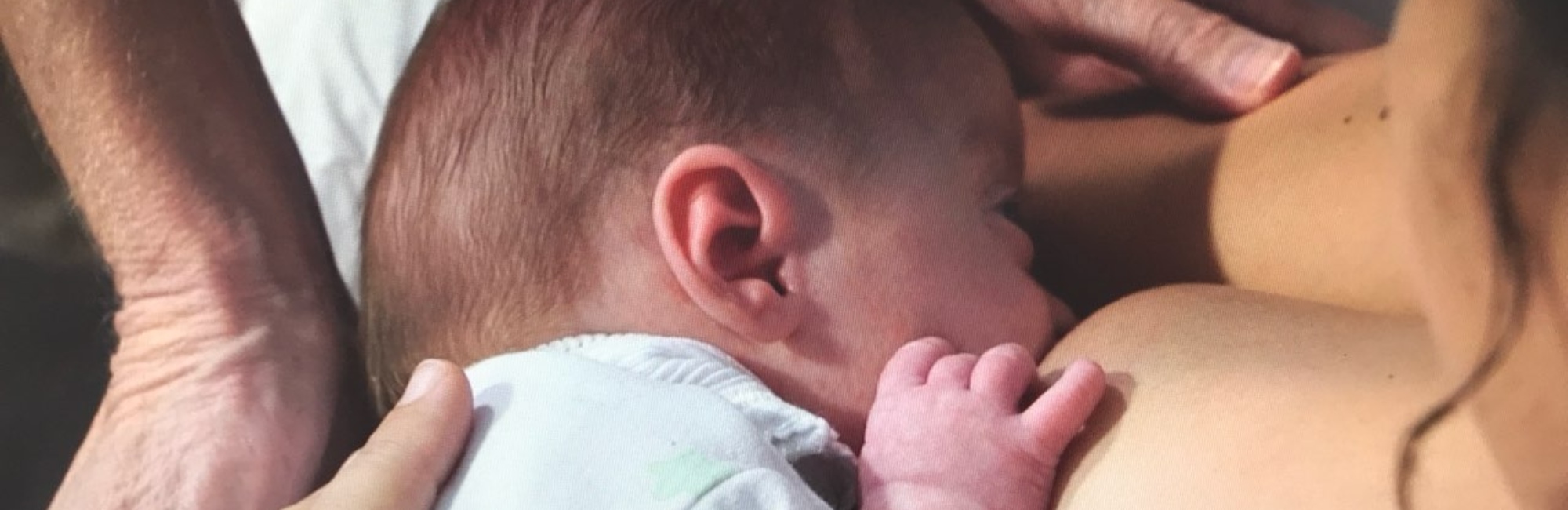
All research and clinical guidelines agree that poor fit and hold (often referred to as latch and positioning) is the most common cause of nipple pain
Studies examining the causes of nipple pain and clinical guidelines all agree that poor infant 'latch and positioning' (which we call fit and hold in the Possums programs) is the most common cause of nipple pain. All advise that fit and hold problems should be dealt with before any other treatment is instituted. That much is agreed upon!
But the biomechanical principles of what actually happens inside the mouth when a baby suckles effectively, and what it is about a fit and hold which might cause pain and damage are not agreed upon, and are either poorly defined or not defined at all in existing guidelines (other than in my research papers and the NDC or the Possums programs). A mother and her breastfeeding baby's fit and hold, with its direct mechanical effects upon the biomechanics of suckling, remains a crucial blind spot in nipple pain research and clinical guidelines.
-
You can find out why mechanobiology is fundamentally important in breastfeeding here.
-
You can find out about the biomechanics of baby's suck at the breast here.
Ten years ago, a study showed that 42% of women who presented with nipple pain weren't helped by fit and hold work
A 2015 study by Kent et al at the Breastfeeding Centre of Western Australia found that in 42% of breastfeeding women who presented with nipple pain, there was a lack of improvement with fit and hold work and other interventions by International Board Certified Lactation Consultants (IBCLCs). The authors suggest this shows that ‘either correction of positioning and attachment is not always effective and/or there are other contributing factors to nipple pain as noted by LCs’.
However, to my mind a more accurate interpretation of this data may be that IBCLCs are not yet trained to offer truly effective fit and hold interventions. This is no-one's fault, but results from health systems which don't value research into fit and hold.
Not surprisingly, the lactation consultants in this study then went on to diagnose various anatomic abnormalities. In the case of this breastfeeding centre, they went on to diagnose ankyloglossia and palatal anomaly in 36% of the infants of women with nipple pain.
Flanged lips: an example of misunderstandings about baby suck in breastfeeding
Many guidelines on nipple pain advise the clinician to look for wide-open mouth with lips turned out, so that the baby can take a wide mouthful of breast and be close to the mother’s body, avoiding biting or jaw clenching at the breast.
However, Dr Nikki Mills’ MRI series of eight successfully breastfeeding babies, whose mothers don’t have nipple pain, confirms that the lips are usually neutral, not turned out into eversion or a flange or a ‘special k’ configuration in breastfeeding.
In the gestalt model, if a baby’s lips are visible, this is a sign that more breast tissue needs to be drawn up into the baby’s mouth. A deeper face-breast bury (so that the lips can't be seen) will stop stretching forces concentrating too much on one specific area, which results in nipple skin and also deep nipple stroma inflammation and damage. When more breast tissue is drawn up, the mechanical stretching forces spread out over a larger area of nipple, areola, and breast tissue skin, protecting the nipple. This is why visible lips are something to avoid during breastfeeding, not something to aim for!
Selected references
Cadwell K, Turner-Maffei C, Blair A, Brimdyr K, McInerney ZM. Pain reduction and treatment of sore nipples in nursing mothers. Journal of Perinatal Education. 2004;13(1):29-35.
Kent JC, Ashton E, Hardwick C, Rowan MK, Chia ES, Fairclough KA, et al. Nipple pain in breastfeeding mothers: incidence, causes and treatments. International Journal of Environmental Research and Public Health. 2015;12:12247-12263.
Stuebe AM. We need patient-centred research in breastfeeding medicine. Breastfeeding Medicine. 2021;16(4):349-350.
Thompson RE, Kruske S, Barclay L, Linden K, Gao Y, Kildea SV. Potential predictors of nipple trauma from an in-home breastfeeding programme: a cross-sectional study. Women and Birth. 2016;29:336-344.