
Mama, mother: the Earth is crying. A little extra something - part 5
There is an inherent order to certain primordial biological patterns, which we can trust
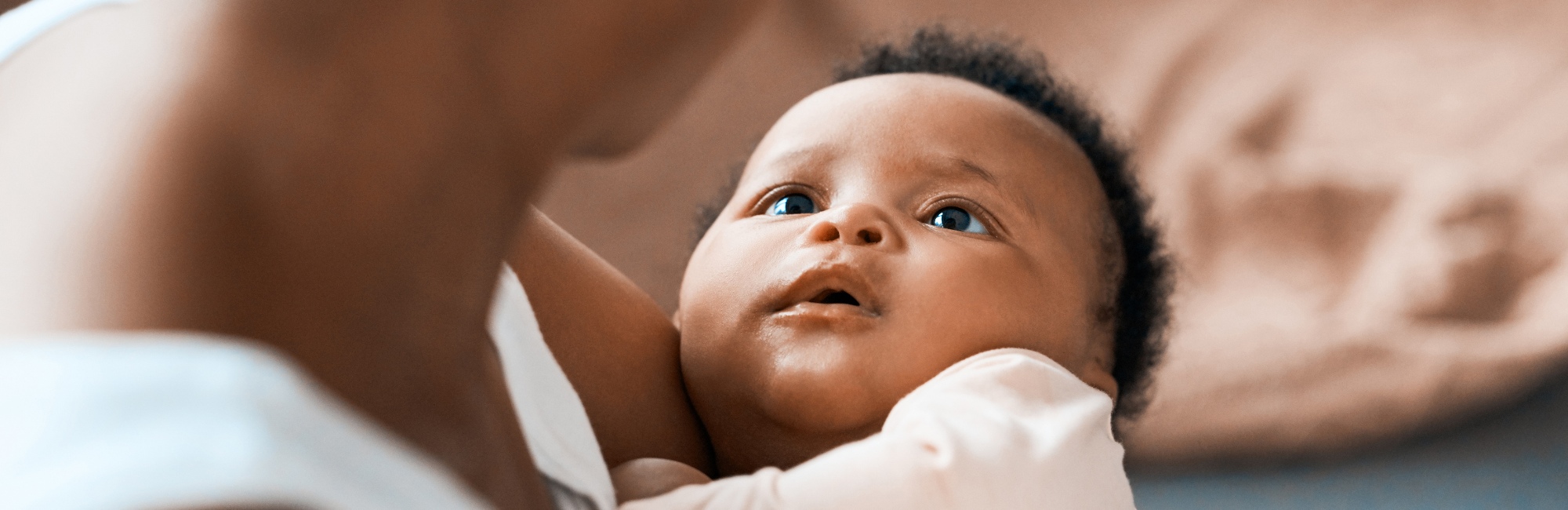
In the midst of all this chaos there is an inherent order to certain ancient biological patterns and we can follow these in trust. Wait, for instance, as the newborn stretches and shudders, slippery with blood and vernix on her mother's chest, wait as she bounces her wet little head, as she crawls down the breast, an ancient mammalian reflex coded deep in her bones, a tiny newborn animal who knows what to do. Wait as her mother’s hands contain her, wait as she licks and inhales the scent and opens her mouth to take the nipple.
That which appears chaotic and incomprehensible in the short-term, like the avid, frequent, highly irregular feeding of the newborn, has its own innate biological logic. A health system's failure to trust the innate inflicts its own kind of injury, even though those of us who are trained to care for them must be watchful, too, for other kinds of disruptions or threats.
The land between lands in the human body is particularly vulnerable in infancy. There is evidence that the impact of primal psychic or physical wounds may reverberate here life-long. This is why human cultures from the dawn of time ritually protected the new mother and her baby. The new mother and her baby were not just themselves, but a numinous symbol of the future of the people. Everyone knew - once upon a time, everyone knew - that injury here could ricochet down generations.
But so much in life is outside our control. We do our best as parents, some days better, some days worse, and it helps to remember that our child’s life and journey is subject to powers much bigger than us. The newborn's vulnerability needs to be understood in the context of the great sociocultural powers which shape us as parents, and also the mysterious complexity of each human being’s immense capacity for healing right throughout the lifespan.
For as long as I am able, I will offer my own small contribution towards a shift in those great sociocultural forces (in my case, perinatal clinical approaches and parent education) which currently make it so difficult to enjoy caring for our babies. Even so, there are vast powers at work outside and within me which are beyond my control, and the older I become, the more I learn to invoke a most profound and tender self-compassion, stumbling along day by day through this stunningly beautiful and terrifying world, trying to give of my best. Maybe we can practice radical self-kindness as we each do our best, together.
A metaphor for our urgent times
The widespread failure of human lactation illustrates poignantly the urgent nature of our times. From a bird's eye view, our health systems' struggle to effectively support breastfeeding women illustrates the extremity of the modern Homo sapiens cultural disconnection from a fundamental biological ease.
It's not that we want to go back in time: our accelerating 21st century technological brilliance saves lives and dramatically improves the quality of human life. It's just that after four hundreds years of modern science, we are entering a new phase of knowledge. It's time for paradigm shift, time to put reductionist, biomedical hubris in its place, time to incorporate much wiser understandings of the dynamic relationships between body, soul, and culture into the interventions we offer to support human wellbeing, and the wellbeing of families with babies.
For example, we could say that the failure of health systems in advanced economies to respond effectively to a breastfeeding woman and her baby's needs illustrates the threat of reductionist, late capitalist worldview to human wellbeing.
This is a metaphor: that many Homo sapiens in the past one hundred years have known infancy without the living milk of a woman's breast.
The human child is fundamentally resilient - though it's easy to make this claim from my privileged position here in the West, where children grow up amidst affluence and good nutrition and hygiene and vaccinations. What I mean is that we need to be careful not to overstate the effects of any loss or insult in early life. At each moment, complex powers wash through and interact in the land between lands of the human body, now the tides of vulnerability or injury, now the rising powers of resilience. Speaking without an evidence-based nuance about the effects of the absence of human milk upon a child's life inflicts it's own kind of violence.
And still, we can't change the truth of it: this is the evolutionary inheritance of the human child, to be part of the mother's flesh, breast milk the ancient river, breast milk the connecting stream. This is ancestral heritage, to grow at the beginning by the maternal flow of tissue, to drink from the living waters that have linked generation to generation, aeon after aeon, always. Could this be the holiest communion, to partake of the mother's body?
May the Earth forgive us
Like all creatures, we are nourished by the sap of the Earth, dependent on her aquifers, her eucalypt forests, her granite-strewn bubbling creeks, her grains and fruits, her worm-laden pungent soils: the bountiful milk of her body. In the beginning was the breast, and the breast was of the mother, and the breast was Mamma, Mother.
But we have forgotten the primordial nature of our dependence upon our source. We plunder and pollute the oceans and the rivers and the skies and the land. We mortally wound our Earth's fragile, self-organising climate and biosphere. We tell ourselves that with our technology and our machines we can manufacture the primal stuff of a woman's milk: that we can quantify and replicate that which is inimitably complex and dynamic and alive, life-nourishing, life-protecting. And truly, it is amazing how close we come, with our brilliant technologies. It is amazing how safe and nourishing technologically created milk formulas are. Yet manufactured or technologically manipulated milk from another mammal can never replicate a woman's own milk and the mystery and miracle of its protection of her baby's body.
The old ones knew breastmilk was inimitable and therefore magic: they knew the rivers of milk from the breasts of a mother were sacred.
We have forgotten. So her breasts are drying. Her abundance dwindles. Our water sources wither and pollute, soils salinate, millions die of famine, a species extincts each ten minutes, the Amazon burns, temperatures rise, women weep in the night because they cannot breastfeed their children.
They know in their bodies, these women, in their breasts, in their tears, how deeply our health systems fail them in their longing to feed their baby from their body. This is a woman's story, the story of a mother and her child. This is the lament of our weeping Earth.
In the beginning is the low-hung and ancient breast of the mother, the sap of her body, her rivers of milk, sacred waters of life that nourish, and protect. Ours are the generations that have forgotten to drink from her. That which was numinously whole has been pulled apart. Mother, forgive us.
We know not what we do.
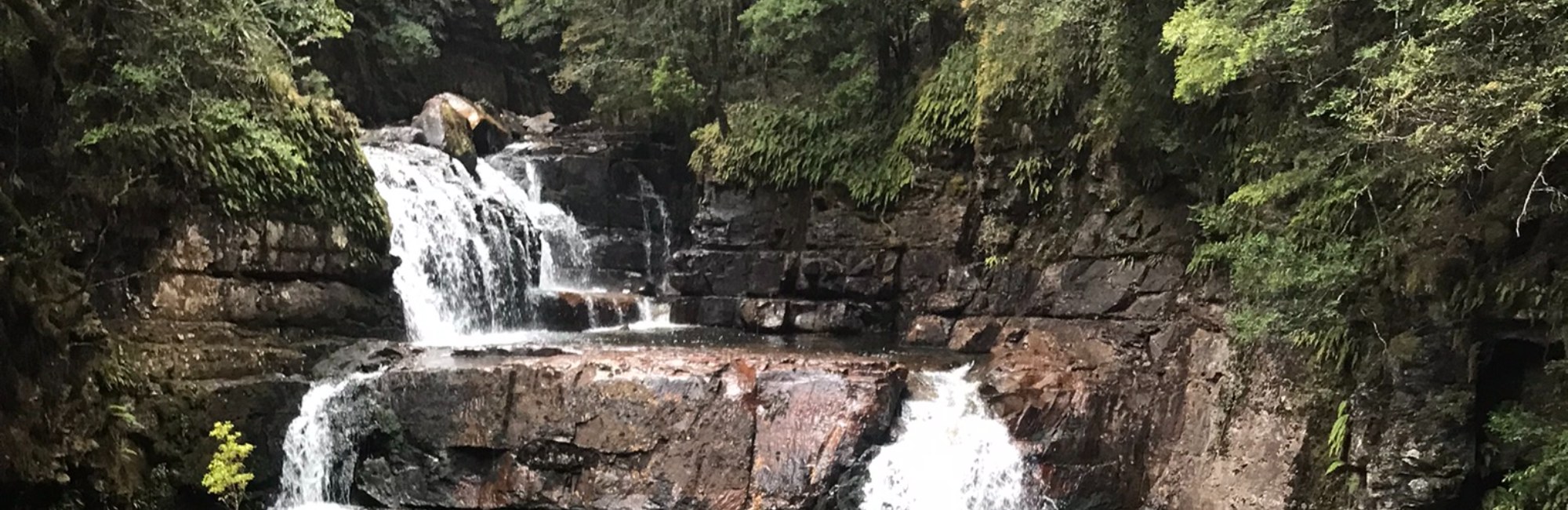
I wrote the essay A little extra something when I lived in Bullaburra, in the Blue Mountains. My children were very young. It took me a good six months and I thought about it day and night. I wrote it in response to Wyeth's advertisements for commercial milk formulas which were appearing regularly across a range of medical journals and in the medical news at that time. As a GP, I couldn't escape these ads: they were everywhere in the professional materials I accessed. In every spare moment, when my children were asleep or in someone else’s care, I sat in my cramped study overlooking the wild green Bullaburra gully with its raucous flocks of sulphur-crested cockatoos, dreaming and writing, writing and dreaming, urgently. ...Then when I finished it in August 1994, I didn’t publish it. I had no idea who might be interested. I’ll never forget that Maureen Minchin kindly read every word and told me down the phone that she really liked it. After we hung up, I shouted out with happiness into the bright gully air. This is an updated excerpt.
Recommended resources
White blood. A little extra something - part 2
Breastfeeding durations in ancestral environments. A little extra something - part 3
In the land between lands, roots of flesh and tides of soul entwine. A little extra something - part 4
