Logo - The Possums baby and toddler sleep program.
parents home
librarybrowse all programsfind answers nowaudioprograms in audiogroup sessionsgroup sessions with dr pam
menu icon NDC Institute
possums for professionals
(the ndc institute)
menu icon eventsguest speakers
menu icon the sciencethe science behind possums/ndcmenu icon who we arewho we aremenu icon evidence basendc research publicationsmenu icon dr pam's booksdr pam's books
menu icon free resourcesfree resourcesmenu icon dr pam's blogdr pam's blog
menu icon consult with dr pamconsult with dr pammenu icon consult with dr pamfind a possums clinicmenu icon find a NDC accredited practitionerfind an ndc accredited practitioner
login-iconlogin

Welcome back!

Forgot password
get access
search

Search programs

PBL Foundations icon

PBL Foundations


  • NIPPLE PAIN & DAMAGE - IS IT TONGUE-TIE? Demonstration of oromotor examination + frenotomy discussion. Simone and newborn Maggie PART 1. Dr Pamela Douglas, F2F Nova Health Co. 19_10_23

Next article

Sign up now
  • PBL Foundations
  • S10: Infant tongue-tie and fascial restrictions
  • CH 1: Stories about tongue-tie or oral connective tissue concerns + what helped (videos + written)
  • PT 1.1: A breastfeeding woman seeks help for baby tongue-tie concerns (video)

NIPPLE PAIN & DAMAGE - IS IT TONGUE-TIE? Demonstration of oromotor examination + frenotomy discussion. Simone and newborn Maggie PART 1. Dr Pamela Douglas, F2F Nova Health Co. 19_10_23

Dr Pamela Douglas20th of Dec 20234th of Nov 2024

Simone is exclusively breastfeeding her secondborn child Maggie, who is a newborn. Simone has nipple pain and damage. She consults with Dr Pamela Douglas at Nova Health Co, Wagga Wagga, Australia, October 2023. A big thanks to Simone for her great generosity in agreeing to participate in this video for education purposes including for general use online.

Simone has nipple pain and damage. Her lactation consultant suggested that newborn Maggie needs a frenotomy for tongue-tie. Simone requests a review and my opinion.

Performing an oral and oromotor assessment

1. Preparation for an infant oral and oromotor assessment

A. Photo below shows positioning baby with parent also talking to baby from above, and getting ready to hold both sides of baby's head so that she can't turn it from side to side during examination (but not lifting head from couch).
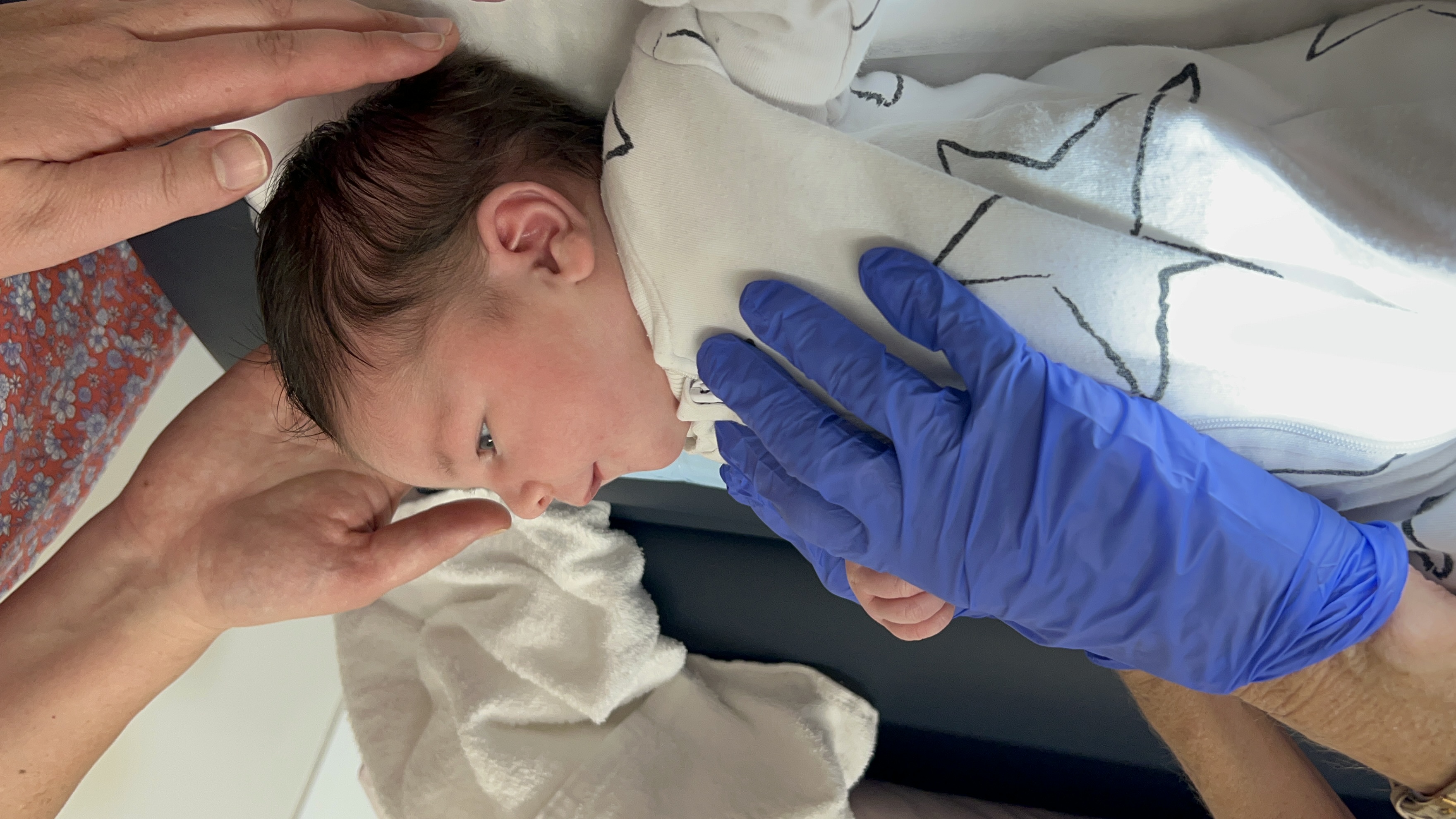
Preparing for oral and oromotor assessment in infant

B. In the photo below, Pam talks a little to baby Maggie, aiming to establish emotional connection and trust, or at least tolerance!
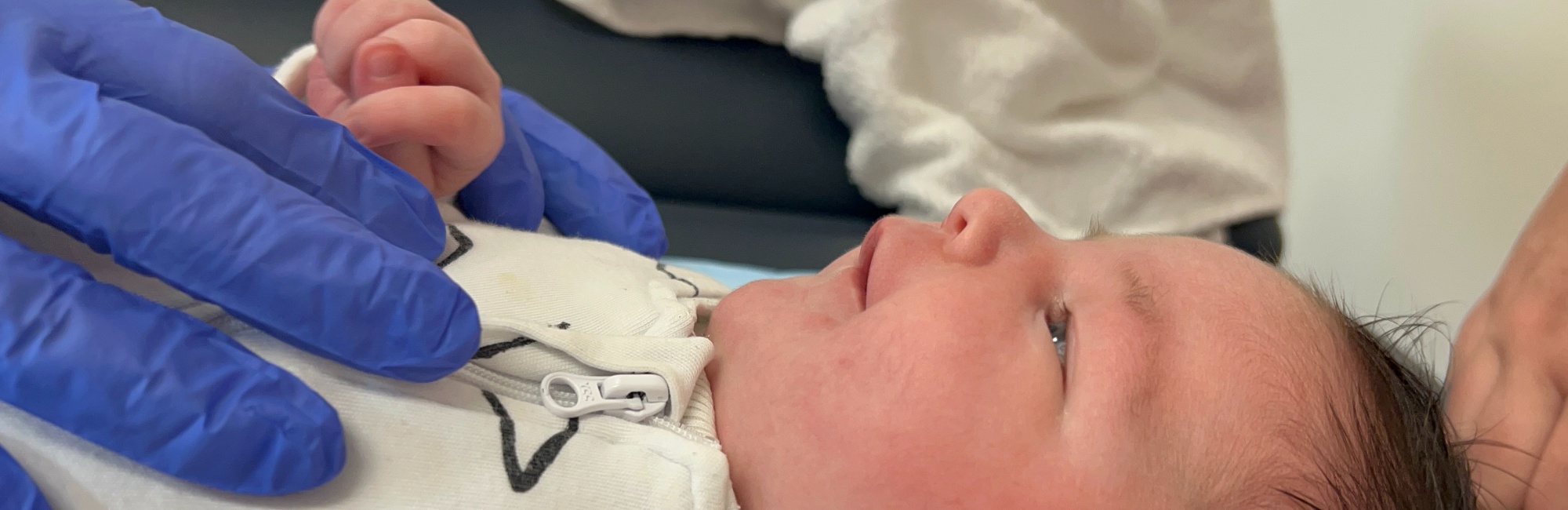
x

C. In the photo below, Maggie extends her tongue while interacting with Pam, demonstrating that the tip of her tongue extends well beyond lower alveolar ridge. (Successful breastfeeding only requires extension of tongue as far as the lower alveolar ridge.)
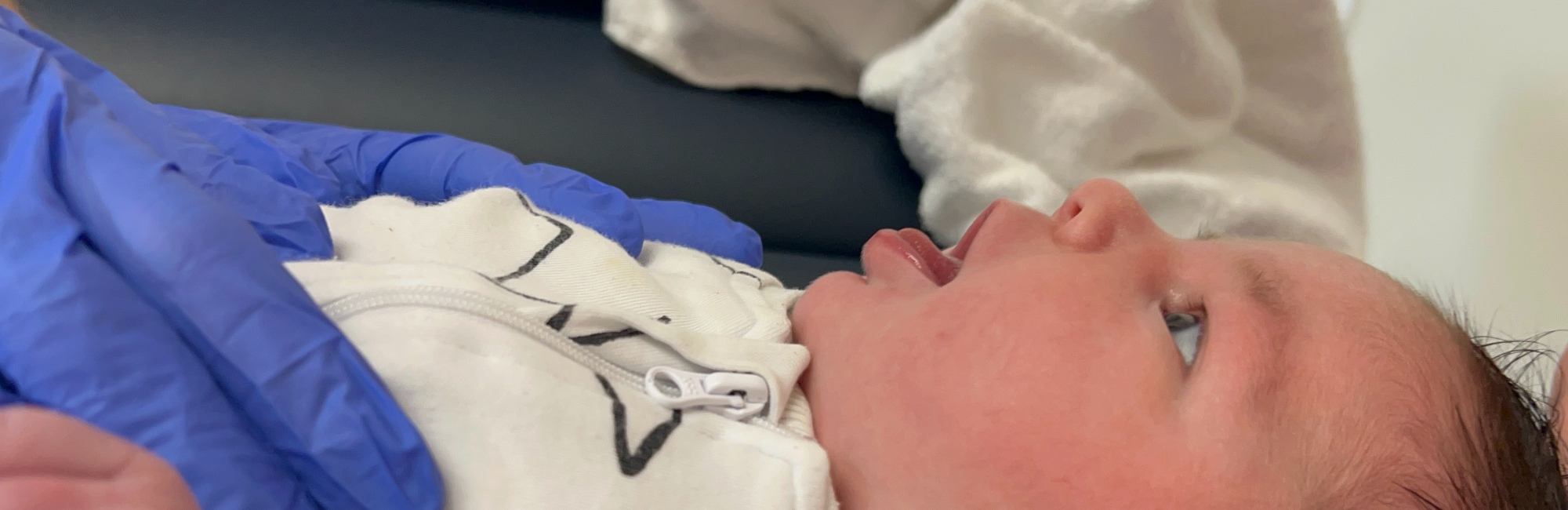
x

2. Demonstration of an infant oral and oromotor examination

A. The video below demonstrates an oral and oromotor assessment, finding a prominent anterior frenulum (at least 70% ventral surface of tongue) and normal white coating on tongue.

B. The video below further displays this newborn's lingual frenulum anatomy.

C. The photo below also displays the lingual frenulum. The frenulum inserts well behind the alveolar ridge.
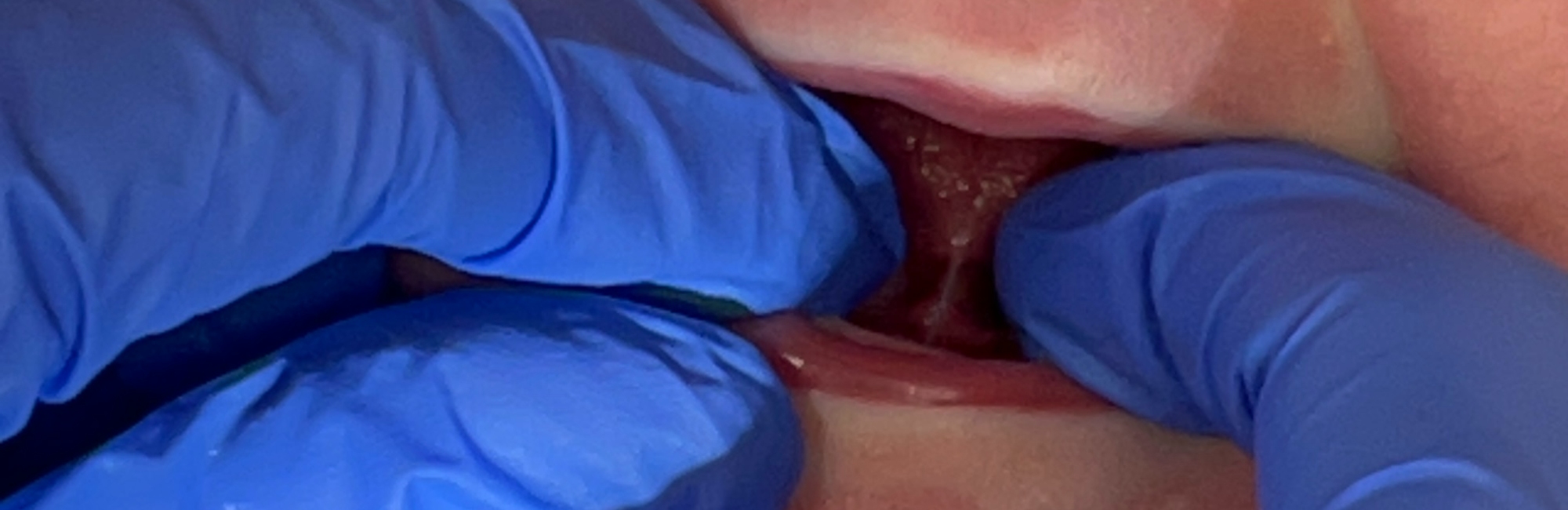
Tongue-tie assessment

D. The photo below shows the normal white coat on the baby's tongue and the way the tongue doesn't lift to half-way up the baby's mouth when she is crying a little, which is not relevant. (The pale mottling that appears to be present in this photo on palate is an artifact of this photo - not present in examination, and nor is this the way candidiasis presents.)
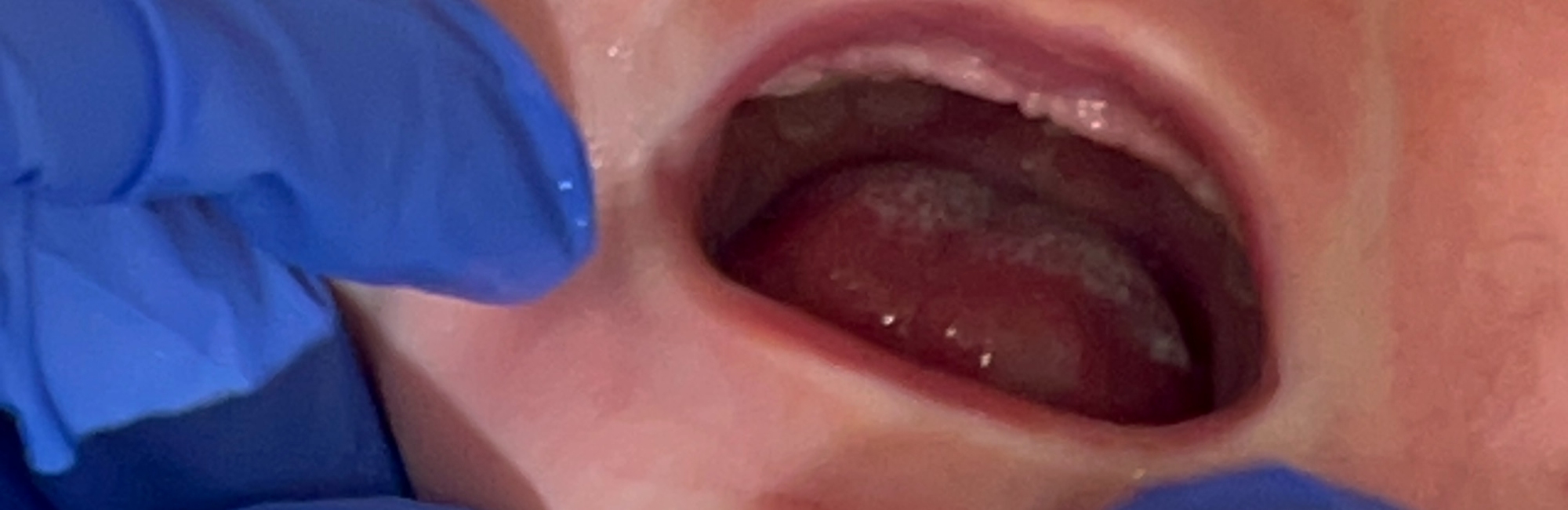
Surface of tongue

E. The photo below shows gentle hands securing baby Maggie's head (not lifting her head from couch though) as Pam checks out the baby's suck. A digital suck assessment actually doesn't tell an examiner very much, since the way a baby sucks on a finger will be highly variable, depending on context in that moment.
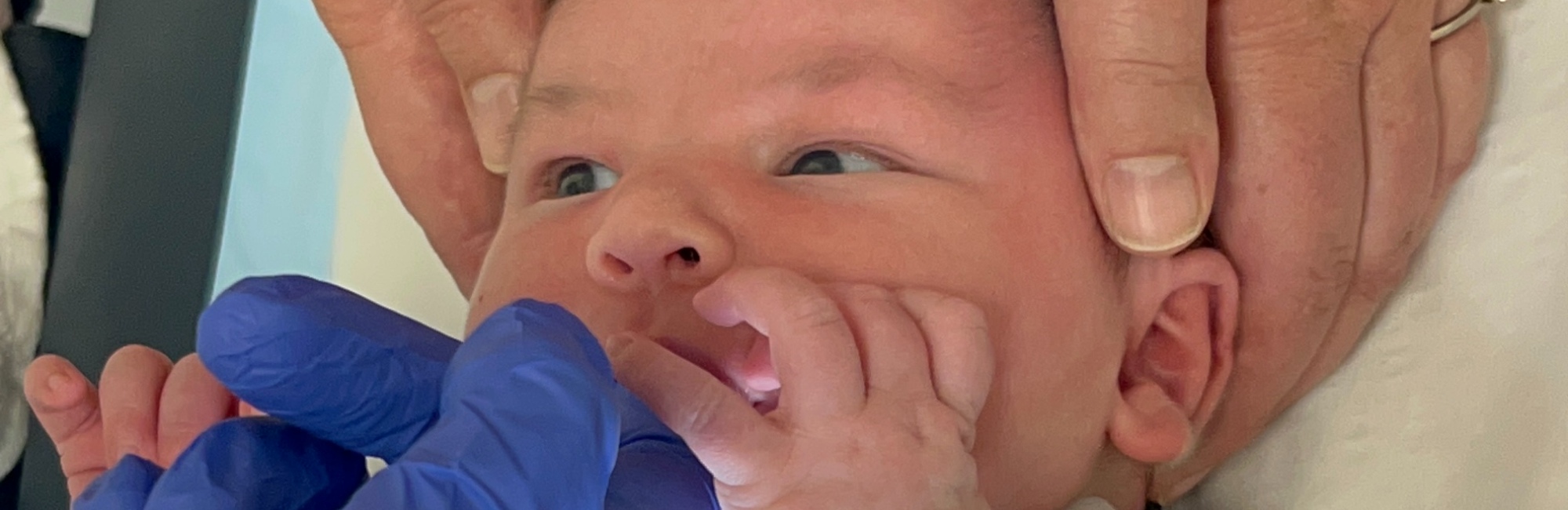
Suck assessment as adult secures baby's head

Discussing with Simone why frenotomy is not first line of treatment for her nipple pain and damage

The video below shows

  • A discussion in which Pam explains why she doesn't believe it necessary to perform a frenotomy today

  • A gestalt intervention.

Please see PART 2 of this consultation to observe Pam's next steps in helping Simone.
Finished

share this article

Next up in A breastfeeding woman seeks help for baby tongue-tie concerns (written)

Part 1. Muhammad is nine weeks old when Angelika asks me for help with the wounds on her nipples: hearing what has happened so far, including about baby's frenotomy and bodywork therapy, and checking out Angelika's nipple shields

x

Disclaimer: the case below is an amalgam of multiple cases that have presented to me, and is not derived from any specific or identifiable mother-baby pair who have seen me as patients. Needless to say, all names are fictional.

Angelika has nipple pain from the very first time she breastfeeds baby Muhammad

“From the very first breastfeed, the pain was awful!” Angelika tells me. Muhammad is now nine weeks old, dressed in a white tee-shirt and little cotton romper with sailing boats on a blue background, gazing at me from his mother’s arms.

“The midwives said to count to twenty, that it was normal to have some pain when I put him on at first.”

“Ok.” I…

Keep reading
logo‑possums

Possums in your inbox

Evidence-based insights, tips, and tools. Occasional updates.

For parents

parents homebrowse all programsfind answers nowprograms in audiogroup sessions with dr pam

For professionals

possums for professionals
(the ndc institute)
guest speakers

About

the science behind possums/ndcwho we arendc research publicationsdr pam’s books

More resources

free resourcesdr pam’s blog

Clinical consultation

consult with dr pamfind a possums clinicfind an ndc accredited practitioner

Help & support

contact usfaqour social enterpriseprivacy policyterms & conditions

Social

instagramlinked infacebook

Possums acknowledges the traditional owners of the lands upon which The Possums Programs have been created, the Yuggera and Turrbal Peoples. We acknowledge that First Nations have breastfed, slept with, and lovingly raised their children on Australian lands for at least 65,000 years, to become the oldest continuous living culture on Earth. Possums stands with the Uluru Statement from the Heart.