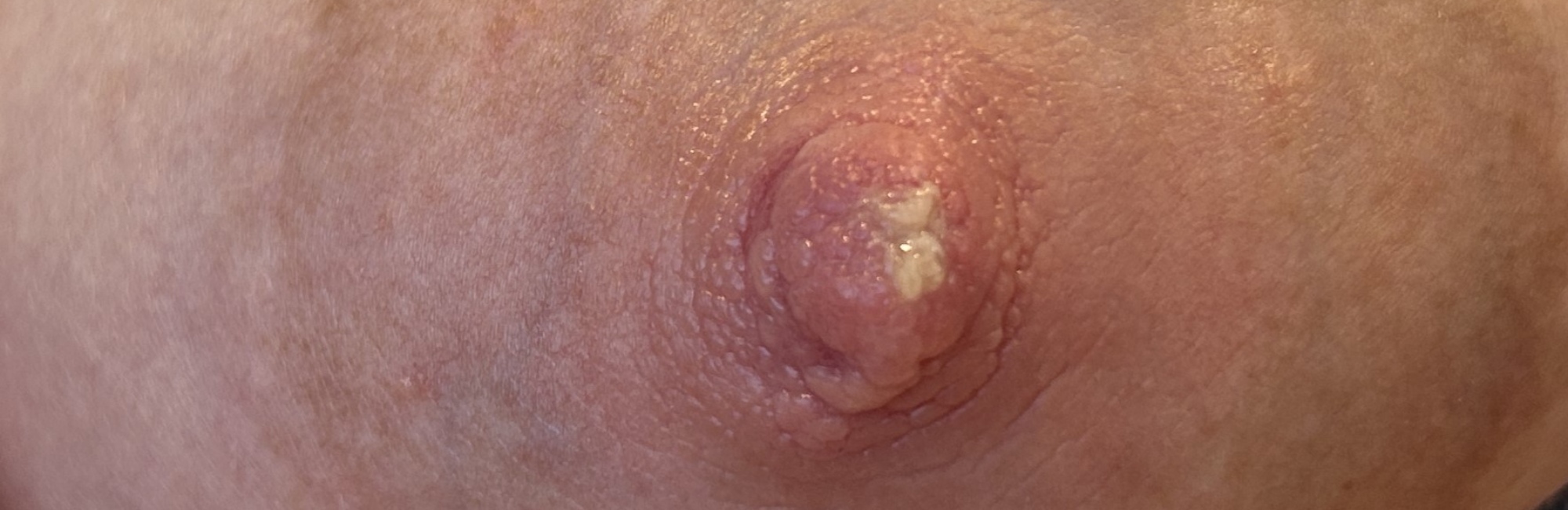
Vasospasm of the nipples during lactation: management

Primary intervention for lactation-related vasospasm
The gestalt method is currently the only fit and hold intervention which offers an evidence-based biomechanical model for eliminating conflicting intra-oral vectors of force during milk removal.1-3
Mechanism
Distribute mechanical load over a larger area of nipple and areola surface, by eliminating conflicting intra-oral vectors of force during suckling or mechanical milk removal. This eliminates repetitive mechanical micro-trauma
Secondary or adjunct intervention for lactation-related vasospasm
-
Keep nipples warm between feeds
-
Avoid stimulants such as nicotin
-
Avoid beta-blocker or vasoconstrictor medications (e.g. propranolol, pseudoephedrine).
Interventions which don't help
Pharmaceutical interventions which don't help
Medications for vasospasm have not been studied in breastfeeding women.There is no evidence nor physiological rationale to support use of the following medications, even though they are commonly prescribed for nipple vasospasm.
-
Nifedipine 30 mg slow release tab daily, increased to 60 mg daily
-
Amlodipine 5-10 mg daily or twice daily in warmer months
-
Diltiazem
-
Verapamil 120-360 mg/day; antibiotics
-
Serotonin reuptake inhibitors.
Possible side-effects
Nifedipine increases nitric oxide levels which induces vasodilation, resulting in decreased oxygen demand and increased oxygenation. Side-effects of nifidepine include headaches due to cerebral vasodilation, ankle oedema, flushing, dizziness, fatigue, mylagias.
Non-pharmaceutical interventions which don't help
Breastfeeding women with nipple vasospasm may be prescribed vitamin B6, magnesium (300 mg twice daily); fish oil capsules (gamma linoleic); calcium; evening primrose oil (gamma linoleic acid).
Vitamin B6 in high doses can cause neurological side-effects. Magnesium is said to relax blood vessels walls. Fish oil capsules contain essential fatty acids, which are said to relax blood vessels walls. Similarly, calcium and evening primrose oil are said to relax blood vessel walls.
But there is no evidence of benefit of any of these supplements, and the physiological rationale is weak.