
High staphylococcus counts most likely result from high milk leukocyte counts and only occasionally proceed to end-stage inflammation (or infection)
Staphylococcus aureus and the human body
Staphylococcus aureus (S. aureus) is found in the healthy microbiomes of approximately one-third of the human population and may also result in invasive disease in many different sites of the human body.
The following examples illustrate the complexity of interactions between S. aureus and the human immune system.
-
S. aureus displays metabolic plasticity and a range of virulence attributes, which make it particularly successful in counteracting immune mechanisms and dominating nutrient sources.19 For example, S. aureus produces toxins and leukocidins, forms biofilm, and rapidly acquires antibiotic resistance.
-
S. aureus influences the metabolism of leukocytes including neutrophils; it both elicits the formation of neutrophil extracellular traps, which enhance an immune response, and reduces the activity of neutrophil extracellular traps.20
-
S. aureus survives within neutrophils but, from this intracellular niche, also extends the life of neutrophils.21
Staphylococcus aureus and human milk
It’s agreed that S. aureus is more likely to be cultured in the milk of women with mastitis.22 There are five studies which help elucidate this, detailed below. But this link doesn't mean that S. aureus is a primary causative mechanism of breast inflammation, or that antibiotics are necessary.
Much remains to be elucidated about the role of S. aureus in breast inflammation during lactation. S. aureus is just one of myriad microorganisms which inhabit a woman’s milk and which respond to and co-ordinate with the mammary gland immune system as it regulates the inflammatory cascades triggered by raised intraluminal pressures.
The NDC mechanobiological modell hypothesises that leukocytes selectively eliminate less resilient bacterial species as they surge into milk in response to inflammatory cascades triggered by high backpressures in the alveoli and ducts.
S. aureus is, however, also a microorganism in human microbiomes particularly well placed to benefit from an inflammatory response and becomes increasingly dominant as the leukocyte count rises in the milk. Usually, inflammation will resolve with application of the key management principles, detailed elsewhere, and S. aureus counts drop back down.
Moreover, the premature use of antibiotics disrupts the balance of the bacteria in the milk microbiome. The milk microbiome is a part of the mammary immune system, and milk bacteria interact with and contain S. aureus. You can find out about this here. The NDC model hypothesises that premature use of antibiotics increases the risk of a multi-drug resistant S aureus becoming the dominant organism, potentially triggering a true and dangerous infective process.
Evidence
-
In 2008, Kvist et al cultured the milk of 192 women with mastitis and 466 without S. aureus and Group B streptococci were found more often in the women with breast inflammation but 31% of healthy women had S. aureus and 10% had Group B streptococcus. No significant correlations were found between scores for erythema, breast tension, pain or for the total severity of symptoms at first contact, and the type of bacteria found in the breast milk. There was only an increased odds for a less favourable outcome when Group B streptococci were present in the milk.23
-
In 2008, Delgado et al investigated the microbial diversity of breast milk in 20 women with lactational mastitis and found that from the 149 bacterial species identified in their milk, 70% by culture and PCR analysis were Staphylococci, of which Staphylococcus epidermidis (previously known as a skin commensal) was the dominant species. In fact, S. epidermidis was isolated in 17 of the 20 women, S. aureus in only 5. No Candida spp were identified. Streptococcus was isolated only in four samples and always outnumbered by Staphlococcus. The authors suggest that breast inflammation was accompanied by a process where some of the bacterial species usually present in human milk overgrow (Staphylococcus) while others disappear (in particular, Lactobacilli or Lactococci.24
-
In 2015 Cullinane et all found that 59% (16 of 27) of milk samples collected from women who reported mastitis at the time of collection or the day prior cultured positive for S. aureus. However, Cullinane et al also found that 32% of milk samples collected at week 1 in asymptomatic lactating women (207 of 657 milk samples) cultured positive for S. aureus, and 15% at week 4.25
-
In 2020 Rimoldi et al found that in 26 lactating women with mastitis and another 34 with breast abscess, S. aureus was the most common microorganism identified, with methicillin resistance identified in 44.7% of S. aureus strains, including in 80.9% of the cases of abscess. Hospitalisation was required more frequently in methicillin resistant S. aureus cases.26
-
In 2022, an Australian case-control study examined the role of coagulase-negative staphylococci in 20 women with mastitis and 16 women without mastitis. The majority of coagulase-negative staphylococci were Staphylococcus epidermidis, but there was no specific link with mastitis cases.
Antibiotics are required for late-stage breast inflammation
It is possible that the inflammatory cascade is so acute and persistent, and the leukocyte count so high, that the S. aureus population soars and S. aureus secretion of membrane-damaging toxins begins to affect the surrounding breast stroma.
At this late-stage on the spectrum of breast inflammation, high counts of S. aureus may participate in and fuel a spreading cascade of inflammatory responses, as the mammary immune system makes further response and attempts to downregulate S. aureus. High and increasingly dominant populations of S. aureus will present clinically as worsening, rather than resolving, pain, fevers, lump pain, and lump size, over a period of multiple days.
Antibiotics break this destructive cycle. The decision to use antibiotics is based on clinical monitoring over time.
It is also possible that occasionally, over time, an extremely high cell count in milk composed of leukocytes and epithelial cells results in end-stage thickened or inspissated milk, which may be detected during milk expression and which also contains biofilm. But from a complex systems perspective, this is a very late sign of disruption, likely to be a consequence of high intraluminal pressures, ductal occlusion, and the ensuing inflammatory cascade rather than a cause. It would also not usually require antimicrobial treatment, depending on the clinical picture.27
Acknowledgements
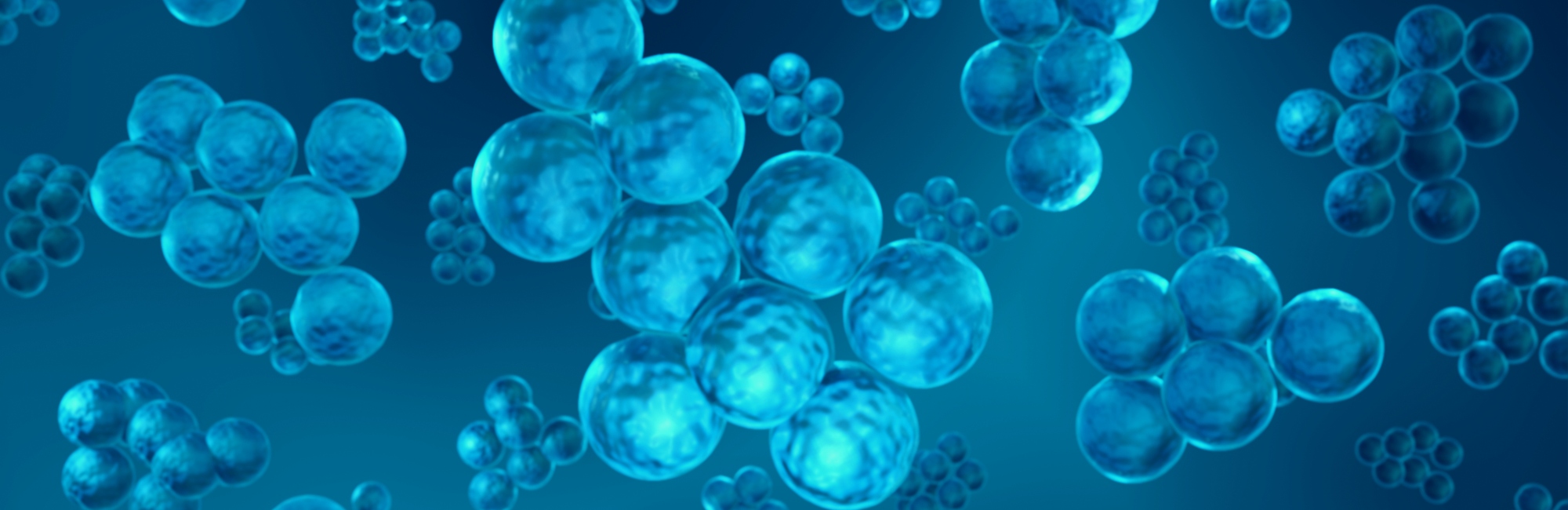
The image on this page is of Staphlyococcus aureus, which means 'golden grapes' in Greek.
Selected references
-
Rimoldi SG, Pileri P, Mazzocoo MI. The role of Staphylococcus aureus in mastitis: a multidisciplinary working group experience. Journal of Human Lactation. 2020;36(3):503-9.
-
Speziale P, Pietrocola G. Staphylococccus aureus induces neutrophil extracellular traps (NETs) and neutralizes their bactericidal potential. Computational and Structural Biotechnology ournal. 2021;19:3451-7.
-
Vozza E, Mulcahy ME, McLoughlin RM. Making the most of the host: targeting the autophagy pathway facilites Staphylococcus aureus intracellular survival in neutrophils. Frontiers in Immunology. 2021;16 June:doi:10.3389/fimmu.2021.667387.
-fotor-202401137502.jpg)