
Human milk immune and epithelial cells (both alive and dead) protect the mammary gland and the infant
Living lactocytes are the most common (non-microbiome) cells found in mature human milk
Human milk is a remarkable, highly dynamic biological fluid which offers far more than nutrition. In addition to the microbiome, human milk contains millions of living cells, also referred to collectively as somatic cells. The total somatic cell count per milliliter of milk decreases over the course of lactation, but dramaticallly increases (at the same time as colony forming units of bacteria increase) during breast inflammation.
-
Immune cells are the dominant population in early-stage milk (or colostrum)
-
After two weeks postpartum most of the (non-microbiome) cells in human milk are lactocytes. It's believed these live lactocytes, which have various subtypes, are exfoliated from the mammary epithelium, and continue to actively secrete milk components whilst within the milk. The dominant genes from living cells in mature milk are the genes found in lactocytes which produce alpha lactalbumin and beta-casein. The role of these large populations of milk lactocytes is still being elucidated, but appears to include immune activity as well as ongoing secretion of milk components.
-
Breast milk also contains multipotent stem cells. Five percent of breast milk cells are stem like.
-
Domestic factors such as number of children, co-sleeping, and pet exposure are associated with shifts in the immune and lactocyte cell composition of breast milk.
Live immune cells are also found in human milk
Living immune cells within human milk play a crucial role in protecting the infant against infection and in guiding the development of the neonatal immune system. The presence of living leukocytes in milk was first described in the 19th century, and since then, their importance has been increasingly recognized in both immediate defense and long-term health outcomes for breastfed infants.
Human milk also contains a diverse array of immune factors, including antibodies, cytokines, antimicrobial proteins.
During maternal or infant infection, the number of immune cells in milk increases dramatically to as much as 90% of total somatic cell count. This mobilization of leukocytes not only benefits the infant but also strengthens wound-healing responses and local defense within the ducts and alveoli of the breast. Such rapid recruitment highlights the breast’s capacity for dynamic immune responsiveness.
By modulating microbiome balance, supporting repair, and modulating immune activity, milk leukocytes provide a dual protection system. They not only enhance infant immunity but also reduce the risk of maternal mastitis and inflammatory damage. This dual role underscores the evolutionary efficiency of lactation: a single set of immune cells serving the needs of both mother and child.
Cell types present
The immune cell composition of milk varies according to the stage of lactation and the health of both mother and infant.
-
In colostrum, which is the first milk produced after birth, up to 70% of total cells may be leukocytes, providing a concentrated immune boost at a time when the newborn is most vulnerable.
-
As milk transitions to mature milk, the proportion of immune cells usually drops to below 10%. However, this is not a static figure. During maternal or infant infection, the number of immune cells in milk can increase dramatically, sometimes returning to colostrum-like levels, reflecting a responsive system tailored to the infant’s needs.
Human milk immune cells are usually discussed in the context of protecting the infant, but evidence suggests they also play an important role in safeguarding the maternal mammary gland. These cells act as sentinels within the breast, reducing the risk of infection, supporting tissue repair, and maintaining immune balance during lactation. The surveillance by live immune cells is likely to be an important part of the prevention of microbiome imbalance or bacterial overgrowth in the milk.
The major immune cell types in milk include:
-
Macrophages (direct defence), which appear to be the most abundant kind of leukocyte by far, comprising at least 40–60% of milk immune cells. They engulf and destroy microbes, secrete antimicrobial factors such as lysozyme, and release cytokines that regulate immune responses. Macrophages, which represent the majority of milk leukocytes, have functions beyond microbial clearance. They secrete cytokines and growth factors that promote resolution of inflammation and tissue repair, helping the gland recover from the stresses of lactation.
-
Adaptive immune cells (lymphocytes), which are present in much smaller populations in the milk of healthy women – This group includes
-
T cells, the dominant milk lymphocytes. Some evidence suggests they survive in the infant gut and may interact with local immune tissues.
-
B cells, which are present at lower frequencies but which are critical because they differentiate into plasma cells that secrete secretory IgA, the dominant antibody in milk.
-
Natural killer cells, which contribute innate cytotoxic activity, targeting infected or abnormal cells.
-
-
Neutrophils (direct defence) are less abundant in human milk than macrophages, but provide rapid antimicrobial defense through phagocytosis and the release of toxic granules.
Dead immune cells in human milk
A substantial proportion of milk leukocytes are non-viable or undergoing apoptosis. These cells are not simply “waste,” but may still play roles in shaping the infant’s immune environment.
The fluctuating balance of live and dead cells across lactation and in response to infection highlights the adaptive, communicative nature of the maternal-infant immune system. The mammary gland can quickly shift the balance to supply more active immune defense when the mother or infant needs it most.
Proportion and dynamics
The viability of milk immune cells changes across lactation. In colostrum, cell viability is relatively high, with up to 70% of leukocytes remaining alive and functional. This coincides with the critical window when the newborn is most vulnerable and requires maximal maternal immune support. As lactation progresses into mature milk, the proportion of live cells declines. Studies using viability assays show that in mature milk, often less than one-third of immune cells remain viable, with the majority being apoptotic or dead.
During episodes of maternal infection, breast inflammation, or infant infection, the mammary gland responds by mobilizing additional leukocytes into milk, many of which are alive. This shift results in a temporary increase in the proportion of viable cells, resembling colostrum-like levels of immune activity.
Types of dead immune cells in human milk
The non-viable fraction of milk leukocytes includes the same cell types as live ones: macrophages, lymphocytes (T cells, B cells, and NK cells), and neutrophils. As these cells undergo apoptosis, their membranes, intracellular proteins, and nucleic acids break down and are released into the milk.
Potential functions
Even though these non-living cells and their debri are no longer functional in the traditional sense, their remnants may have important biological effects. It's hypothesised that dead immune cells
-
Are a source of antigens. Fragments of apoptotic leukocytes could expose the infant’s immune system to maternal antigens, helping shape oral tolerance and preventing inappropriate immune activation. This may be particularly relevant for developing mucosal immunity in the gut.
-
Deliver bioactive molecules. Dead and dying cells release intracellular contents such as cytokines, enzymes, and nucleic acids. These molecules may influence the infant’s gut immune responses, regulate microbial colonization, or act as signaling cues.
-
Provide immune regulation. The phagocytosis of apoptotic cells is generally anti-inflammatory, promoting tolerance rather than immune activation. Thus, the presence of apoptotic leukocytes in milk could help balance immune stimulation and downregulation in both the maternal breast and the infant.
-
Recycle nutrients. Degraded immune cells may serve as a source of nucleotides, peptides, and other nutrients, supporting infant metabolism.
Summary
Human milk is a living, adaptive fluid containing immune cells which actively defend and educate the infant’s immune system, and help protect the maternal mammary gland. Macrophages, T and B lymphocytes, NK cells, and neutrophils form a dynamic cellular population, with numbers peaking in colostrum and during episodes of infection.
These cells not only downregulate inflammation, but may also persist in the infant, shaping immune development and potentially contributing to long-term health. The live cells in human milk comprise an extraordinary biological bridge between mother and child.
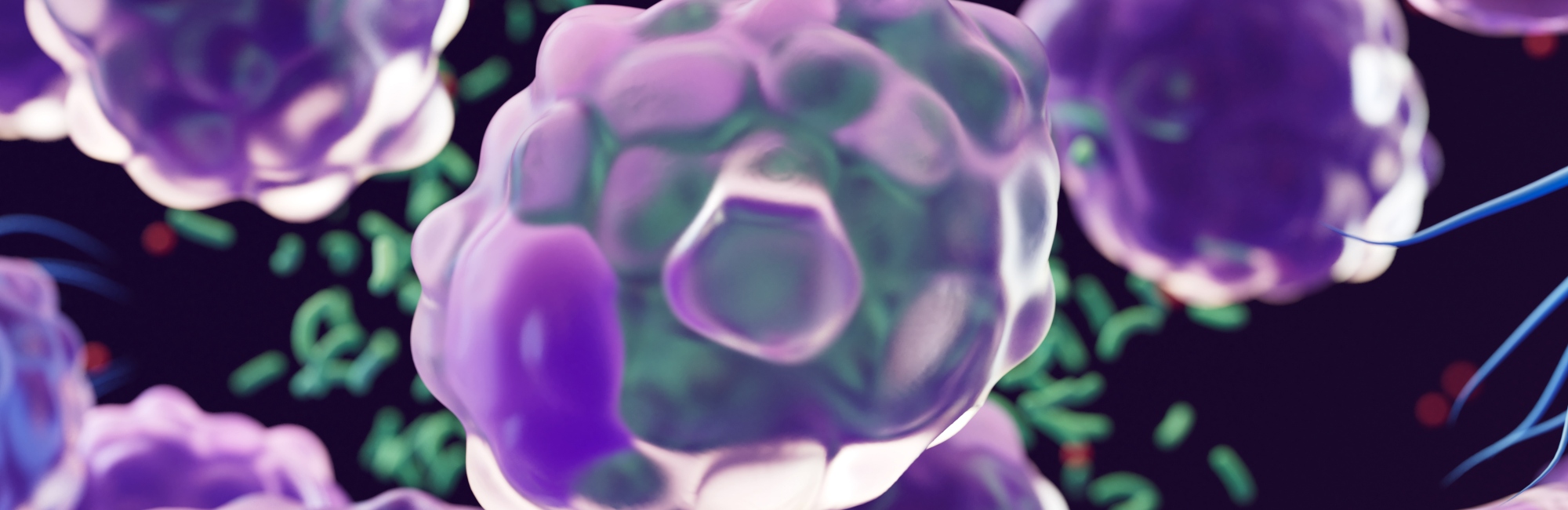
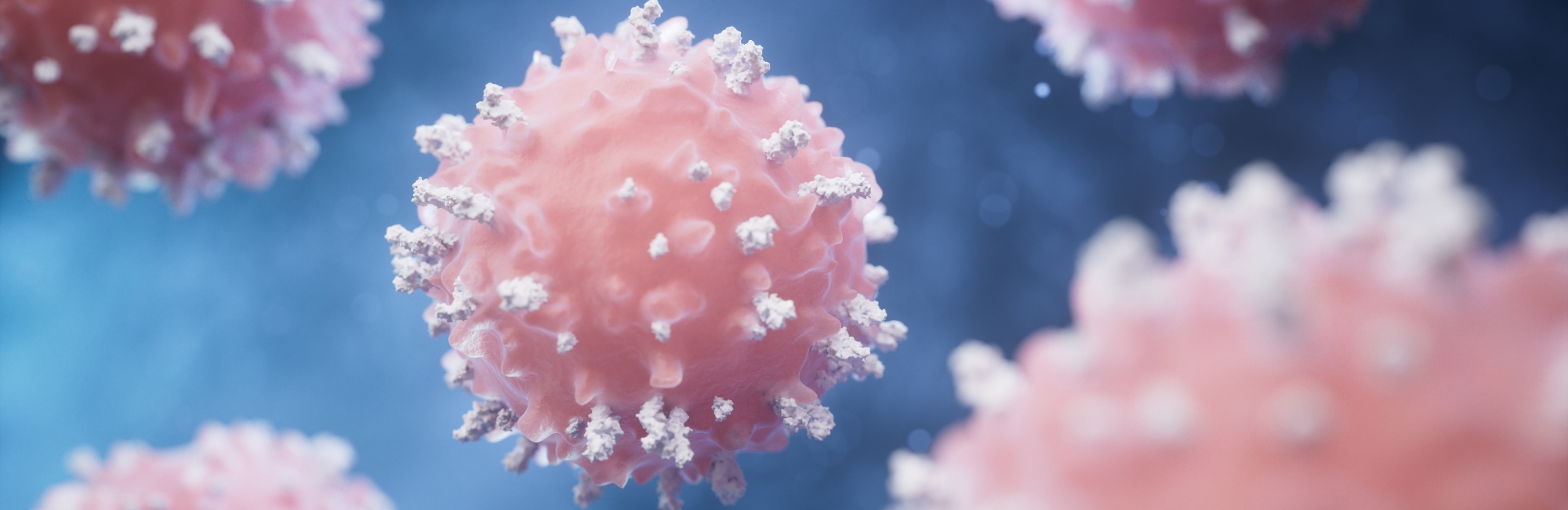
The image below is of a lymphocyte. The image at the top of the page is a macrophage.
References
Cabinian, A., et al. (2016). Transfer of maternal immune cells by breastfeeding: Maternal cells in the breastfed infant. JAMA Pediatrics, 170(2), 122–124.
Fernández L, Langa S, Martín V, Maldonado A, Jiménez E, Martín R, Rodríguez JM. (2013). The human milk microbiota: Origin and potential roles in health and disease. Pharmacological Research, 69(1), 1–10.
Gleeson JP, Chaudhary N, Fein KC. Profiling of mature-stage human breast milk cells identifies six unique lactocyte subpopulations. Science Advances. 2022;8(26):eabm6865. doi: 6810.1126/sciadv.abm6865.
Hassiotou, F., et al. (2013). Breastmilk is a novel source of stem cells with multilineage differentiation potential. Stem Cells, 30(10), 2164–2174.
Molès, J. P., et al. (2018). Breastfeeding-associated maternal microchimerism. Nature Reviews Immunology, 18(12), 665–673.
Nyquist SK, Gao P, Haining TKJ. Cellular and transcriptional diversity over the course of human lactation. Proceedings of the National Academy of Sciences. 2022;119(15):e2121720119. doi: 2121720110.2121721073/pnas.2121720119.
Riskin, A., et al. (2012). Changes in immunomodulatory constituents of human milk in response to active infection in the nursing infant. Pediatric Research, 71(2), 220–225.
Tomaszewska A, Porębska K, Jeleniewska A, Królikowska K, Lipińska-Opałka A, Gościńska A, Zdanowski R, Pogonowska M, Kalicki B. The Home as a Modulator of Milk Immunity: Association Between Domestic Factors and Immune Cell Populations in Human Breast Milk. Nutrients. 2025 Aug 7;17(15):2574. doi: 10.3390/nu17152574. PMID: 40806158; PMCID: PMC12348968.
Twigger, A. J., et al. (2015). Gene expression in breastmilk cells is associated with maternal and infant characteristics. BMC Genomics, 16, 110.
Vaidya Y, patel S, Joshi C, Nauriyal D, Kunjadia A. Somatic cell count: a human breast wellbeing indicator. Journal of Breast Health. 2017;13:88-93.
This article was initially generated by ChatGPT, and then substantially edited, according to my knowledge of, and my referring back to, the research literature. I asked ChatGPT to give me an overview of the live and dead immune cells in human milk. I adhere to the ethical guidelines for science writing summarised here. The picture at the top of this page is of a lymphocycte (though not specifically in human milk).
-fotor-202401137502.jpg)