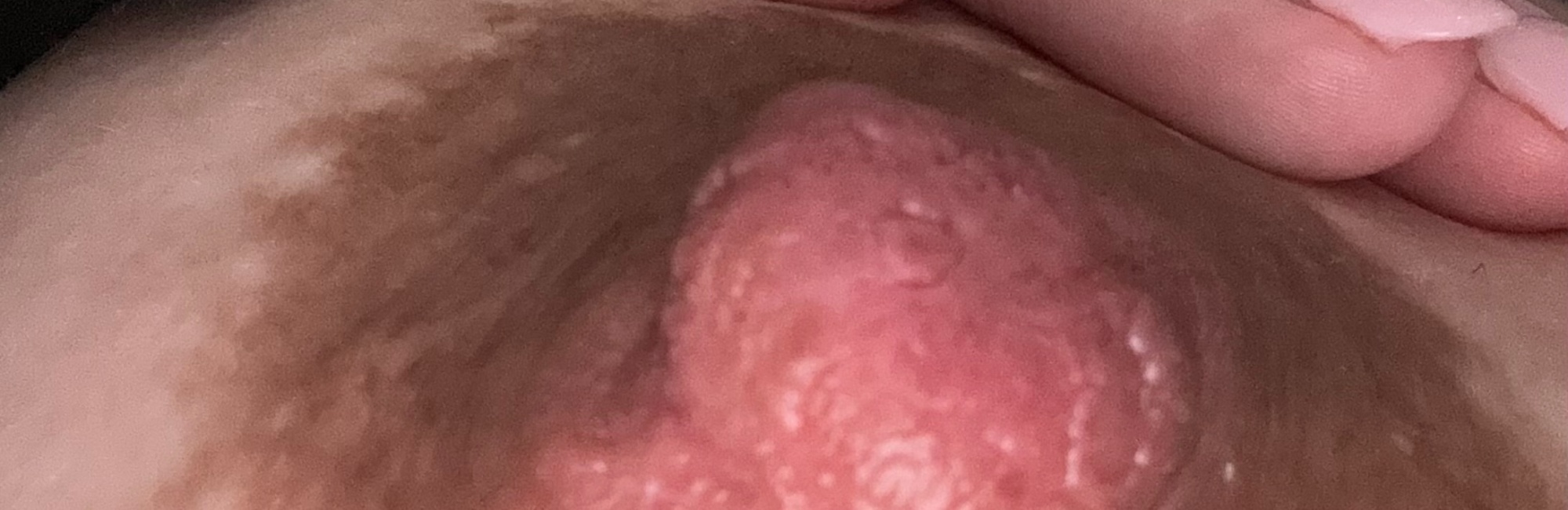
Persistent lactation-related nipple pain: aetiology and management
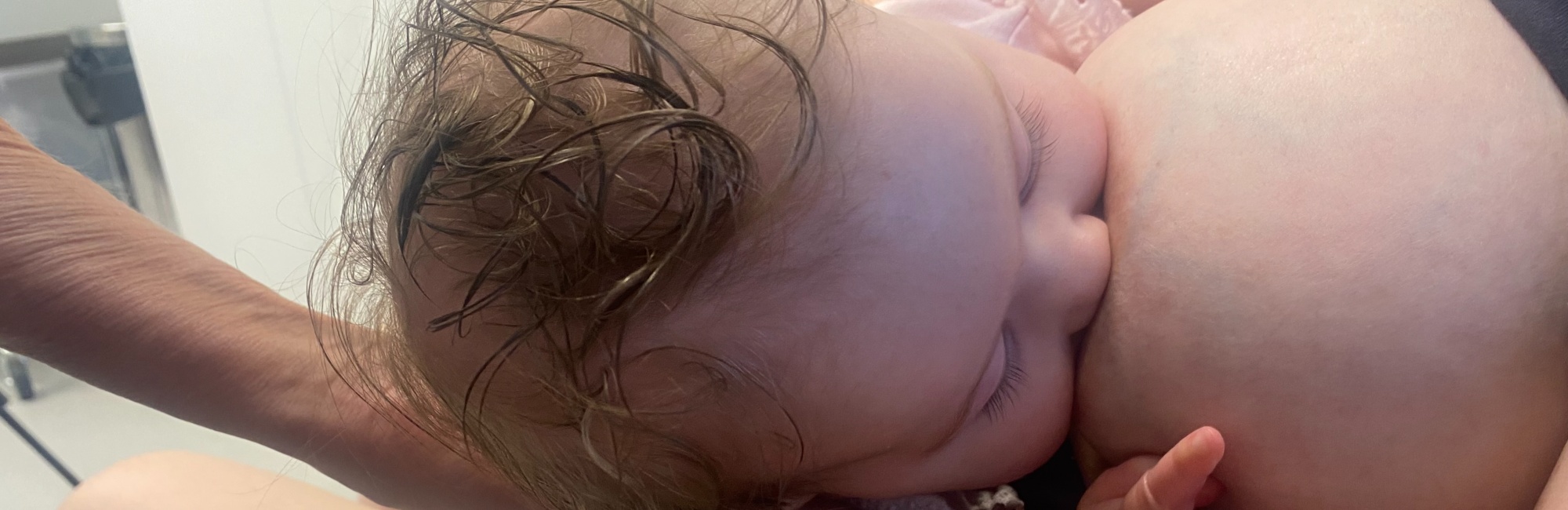
Persistent nipple pain occurs when a mother's pain does not respond to management principles for lactation-related nipple pain
The NDC clinical guidelines define persistent nipple pain as pain that is not resolving as expected with comprehensive fit and hold intervention and avoidance of overhydration and moisture-associated skin damage. The pain might be defined as persistent after a couple of weeks of intervention with some women, or after a month or two in others, depending on the level of pain and damage.
The NDC clinical guidelines does not use the arbitrary definition of persistent nipple pain as pain which persists for more than a fortnight. This definition is not helpful, as management needs to be calibrated to the complex presentation of each individual mother and her baby, and where she is on the spectrum of nipple pain and damage.
Does an inflammatory response fail to resolve in some breastfeeding women but continue to be triggered in response to what are now more normalised mechanical pressures of breastfeeding?
A chronic inflammation of the nipple is characterised by
-
Elevated interstitial pressures in the stroma, including due to hypervascularity and vasodilation
-
Elevated stromal levels of histamines and cytokines.
These factors, and the ongoing effects of mechanical tissue stress with breastfeeding or pumping, result in nociceptive pain. NDC hypothesises that in some women, nipple epidermal and stromal inflammation, once it has taken hold, is unable resolve in the context of repetitive exposure to mechanical pressures, regardless of how much better the woman is now able to distribute (or defuse) the mechanical elastic or stretching load of the baby's sucking over her nipple and areola tissues. This results in peripheral sensitisation of the nipple tissues (reduced threshold of nociceptive neurons to stimulation) in the context of ongoing mechanical pressures and resultant inflammation.
You can find here why persistent nipple pain remains an acute form of pain, and is not accurately conceptualised as chronic neuropathy, nociplastic pain, or central sensitisation.
Management of persistent nipple pain
In addition to ongoing attention to principles for management of nipple pain and damage, dealt with previously, the following principles apply to management of persistent nipple pain.
-
Ongoing fit and hold work together until the breastfeeding woman let's you know she's done - either done with trying to breastfeed, or done with working on fit and hold with you.
-
Continuing to ensure that she's educated about the dangers of overhydration and moisture-associated skin damage, and continues to expose her nipples to air as much as is sensibly possible, especially at nights. Ensuring she avoids potions that might worsen MASD, or at least uses them carefully.
Trial a short course of maternal oral antifungal medication
There may be rare occasions when you may consider a one week trial of diflucan to eliminate the possibility of nipple candidiasis in a woman with persistent nipple pain who has
-
Taken antibiotics recently
-
Preferred to keep her painful breasts in moisture-promoting contexts e.g. constant bra-wearing, not exposing breasts to the air at night
-
Excessive use of lansinoh, hydrogel discs, polymem, silverettes, or breast shells, which may cause a true candidiasis infection.
Photobiomodulation therapy
In situation of persistent nipple pain, the clinician may raise laser therapy as an option. The NDC Clinical Guidelines suggest offering laser or light treatment in persistent nipple pain, as an adjunct to fit and hold work. You can find out about laser treatment, starting here.
When is it time for complete nipple rest?
Once the situation has become too discouraging and the woman needs to change tack, she might
-
Decide that she is no longer aiming to exclusively feed with her own milk, but introduces donor milk or some formula and offers the breast less often. This is with a view to preserving some positive experiences of breastfeeding, at the same time as perhaps helping the nipples to heal through less exposure to mechanical forces
-
Stop direct breastfeeding altogether to let the nipple heal. Hand express to avoid engorgement and mastitis. Pumping may well continue to perpetuate mechanical damage so cease this too. Accept that the focus now is not on exclusive breastfeeding and maintaining supply, but on healing up her nipples
-
Resume breastfeeding once nipples are healed (if she wants to) - gradual return, re-lactation, with optimal fit and hold. Make a followup appointment for her first attempt to bring baby to the breast, to mitigate as far as possible against the return of the same nipple and breast tissue drag problems
-
Wean and cease milk removal altogether, and support her as she moves through the grief of this. From an NDC perspective, this support comes from normalising the strength of many women's grief for the loss of breastfeeding. The grief will take time and require the same care as any grieving process.
You can find out more about nipple rest, and why it may be the best strategy for preserving breastfeeding long term, here.
Recommended resources
Are women more prone to persistent nipple pain during lactation if they have other skin conditions?
Selected references
Douglas PS. Re-thinking lactation-related nipple pain and damage. Women's Health. 2022;18:17455057221087865.