Do you have an inverted nipple?
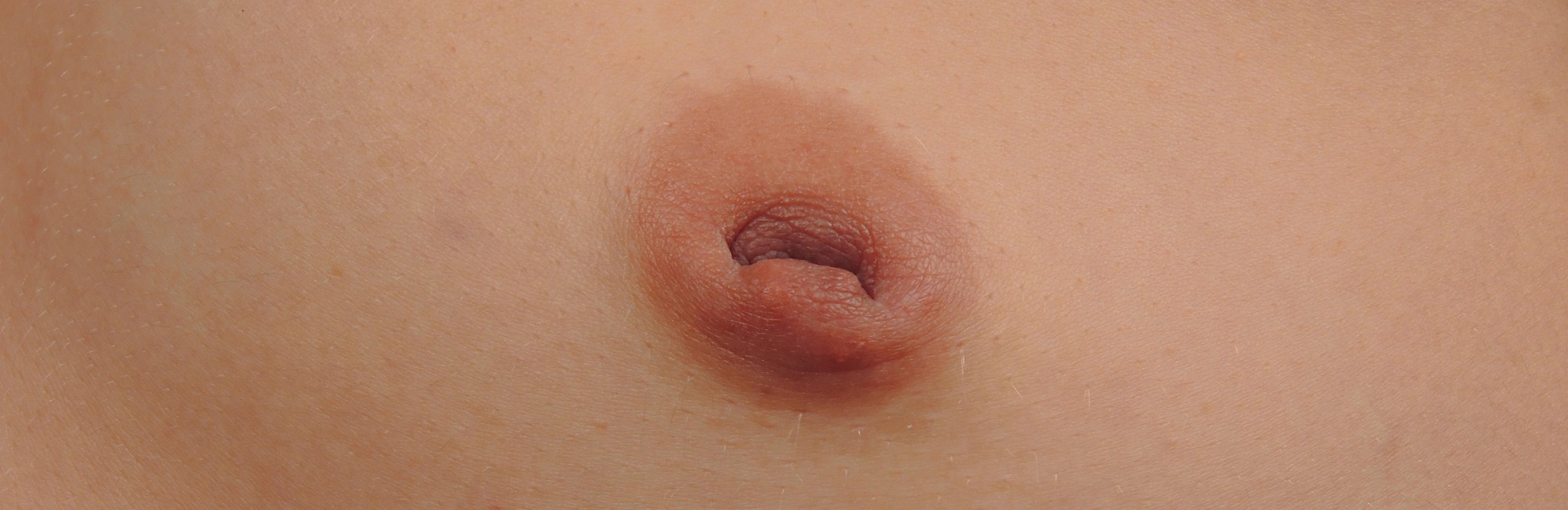
What is an inverted nipple?
Any kind of discharge, ulceration or lump in the nipple or breast requires prompt assessment by your GP.
An inverted nipple is a non-projecting nipple that lies below the plane or the level surface of your areola. Up to one in ten girls are born with inverted nipples.
-
Mostly, both nipples are inverted, and in half of these girls, the nipple inversion is hereditary.
-
Often, nipples spontaneously evert (that is, come out or become more prominent) during puberty.
When you have a true inverted nipple which is tethered in with fibrous tissue
Some inverted nipples are tethered in with fibrous tissue. They can't be projected or pulled out with your fingers, and can only be made to project out surgically. Unfortunately, breastfeeding is not always possible after corrective surgery for a tethered inverted nipple, because of the permanent lack of development of the underlying nipple and ducts, which existed prior to any surgery you might have decided to have. The ducts and glands under a true inverted nipple usually don't properly develop and are atrophied and fibrous. It can be very upsetting to be born with this genetic problem when you have a longing to breastfeed your baby, especially if a true inversion affects both nipples. (You can find an article written for those who find they're not being able to breastfeed here.)
You can always try breastfeeding though, and see if you are able to generate any milk. With true, congenital inverted nipples, this is unlikely, but you can still offer your baby the breast as much as you'd like to. Some women who find themselves in the upsetting situation of true inverted nipples find they can still enjoy using the breast to dial baby down and be close together physically, even though milk transfer doesn't occur.
Most inverted nipples can be encouraged to project out using your fingers
Most inverted nipples project out once you use your fingers to gently roll them or pinch them, or to press upon the areolar.
There are various suction devices on the market, in the form of shells, cups, and nipple extractors. None have evidence to suggest that their use will help. Still, you might decide to try gently everting your nipple or nipples as best you can once or twice a day in the last trimester of your pregnancy. It's very important not to hurt your nipple.
If you do have inverted nipples which are not tethered in by fibrous tissue, then before you put the baby on, you'll simply need to evert the nipple (or make it project out) with your fingers before breastfeeding. Some women in this situation have been told to use a suction device prior to putting the baby on to the breast in the early days after birth too, if they aren't able to easily evert the nipple by stimulating the area and persuading it to evert their fingers. However, a trial has shown that using an inverted syringe (or suction device) prior to breastfeeding doesn't help and may make things worse. Another study has shown that using your fingers works best. You can read about that study below.
Sometimes a nipple shield is necessary to help a baby come on when your nipples are inverted.
Remember that babies aren't feeding from the nipple - they are drawing as much breast tissue as possible in addition to the nipple into their mouths when they feed. It's important that the baby is positionally stable without breast tissue drag, as this is the most common reason why babies have difficulty coming on to the breast. Often problems are attributed to a partly inverted nipple which in fact they result from breast tissue drag and positional instability.
One trial showed that the Hoffman technique improved breastfeeding for women whose nipples could be everted with finger stimulation
How do you use the Hoffman technique?
Place your thumbs or forefingers on either side of your nipple. Be sure to place them at the base of the nipple, not the outside of the areola. Press down firmly but gently into your breast. While still pushing down with your thumbs, now pull your thumbs away from each other. Do this about five times in the vertical plane and five times in the horizontal plane. Then try to ease the nipple out by pulling gently at the nipple base.
What does the research say?
The Hoffman technique was performed four times a day for 30 minutes each time. In an Indian study of 55 women who had delivered a baby (day 1) were diagnosed with grade 1 inverted nipple using the pinch test, and randomised to a 27 in the control group and 28 in the Hoffman technique group. On day 3, breastfeeding efficacy was measured using the BBAT scoring, and nipple length was measured. On day 3, the mothers using the Hoffman technique had a significantly higher BBAT score and increased nipple length.
Selected references
Kaya O, Tecika S, Suzan OK. The effect of interventions on flat and inverted nipple on breastfeeding: a systematic review. Journal of Pediatric Nursing. 2024;74:e1-e13.
Mangialardi ML, Baldelli I, Salgarello M, Raposio E. Surgical correction of inverted nipples. Plastic Reconstructive Surgery Global Open. 2020:1-15 DOI: 10.1097/GOX.0000000000002971.
Nabulsi M, Ghanem R, Smaili H, Khalil A. The inverted syringe techique for management of inverted nipples in breastfeeding women: a pilot randomized controlled trial. International Breastfeeding Journal. 2022;17(9):https://doi.org/10.1186/s13006-13022-00452-13001.
Thurkkada AP, Nair SR, Thomas S. Effectiveness of Hoffman's exercise in postnatal mothers with grade 1 inverted nipples. Journal of Human Lactation. 2023;39(1):69-75.