Logo - The Possums baby and toddler sleep program.
parents home
librarybrowse all programsfind answers nowaudioprograms in audiogroup sessionsgroup sessions with dr pam
menu icon NDC Institute
possums for professionals
(the ndc institute)
menu icon eventsguest speakers
menu icon the sciencethe science behind possums/ndcmenu icon who we arewho we aremenu icon evidence basendc research publicationsmenu icon dr pam's booksdr pam's books
menu icon free resourcesfree resourcesmenu icon dr pam's blogdr pam's blog
menu icon consult with dr pamconsult with dr pammenu icon consult with dr pamfind a possums clinicmenu icon find a NDC accredited practitionerfind an ndc accredited practitioner
login-iconlogin

Welcome back!

Forgot password
get access
search

Search programs

Baby Sleep (0-12 months) icon

Baby Sleep
(0-12 months)


  • It’s normal for babies to wake every couple of hours during the night
  • It's biologically normal for babies to need physical contact, feeds and comfort when they wake in the night
  • You get at least as much good quality sleep if you're breastfeeding as parents who formula feed
  • What's the difference between normal and excessive night-waking in babies?
  • What causes babies to wake excessively in the night?
  • Babies with a pattern of long naps during the day might have very late bedtimes or wake excessively in the night
  • Babies who go to bed too early in the evening might end up with excessive night waking a few weeks later
  • How to keep your baby at the right temperature in the night

Listen to audio program

Next article

Sign up now
  • Baby Sleep (0-12 months)
  • S4: Night-times
  • CH 1: Night-time sleep science

What's the difference between normal and excessive night-waking in babies?
Dr Pamela Douglas19th of Aug 202323rd of May 2025

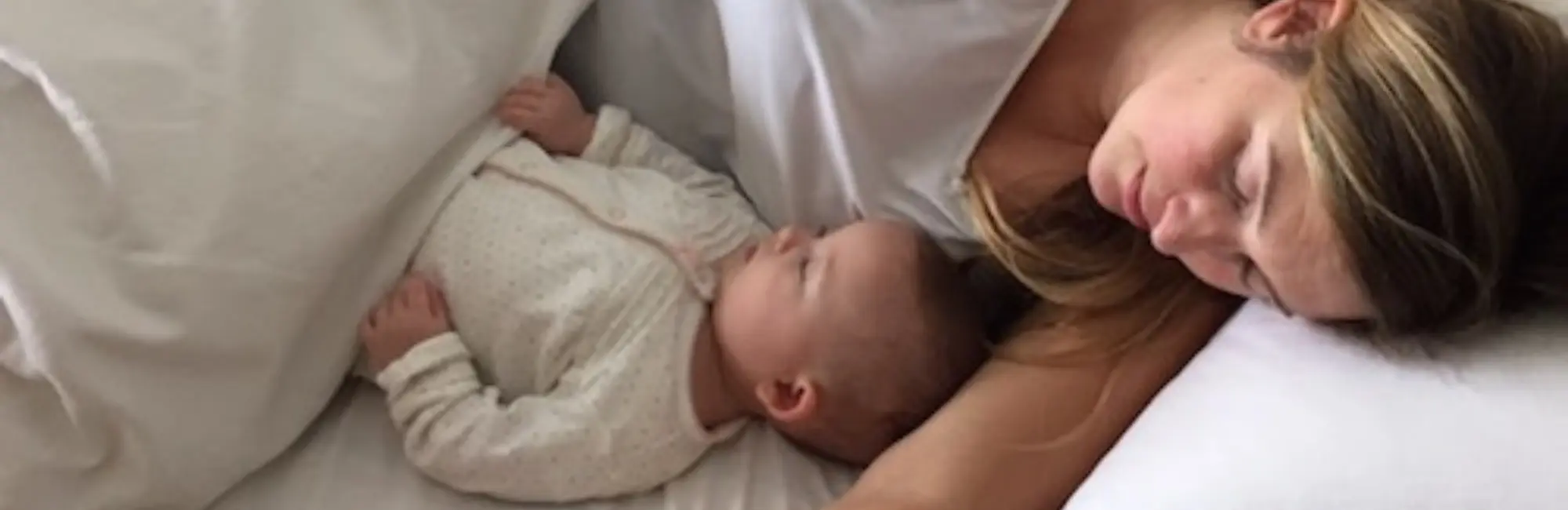
mother and baby in white clothing sleep together in bed

It's normal for babies to wake every couple of hours during the night, right into toddlerhood. You can find out about normal night waking here.

It’s also normal to have a bad night every now and then, or even a few bad nights in a row. Often it can be difficult to know what causes a bad night or two. The most important thing is that it passes! Sometimes your baby might have a viral infection. There is evidence to suggest that developmental changes (e.g. crawling, starting to walk) result in temporary changes to sleep at night.

But normal, occasional bad nights are quite different to a pattern of excessive night waking. The sleep deprivation which parents experience as a result of unnecessarily fragmented baby sleep patterns can be awful, and quite unsustainable.

Excessive night waking occurs when your baby

  • Wakes very frequently as a pattern through most or part of the night, perhaps every hour or more

  • Wakes and wants to interact and play for a period of time in the night

  • Wakes every hour, or even more often, from one or two o'clock in the morning

  • Groans, grunts with stretching and back arching for long periods in the night, keeping you awake

  • Wakes frequently between when you put her down in the evenings and when you go to bed

  • Only sleeps when on your body or in your arms

  • Wakes and is unable to settle back to sleep for a long period during the night, either

    • Waking and crying whenever you try to put her down in the cot

    • Breastfeeding continuously, or

    • Groaning, grunting and stretching, even with his eyes closed.

Not uncommonly, a breastfeeding mother might report to me that she's been waking every 30 or 40 minutes throughout the night. Often she has tolerated this pattern of extremely disrupted sleep for a very long time because she is deeply committed to responding to her little one's cries and communications. She may have been led to believe that the only alternative to excessive night waking is weaning, or letting her little one cry.

But The Possums Sleep Program helps with excessive night waking without leaving babies to fuss or cry, supporting you as you respond to your little person's communications and needs.

It usually takes one or two weeks to change a pattern of excessive night waking. But since 2011, parents have repeatedly reported back to me and my colleagues delivering the Possums programs that when they put these steps in place, their life is turned around. Research evaluations also show this to be the case.

Acknowedgements

The photo at the top of this page is by Beverley Latter from the Baby Sleep Information Source site basisonline.org.uk
Finished

share this article

Next up in Night-time sleep science

What causes babies to wake excessively in the night?

baby in striped blue and white pyjamas sleeps on back with arms over its head

What doesn't cause excessive night waking in babies

This might sound weird, depending on what you've heard, but excessive night waking in our babies is not typically caused by

  • Wind or gut pain

  • Gut dysbiosis

  • Reflux

  • Allergy which affects baby's gut (though occasionally allergy causes a severe Keep reading

logo‑possums

Possums in your inbox

Evidence-based insights, tips, and tools. Occasional updates.

For parents

parents homebrowse all programsfind answers nowprograms in audiogroup sessions with dr pam

For professionals

possums for professionals
(the ndc institute)
guest speakers

About

the science behind possums/ndcwho we arendc research publicationsdr pam’s books

More resources

free resourcesdr pam’s blog

Clinical consultation

consult with dr pamfind a possums clinicfind an ndc accredited practitioner

Help & support

contact usfaqour social enterpriseprivacy policyterms & conditions

Social

instagramlinked infacebook

Possums acknowledges the traditional owners of the lands upon which The Possums Programs have been created, the Yuggera and Turrbal Peoples. We acknowledge that First Nations have breastfed, slept with, and lovingly raised their children on Australian lands for at least 65,000 years, to become the oldest continuous living culture on Earth. Possums stands with the Uluru Statement from the Heart.