
Nipple vasospasm is a sign of repetitive microtrauma in breastfeeding
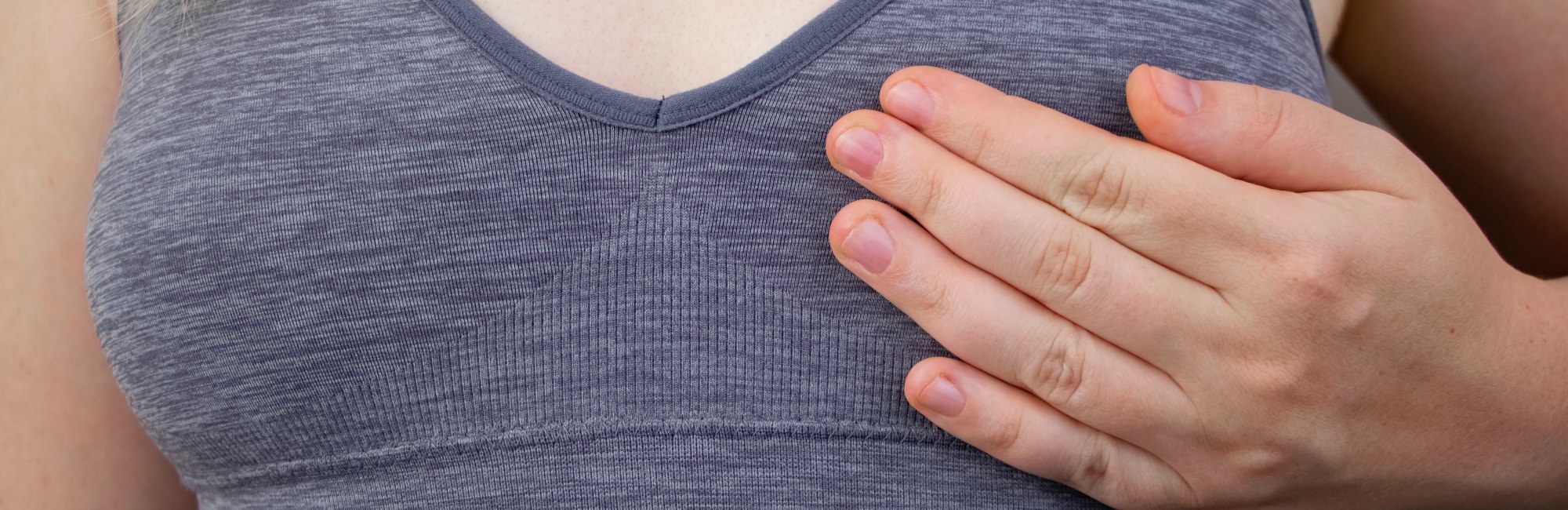
What is vasospasm?
Your nipple is very rich in blood vessels. Vasospasm is a contraction or spasm of the smooth muscle which lines the walls of the small arteries and arterioles in your nipple, limiting blood flow to the area. Vasospam occurs on a spectrum of severity.
Vasospasm can be troublesome in various parts of the body, but most commonly in the fingers, toes, ears or nose in response to cold or persistent vibration. In these situations, the blood supply to the area is reduced and the skin becomes pale and cold or numb. Lack of oxygenation to the tissues from sudden reduction of blood flow causes blanching and pain.
Vasospasm of the nipple regularly occurs without pain either when breastfeeding or not breastfeeding, and can even occur in response to touch or examination by your breastfeeding support professional. This common kind of vasospasm, which is at the very low end of the spectrum of smooth muscle contraction of the small arteries and arterioles, is of no concern.
But many breastfeeding women describe shooting or stabbing or radiating or burning nipple and breast pain at the same time as they have visible blanching of the nipple face, that is, nipple vasospasm.
What can you do if you have vasospasm?
-
The most important thing to do is to seek help for nipple and breast tissue drag.
-
Warm applications or 'breastwarmers' slipped inside your bra can help relieve the pain.
-
Avoid sudden temperature changes and exposure to the cold.
There's no evidence to support the belief that nifedipine (either orally or as an ointment) helps with vasospasm, and reasons to worry about side-effects, such as headache.
Is vasospasm of the nipple the same as Raynaud’s syndrome?
Sometimes, after blanching, the colour of the nipple skin changes to purple, due to deoxygenation of the tissue, followed by a red flush once the arterioles relax and the blood rushes back in. If the surface of your nipple remains ischaemic (without blood flow) for long enough that the tissues turn purple, it's a sign of severe vasospasm. Another word for what's happening when your nipple skin turns this purple colour is cyanosis.
In breastfeeding women, more severe skin colour changes, from white to purple to red, have often been said to be signs of ‘primary’ Raynaud’s syndrome (also known as Raynaud’s disease or Raynaud’s phenomenon), of unknown cause. It's not accurate, however, to apply this diagnosis to a breastfeeding woman's nipple vasospasm, and confusing.
What causes nipple vasospasm?
All guidelines acknowledge that breastfeeding trauma is a likely cause of vasospasm. However, in practice, vasospasm is confused with the label ‘Raynaud’s disease’ and treated as a primary phenomenon requiring pharmaceutical help, rather than being caused by repetitive micro-trauma, which needs to be resolved in order to resolve the vasospasm.
The mechanisms of vasospasm remain poorly understood. In general, repeated activation of the sympathetic nervous system causes unstable constriction of the arterioles. It seems that inflammatory factors activate the sympathetic nervous system and destabilise the normal function of smooth muscle contraction and relaxation in the arteriole walls, tipping the arterioles into contraction.
This is caused by repetitive microtrauma and inflammation of the nipple tissue, due to breast tissue drag. Once the tissue is damaged by mechanical load, vasospasm may occur during breastfeeding, or later, on exposure to cold, or between feeds with no apparent trigger at all. The autonomic nervous system destabilisation occurs randomly, in the response to heightened inflammation, much the same way a menopausal woman randomly experiences a background level of hot flushes due to autonomic nervous system instability, though triggers can certainly be identified and are best avoided if possible.
The face of the nipple becomes white, blanching due to lack of blood flow, and this ischaemia hurts. It doesn't cause any permanent damage, though. I call this blanching simply ‘nipple vasospasm’, because labelling it Raynaud’s syndrome implies that the cause is unknown. The cause is invisible inflammation caused by repetitive microtrauma.
There is no reason to prescribe a medication (typically nifedipine) for this vasospasm, but the underlying repetitive microtrauma from poor fit and hold needs to be attended to. There is no research to suggest that nifedipine is effective, and women can find the side-effects of nifedipine, in particular headaches, very unpleasant.
Who is more likely to experience vasospasm with breastfeeding and lactation?
Women who have been diagnosed in the past with a true Raynauds syndrome, or a connective tissue or autoimmune disorder, are more likely to experience painful vasospasm while breastfeeding.
Recommended resources
Vasospasm of the nipples during lactation: management
Vasospasm of the nipples during lactation: prevalence and pathophysiology