Logo - The Possums baby and toddler sleep program.
parents home
librarybrowse all programsfind answers nowaudioprograms in audiogroup sessionsgroup sessions with dr pam
menu icon NDC Institute
possums for professionals
(the ndc institute)
menu icon eventsguest speakers
menu icon the sciencethe science behind possums/ndcmenu icon who we arewho we aremenu icon evidence basendc research publicationsmenu icon dr pam's booksdr pam's books
menu icon free resourcesfree resourcesmenu icon dr pam's blogdr pam's blog
menu icon consult with dr pamconsult with dr pammenu icon consult with dr pamfind a possums clinicmenu icon find a NDC accredited practitionerfind an ndc accredited practitioner
login-iconlogin

Welcome back!

Forgot password
get access
search

Search programs

Toddler Sleep (12-36 months) icon

Toddler Sleep
(12-36 months)


  • What's next if you've been sharing the bed or sharing your room with your toddler but want to change this now?
  • How to do toddler sleep when you've made the decision to wean from the breast?
  • What to do when it's time for another loving adult to take over caring for your breastfed toddler in the night?
  • When is it time to wean your toddler from a bottle in the night?
  • Protecting sleep throughout childhood

Listen to audio program

Next article

Sign up now
  • Toddler Sleep (12-36 months)
  • S4: Night-times
  • CH 4: Towards independent sleep

What's next if you've been sharing the bed or sharing your room with your toddler but want to change this now?

Dr Pamela Douglas18th of Sep 202323rd of May 2024

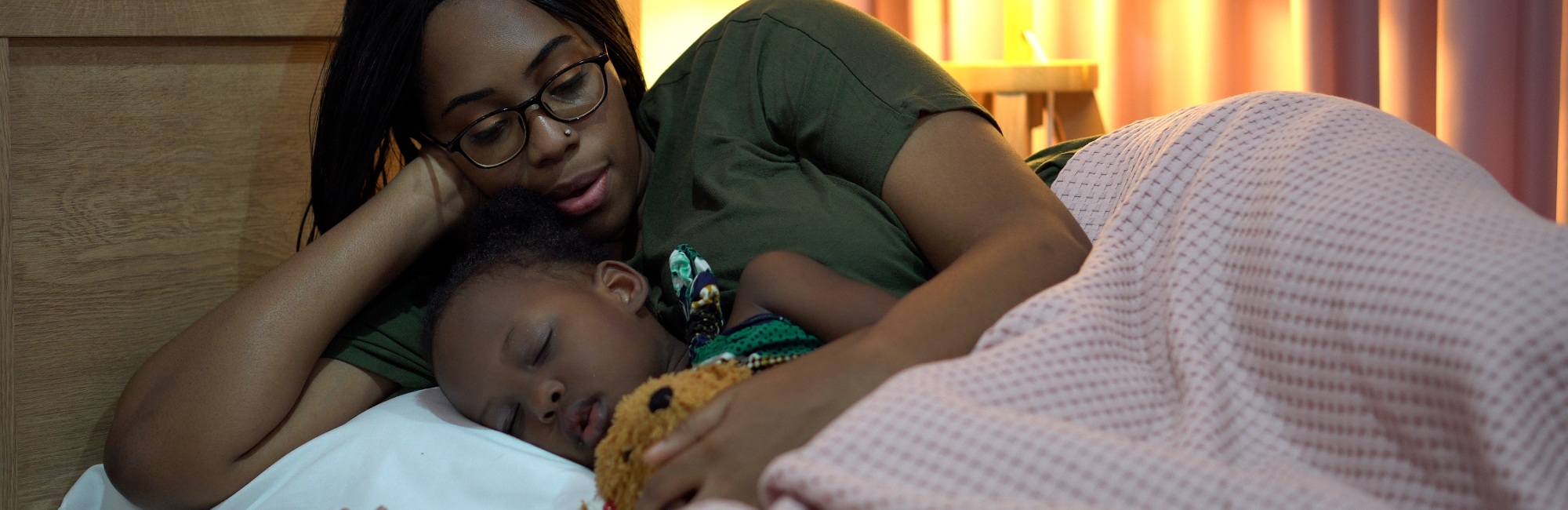
mother holds sleeping daughter in bed

There is no need to rush our little people out of the parental bed. You can do this in a way that suits your own unique family.

For some families, this may be in the latter half of the first year of life or towards one year of age. For other families, it might be when their child is four or five years of age or older. Some cultures and some families share the parental bed with their children into primary school years or more. There is no right or wrong, just what works for your family.

Many of the families I've worked with over the years have found a mattress on the floor in the baby or toddler's own room works well as a transitional arrangement towards independent sleeping, once parents have decided they want to move away from bedsharing, or from having the toddler in the parental bedroom.

For this to work, the mattress needs to be

  • Large enough to comfortably accommodate both a small child and a loving parent. This is because as you do this transition, you might sleep quite a lot of the night on this mattress with your little one.

  • Safe, cleared of objects and bedding that could obstruct airways. After six to 12 months of age, children are much more robust in protecting their own airways in the night.

  • Very low, so that your little one won't be hurt if he clambers (or falls!) off the mattress on to the floor. A futon can work well for this.

For this to be safe, the room needs

  • To be completely child-proofed, so that a toddler climbing around in the night without you present is completely safe

  • A child-proof gate at the door.

It's much easier for you to roll yourself out of this floor bed and return to the parental bed, than it is to ease a lovely, heavy, half-asleep, half-wriggling toddler into a cot! Cots often stop working for many families somewhere through the second half of the first year of life, and don't work terribly well for many or most toddlers, in my experience.

If you fall asleep on the floor bed as you are breastfeeding or cuddling your little one to sleep, that's not a problem. But more and more, you'll be able to roll yourself out without waking your small child, and return to the parental bed.

In this scenario, we're wanting your toddler to learn that her room is specially for her, and that it's a place in which she feels happy and safe, with things she likes playing with easily available. It's the only place she sleeps at night (when you're home). You can find out about protecting your little one's sleep throughout childhood here.

A note for families who enjoy bedsharing with older children

If you enjoy sharing your bed at nights with your child or children, you don't have to teach your little one to sleep alone until you want to! Sleeping socially, including with our children, has been the biological and cultural norm for human beings until the advent of the Industrial Revolution. Even today, bedsharing with children remains usual practice in many cultures and also for many families in the West, as a normal part of loving, psychologically healthy family life.

caucasian family all asleep in same bed

Finished

share this article

Next up in Towards independent sleep

How to do toddler sleep when you've made the decision to wean from the breast?

blue eyed caucasian child breastfeeding while looking at camera

This article assumes that you've made the decision to wean your toddler from the breast based upon accurate information. For example, excessive night waking doesn't result from frequent and flexible breastfeeds, or from breastfeeding to sleep, but from disruption to your toddler's body clock. If your toddler is waking excessively, a body clock reset is required.

What is the kindest way to wean your breastfed toddler?

It can help for a breastfeeding mother to disappear for a number of nights, while the father or other loving parent takes over night wakes. If the little one…

Keep reading
logo‑possums

Possums in your inbox

Evidence-based insights, tips, and tools. Occasional updates.

For parents

parents homebrowse all programsfind answers nowprograms in audiogroup sessions with dr pam

For professionals

possums for professionals
(the ndc institute)
guest speakers

About

the science behind possums/ndcwho we arendc research publicationsdr pam’s books

More resources

free resourcesdr pam’s blog

Clinical consultation

consult with dr pamfind a possums clinicfind an ndc accredited practitioner

Help & support

contact usfaqour social enterpriseprivacy policyterms & conditions

Social

instagramlinked infacebook

Possums acknowledges the traditional owners of the lands upon which The Possums Programs have been created, the Yuggera and Turrbal Peoples. We acknowledge that First Nations have breastfed, slept with, and lovingly raised their children on Australian lands for at least 65,000 years, to become the oldest continuous living culture on Earth. Possums stands with the Uluru Statement from the Heart.