Logo - The Possums baby and toddler sleep program.
parents home
librarybrowse all programsfind answers nowaudioprograms in audiogroup sessionsgroup sessions with dr pam
menu icon NDC Institute
possums for professionals
(the ndc institute)
menu icon eventsguest speakers
menu icon the sciencethe science behind possums/ndcmenu icon who we arewho we aremenu icon evidence basendc research publicationsmenu icon dr pam's booksdr pam's books
menu icon free resourcesfree resourcesmenu icon dr pam's blogdr pam's blog
menu icon consult with dr pamconsult with dr pammenu icon consult with dr pamfind a possums clinicmenu icon find a NDC accredited practitionerfind an ndc accredited practitioner
login-iconlogin

Welcome back!

Forgot password
get access
search

Search programs

Toddler Sleep (12-36 months) icon

Toddler Sleep
(12-36 months)


  • What is sensory motor nourishment and why does it help with toddler sleep?
  • Filling your toddler's sensory tank
  • Outdoor play is good for toddlers and good for sleep
  • Why a toddler carrier can help with toddler sleep

Listen to audio program

Sign up now
  • Toddler Sleep (12-36 months)
  • S1: The essentials
  • CH 4: Your toddler-sleep superpowers
  • PT 4.2: Superpower #2: sensory motor nourishment

Why a toddler carrier can help with toddler sleep

Dr Pamela Douglas15th of Sep 202319th of Jul 2025

toddler carried by smiling mother walking through forest

Carrier use might not suit all families (and may not work for parents who have musculoskeletal challenges or back pain) but can be a useful tool as you experiment your way through these first few years of your little one's life.

In my own life with small children, decades ago now, backpack carrier use from early on helped make a dialled down baby, or later, a dialled down toddler. Some parents use cloth wraps or semi-structured carriers on their backs, and there are many cultures in which this is the normal way mothers transport their small children.

But for me, it was important to make it easy. Having a light structured aluminium frame that sat securely on the ground as I put the toddler in, before lifting it up onto my back, worked well. I could put the toddler on and off, on and off my back, according to our changing circumstances. Straps in structured backpack carriers are a sensible safety feature. My hands were then free to do things. The toddler loved it, her nervous system drinking in the constant small changes in posture, the irregularly altering visual environment. She loved the security of being physically close to me.

Other parents like to wear their toddler in a buckled carrier on the front of their body. You can see a video of that style of toddler wearing below.

Structured backpack carrier use is a strategy some parents like to experiment with in the evenings with toddlers, whose sensory needs can be intense and exhausting at that time of day. Backpack toddlers love seeing what the parent is up to, peering over the parent's shoulder, pulling on the parent's hair, chewing on the parent's T-shirts, revelling in the constant motion and changing view, at the same time as the parent – if slower than usual – might even manage to get something done!

Using a toddler carrier is another powerful tool for providing rich sensory motor nourishment, which keeps your small child dialled down while his sleep pressure rises, so that sleep is easy and no-fuss.
x

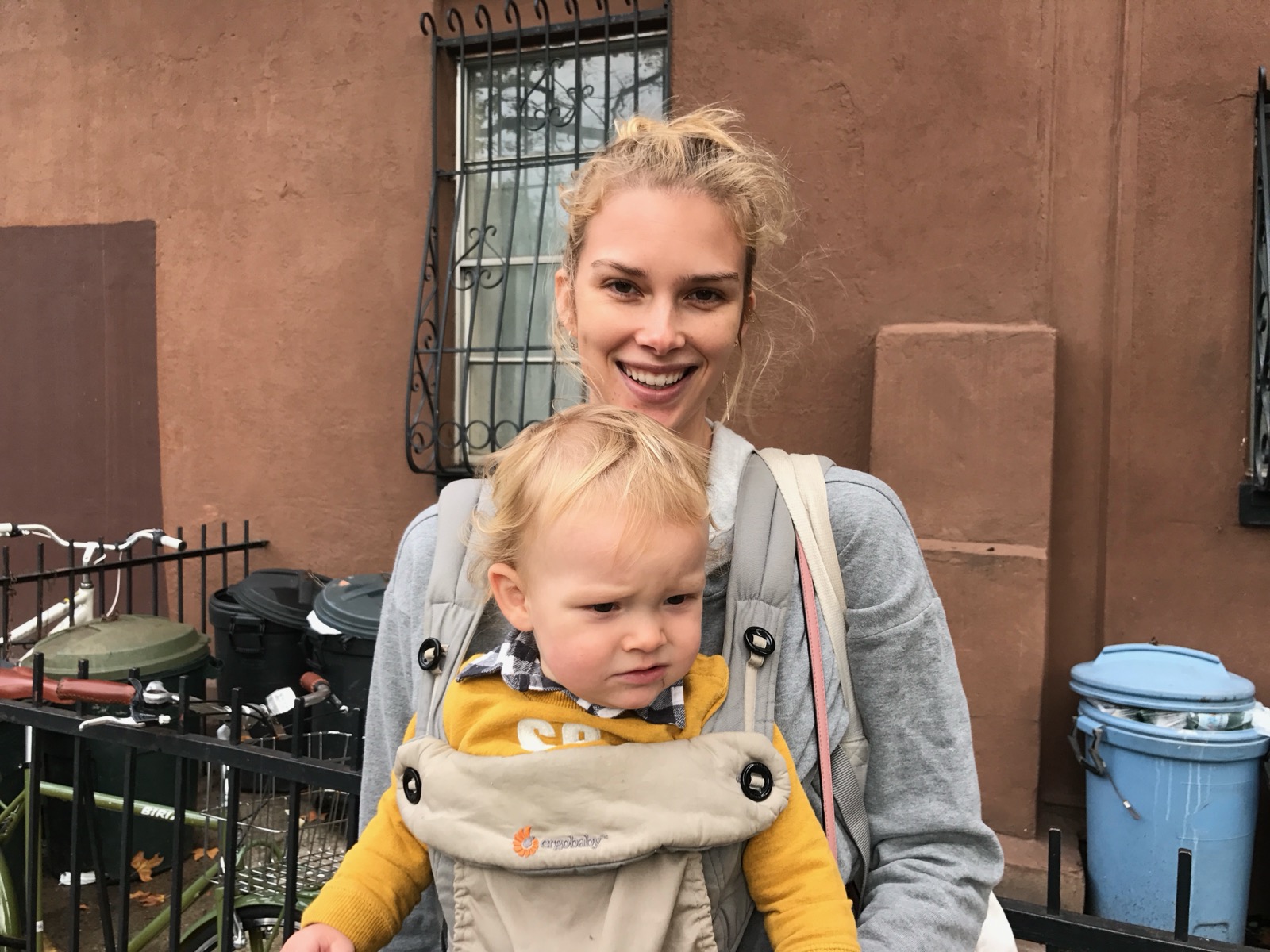
Here is a photo of my daughter Emma with her 17-month-old, and also a video as she walked with him in the carrier through the streets of Brooklyn NYC, where folks walk everywhere rather than use cars. I'd started to say "happy baby" in rhythm with our steps as I videoed, and then my ltitle grandson joined in ...

Finished

share this article

logo‑possums

Possums in your inbox

Evidence-based insights, tips, and tools. Occasional updates.

For parents

parents homebrowse all programsfind answers nowprograms in audiogroup sessions with dr pam

For professionals

possums for professionals
(the ndc institute)
guest speakers

About

the science behind possums/ndcwho we arendc research publicationsdr pam’s books

More resources

free resourcesdr pam’s blog

Clinical consultation

consult with dr pamfind a possums clinicfind an ndc accredited practitioner

Help & support

contact usfaqour social enterpriseprivacy policyterms & conditions

Social

instagramlinked infacebook

Possums acknowledges the traditional owners of the lands upon which The Possums Programs have been created, the Yuggera and Turrbal Peoples. We acknowledge that First Nations have breastfed, slept with, and lovingly raised their children on Australian lands for at least 65,000 years, to become the oldest continuous living culture on Earth. Possums stands with the Uluru Statement from the Heart.